When we look at ourselves as Humans we are living creatures that are very complex both Physically and Mentally. Increasingly we as Humans are trying our best to replicate ourselves designing and developing Human Looking and Operational Robot Machines, called Humanoids. With the advent of the recent Artificial Intelligence (AI) the Humanoid maybe able to Think and Act like Humans. If we think ‘Outside the Box’ we must consider that the Humanoid in years to come may supersede Humans for very good reasons. I want you to consider my reasoning for this in terms of both Physical and Mental issues.
The Worlds most advanced Humanoid and the Human
The Human Body
We as Humans always consider ourselves to be far superior to any living thing and any Humanoid that exists today. We look at our Physical construction and consider it to be an absolute marvel that we can do all the things we normally do. However is that really true? When we look at the Human Body it is in fact very Fragile and it depends upon the normal operation of the Heart, Organs and Muscles, Blood Flow and Nervous System within our body. Our Bone and Spine Structure allowing us to be mobile is covered in Flesh and Skin. All of these are subject to damage in one form or other. We require Energy and Fluids to ensure our Body functions in the form of Food and Liquids, especially Water on a regular basis. We also have to dispense with the Waste in our Bodies on a regular basis. Therefore our Body is very complex but Fragile in nature.
The Human is susceptible to damage in many different forms internally and externally. Perhaps the best example is the horrific damage to the External and Internal parts of the Body soldiers suffered during Wars, where their bodies are ripped apart by Explosions and Bullets. The other major problem Humans have, are Diseases, Viruses and Illnesses such as Heart Attacks and Cancer which affect the Body significantly as we saw with COVID 19. To confirm this look at the number of Hospitals and Clinics that there are in the world all trying to repair our Bodies from Simple Colds to Major Injuries.
Typical Hospital Ward
The Human Brain
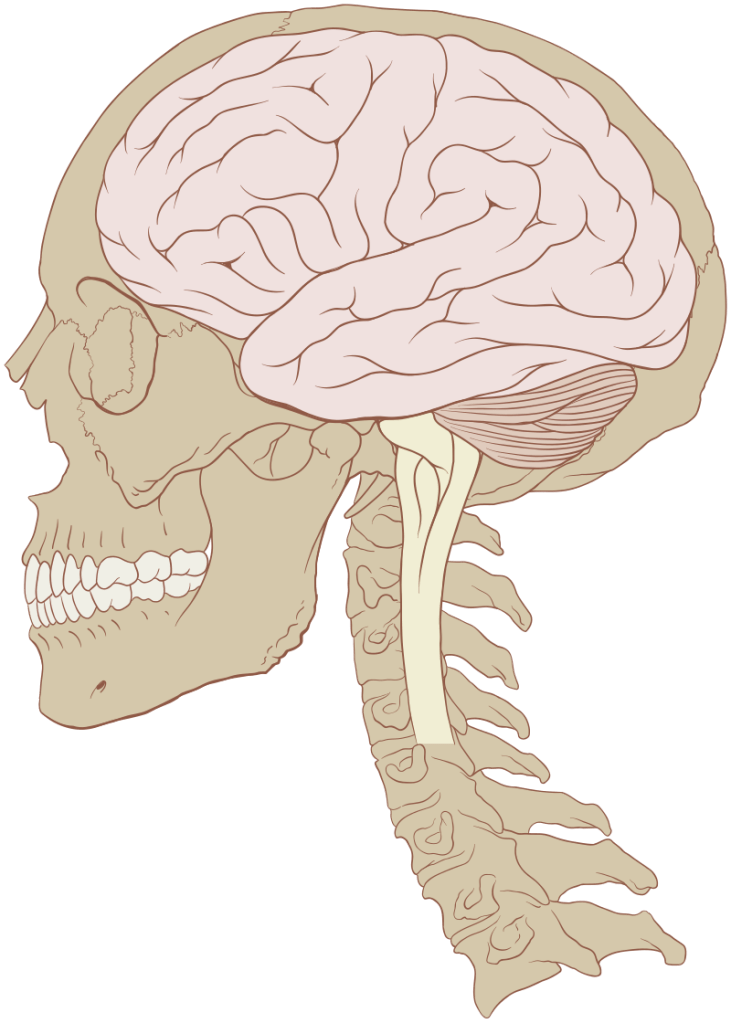
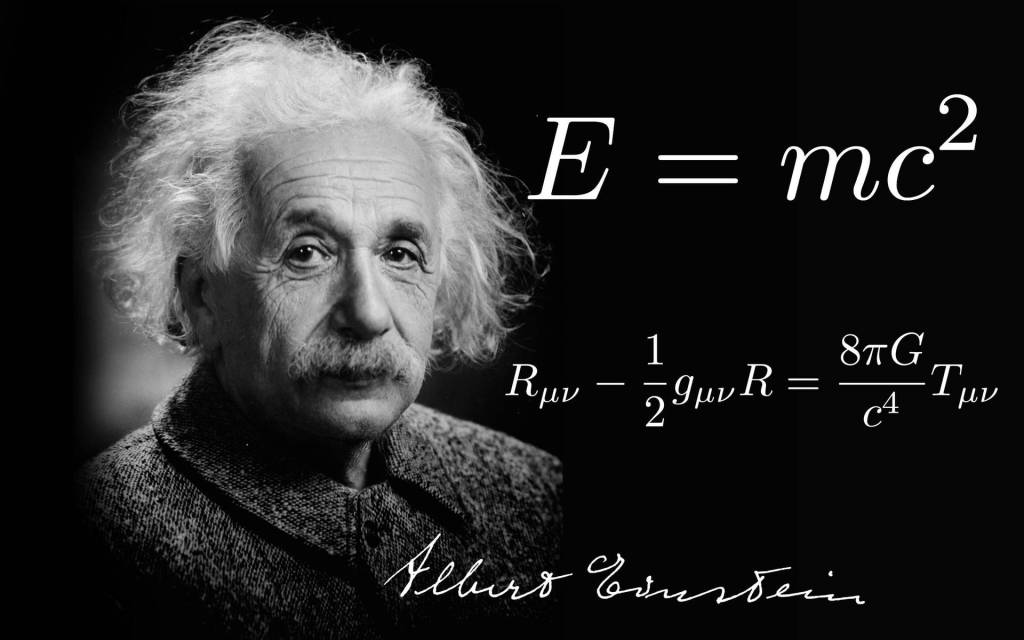
The Human Brain housed in the Head and protected by our Skull, controls everything we do and think. There is still a lot to learn about how the Brain functions. It is our Computer that Interprets millions of signals within our Nervous System from all parts of our Body; including our Senses; Sight, Hearing, Taste, Touch and Smell. The Brain allows us to Learn and Remember Information which we apply in many different ways such as constructing this article. The Brain also enables our Thoughts and Moods which in some cases causes us to be Happy and on other occasions causes us to be Depressed. Each Human has its unique Brain that allows some to be Geniuses such as Albert Einstein, have Normal Brain Functionality or in some cases have Brain Malfunctions.
The Human Brain
Human Performance Physical and Psychological
The Human Performance both Physical and Mental relies upon our individual Life Style but in all cases includes Sleep or Rest every day which is necessary to recharge our Energy for the Activities we undertake. Each Humans Physique is different and the relative Physical Performance varies significantly, some being Extremely Strong, most having Normal Strength or some being Extremely Weak. Most try to improve their Physical Performance by Exercising for months and years and having a Balanced Diet each day but all Humans have Limits on Physical Performance.
Human Physical Performance
Psychological Performance also varies significantly, not just in Academic issues but also related to Attitude issues. Humans tend to consider Psychological Performance is related to Academic Excellence and most Countries structures is based upon this premise. However, there are Two Distinct Parts of Psychological Performance which is Academic Excellence and Intelligence including Talent. There are many people who do not achieve Academic Excellence but reach a high degree of Psychological Performance due to their Intelligence and Talent. There are so many world Business and Political leaders are in this group. There are also those who have exceptional Academic Excellence, Intelligence and Talent such as Albert Einstein (Theory Of Relativity), Michael Faraday (Electromagnetic Induction), James Watt (Steam Engine) and others.
Human Reproduction and Summary
To enable the Humans to continue to exist the Human Body has Two Designs, Male and Female where the Male Fertilises a Females Eggs within her Body. Whilst there are techniques existing for non contact Fertilisation it still requires a Male Sperm to Fertilise the Females Eggs.
It can be seen that we Humans are Very Complex in terms of Construction to a point where we are Over Constructed that leads to many Complications both Physically and Psychologically. Are the Humanoids we are Designing and Creating much less Complex then a Human and therefore more Sustainable for the foreseeable Future. Or are they just an Aid to the Human.
An AI Generated Image – Humanoid Assisting a Human
Humanoid Introduction
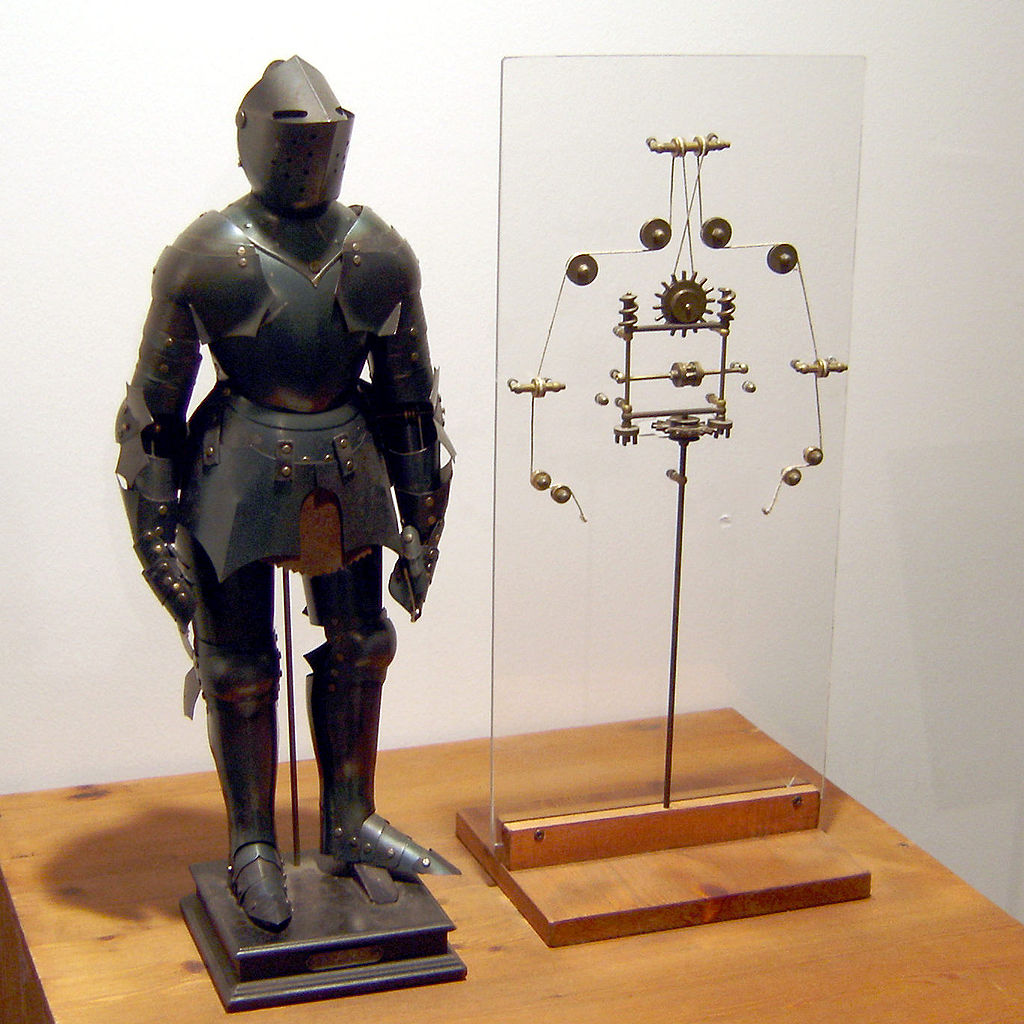
I am sure most of us see the Humanoid as a very recent technology. How wrong that is. In 1400 Leonardo da Vinci produced a Suit of Armour that could Move and Sit by the use of Cables and Pulleys. Of course today Technology is far more advanced which is producing some stunning Humanoid (A Robot that resembles a Human Body) and Android (A Humanoid Robot that aesthetically resembles Humans). A Robot is a Computer Controlled Machine, that is capable of automatically carrying out a series of Actions. In other words, the Humanoid Robot Mimics or Simulates the operation of a Human Body and Mind by using a Computer and Specially Designed Software.
A Humanoid one of many being developed to undertake TasksAn Android one of many being developed at an alarming rate ( Brad Beattie)
The Humanoid Body
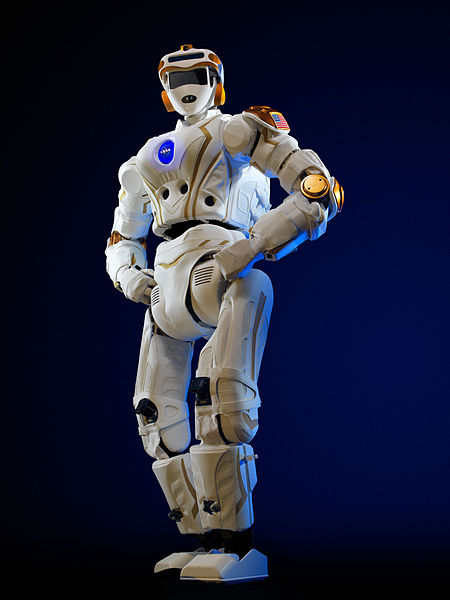
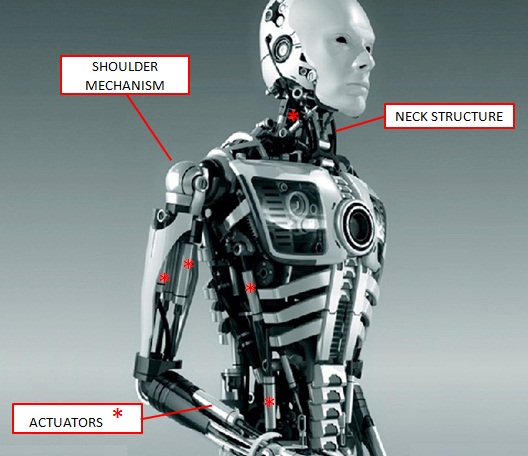
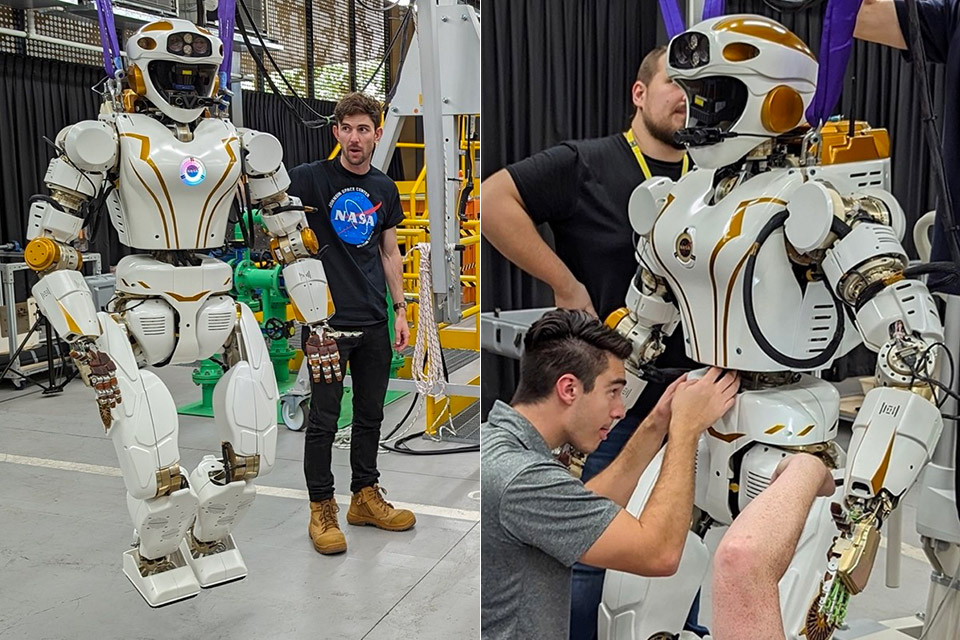
The Humanoid is designed to take the shape of a Human Body in that it has Structures; A Torso, Head, two Arms and Hands, two Legs and Feet. however, depending upon the Humanoid only parts of these are used and are operational. The Humanoid Structures supports all of its components (like a Human Bone Structure). Depending upon the Design; To allow movements of these Structures such as an Arm, it can use specially designed Stepper Motors or Rotary Actuators, or specially designed mechanisms activated by Electrical Linear Actuators, that replicate the Shoulder and Elbow Joints. Linear Electrical Actuators are also used to replicate the Muscles allowing Linear movement of the Arm.
NASA Operational Humanoid Valkyrie (Willy Jackson)Humanoid using Linear Electrical Actuators
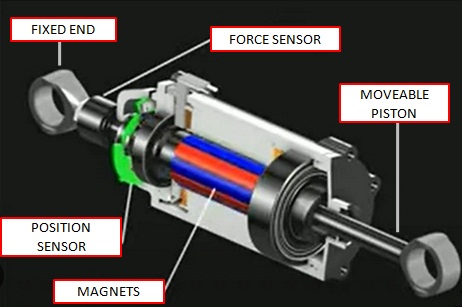
A Linear Electrical Actuator is fixed at one end and a Motorised or a Electromagnetic System moves the other end a Piston In or Out producing the Force. It is important to note that the Electrical Actuators can be very small with a small amount of Force for example Hands and Fingers. Electrical Actuators can be larger producing more Force for the Arm designed for lifting heavy items.
Linear Electrical Actuator using Electromagnetic Force
The Humanoid Brain
In simple terms the Humanoid Brain is a Computer and its Specialised Software, that Controls everything. Looking at the Linear Actuator the Computer will send a signal to move the Piston, as the Piston moves the Position Sensor tells the Computer where the Piston is; this is called Position Feedback. At the same time the Force Sensor will also tell the Computer how much Force is being applied by the Piston and its connection. If the Humanoid is designed to walk and move like a Human then there are other Sensors that are used. For example to ensure the Humanoid can balance itself there are devices such as Accelerometers to detect the Humanoids Position. To allow the Humanoid to have the Sense of Sight, Cameras are used. To have the Sense of Hearing, Microphones are used. To have the Sense of Touch, Pressure Sensors are used. The Senses of Smell and Taste are more related to Androids and are being developed. Some Humanoids have Speakers to create Speech. All of this information is supplied and fed back to the Computer and using its Specialised Software will operate the Humanoid to undertake tasks. We can loosely relate these Computer Signals to the Human Nervous System.
Shaking Hands with Humanoid
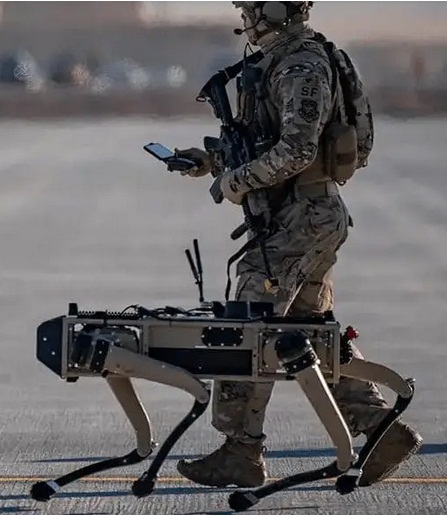
The rapid advancement of Artificial Intelligence (AI) is being applied to Humanoids and Androids, which is allowing them to make their own decisions. This is in its infancy but is being pursued with vigour in the Robot Industry. One use of AI will be in the military field where Humanoids could be used as soldiers in the not so far future just as 4 legged Robots are being used today.
4 Legged Military Robot
Humanoid Performance Physical and Psychological
Physically, a Humanoid can Out Perform a Human in terms of undertaking simple Physical Tasks. The Humanoid can Operate 24 hours per day given that a Power Supply is available to the Humanoid. The Power Supply is normally from Lithium-Ion Batteries positioned in the Torso which requires Recharging. It does not need to Eat or go to the Bathroom. It has no Heart, Organs or Blood Circulation System, that can be affected by Diseases, therefore it only relies upon the Power Supply and Computer Operating the Humanoid Physical Components. However, there will be times when Faults may occur that requires minor Repairs and Testing. So far as AI is in its infancy there is no Psychological Effects as the Computer Instructions are normally planned for the tasks that the Humanoid has to undertake. Therefore the Human feelings of Happiness or Depression do not exist in a Humanoid. There are moves to make Androids have these feelings.
NASA Operational Humanoid Valkyrie undergoing Testing
Humanoid Summary
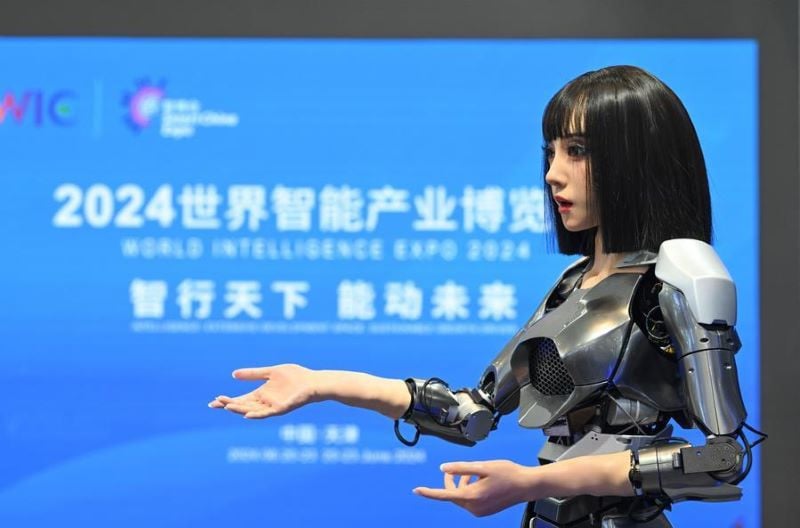
The rise of Humanoids is now very rapid in all parts of the world. The image below is a Humanoid/Android called Xiaoqi, answering questions put by an Audience in China due to the Artificial Intelligence (AI) Computer Programming. You will notice that due to the looks and elegant appearance Xiaoqi is referred to as She or Her. She shows Kindness, Empathy and is very Knowledgeable all because of the AI Software. There is a huge market for normal and AI Humanoids to undertake all sorts of tasks in the home and at work reducing the stress on Humans. This is the tip of the Iceberg as more and more Humanoids are produced they will gradually replace the Humans. One factor is that the Humanoids can work 24 hours per day and the cost of securing there services will be far less than Humans. Another important point is that they will be less troublesome than Humans.
Xiaoqi, a humanoid robot, is pictured at the World Intelligence Expo 2024 in north China’s Tianjin, June 21, 2024. PHOTO:XINHUA
Overall Human-v- Humanoid Conclusion
In not many years to come Humanoids with aid of AI will increasingly become more sophisticated and highly intelligent. This is no longer a Science Fiction movie it is Real. The problem I see is the Control of this Technology not just Humanoids but AI in general. AI can be a Huge Benefit to Humanity but it can also be a Very Big Danger, where the Humanoid becomes more Powerful than Mankind. It is to be remembered that Computers are already Designing the next Generation of Computers, therefore it could be with AI that Humanoids will Design and Manufacture the next Generation of Humanoids. From experience I started Multimedia Computer Software and Computer Systems only 37 years ago. Look at where we are today. Apply that time scale or even less to Humanoids where will that take us.
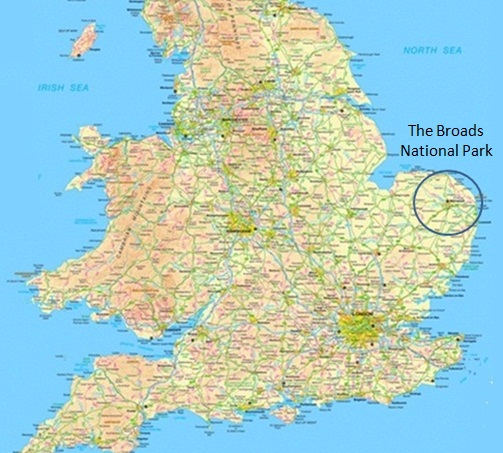
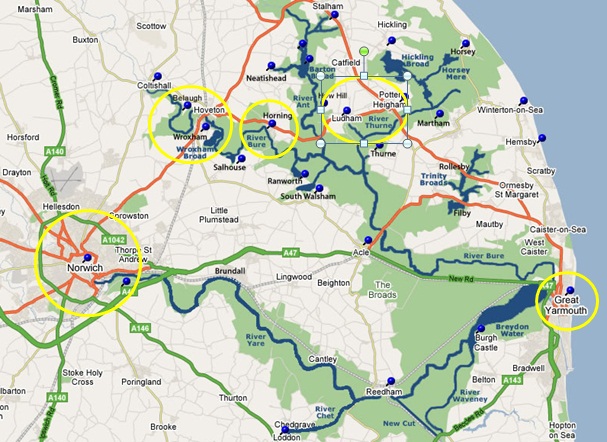
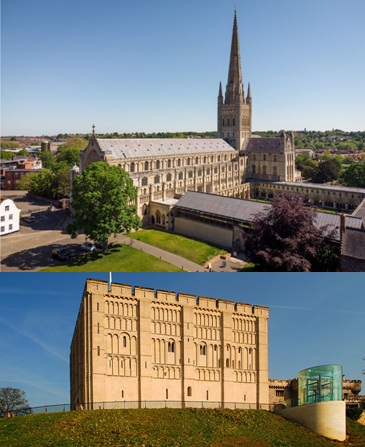
The Broads National Park, also referred to as the Norfolk Broads, is located in East Anglia a part of Anglo-Saxon England which includes the Counties of Norfolk and Suffolk. The traditional Centre Town of East Anglia is the City of Norwich. It was founded around 43AD and became a City in 1094. It is a Cathedral City which was built from 1096 to 1145. It has a large Norman Castle built from 1066 to 1087 and is the Capital of Norfolk County. The Broads are a series of fresh water, 7 Rivers and 63 Lakes (called Broads) that are normally less than 4 metres in depth and most are Non-Tidal, all interconnected and accessed to the North Sea via the Town of Great Yarmouth and the River Yare and River Bure.
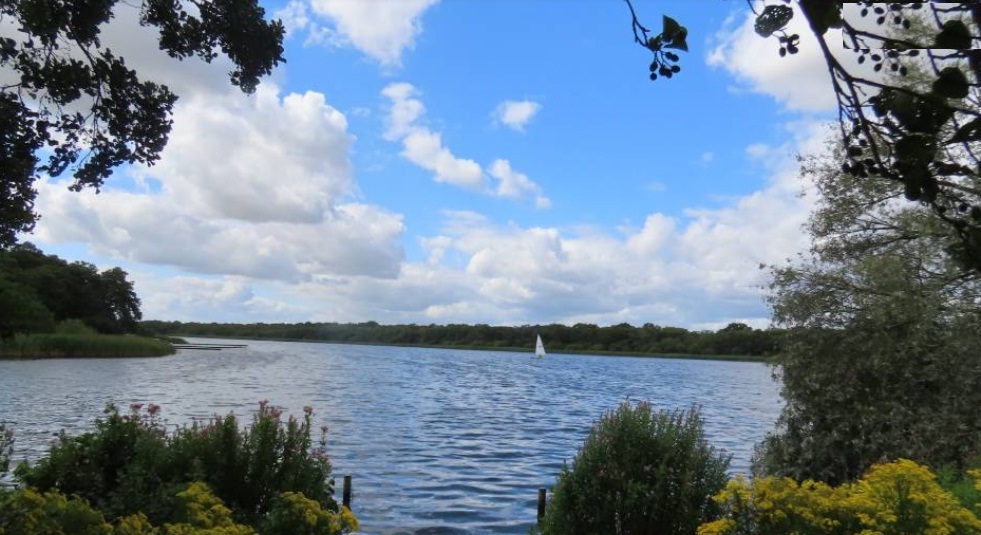
ENGLAND – East Anglia – The Broads National ParkRollesby Broad a typical Quiet and Peaceful WaterwayNorwich Cathedral & Castle Keep
The Broads – The Early Years
In the Early Years and the Broads in terms of the Broads themselves and the Interconnecting Rivers were much like they are today. As I lived in Norfolk with my parents in a village called Ludham going to Primary School in 1945 and Norwich 1951 to 1958 going to Secondary School and Technical & Art College, I have been lucky enough to have been part of the Broads Culture and its main activities, including, Motor Boats/Cruisers, Rowing Boats, Sailing Yachts, Fishing and Bird Watching. Norfolk is mainly a Rural and Farming Area with many Small Towns and Villages and Waterways. The largest Town of Wroxham, located midway between Ludham and Norwich and is known as the Capital of the Broads. The River Bure runs through Wroxham with Wroxham Broad connected to it.
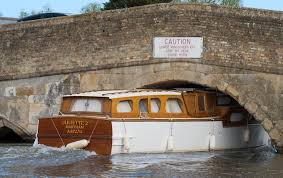
Wroxham Bridge -Yacht and Classic Cruisers – 1950’s
The image above is Wroxham Bridge in the 1950’s showing the Yacht and Motor Boats/Cruisers known as ‘Classic’ Cruisers which were all built of Wood. To pass through the Bridge was very tight. It is still the same today. As you can see it was leisurely and peaceful, as at that time there were fewer Boat Yards that Hired Boats and Yachts. One of the attractions was that you Hired a Boat/Cruiser or Yacht and Operated it Yourself and lived in it for the period of your holiday.
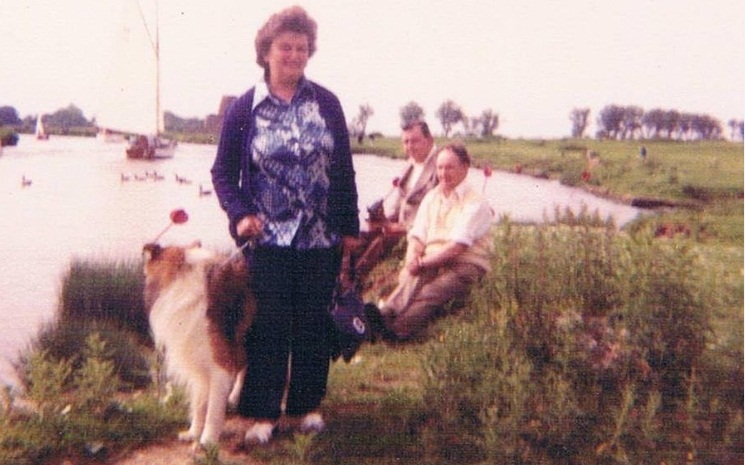
Wroxham Bridge and Classic Cruiser passing under the BridgeMy Mum, Dad, Uncle Ted and my dog Jamie at St Bennets, Rive Bure in the 1950’s
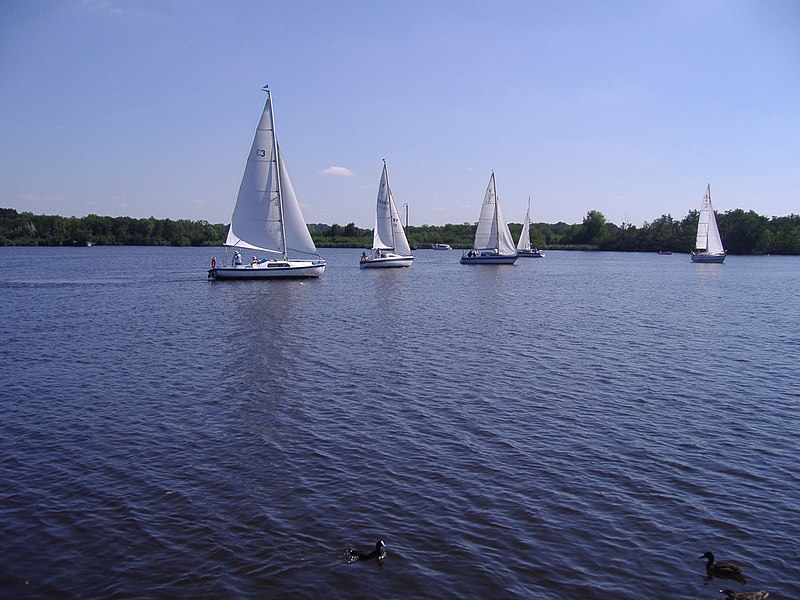
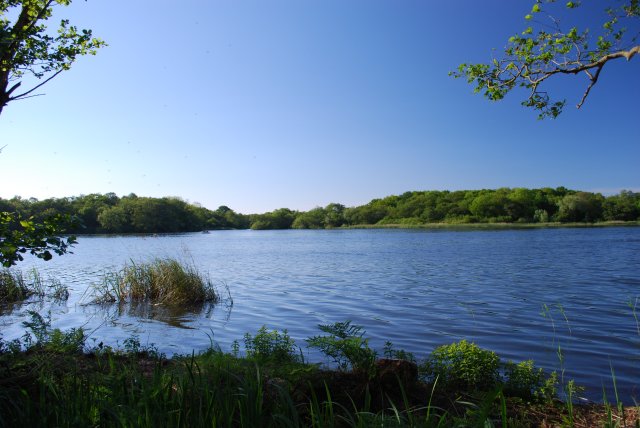
There are many beautiful Rivers like the River Ant at Ludham Bridge and Large and Small Broads such as Wroxham Broad, Ormesby Little Broad. There also Windmills that are used Water Drainage on the Banks of the Rivers.
The River Ant at Ludham BridgeWroxham Broad connected to the River BureOrmesby Little Broad connected to the River BureA Drainage Windmill on the Banks of the River Ant
Main Holiday Attraction – Operating the Hired Boat Yourself.
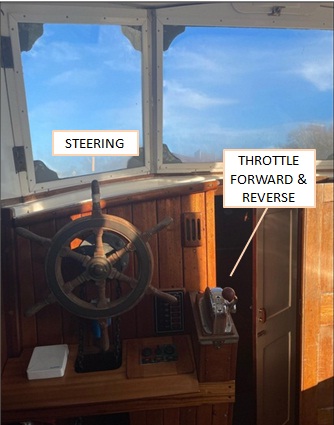
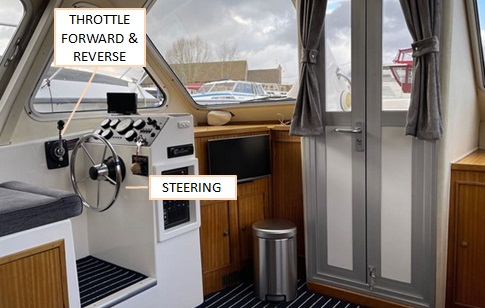
The Broads provides a unique Holiday destination in that it allows people to hire Boats of all types for day trips, or an extended Holiday living and operating their own Boat. In the early days and even today the Classic Cruiser Boat could house up to eight or more people including toilet and small kitchen. These were constructed of Wood and powered by a Petrol or Diesel Engine. The Steering and Engine control were on the Upper Deck and it took a little while to learn how to Maneuver the Boat especially through low Bridges like the Wroxham Bridge. At night or during the day you can moor the Boat to the River or Broad Bank. The Modern Boats are nearly all made of Composite Fibre Glass Material and different Designs to the Classic Wooden Boat. Cabins below are luxurious and fitted with all modern Communication Systems.
Classic Cruiser Controls – Upper DeckModern Cruiser Controls – Part of Single Cabin
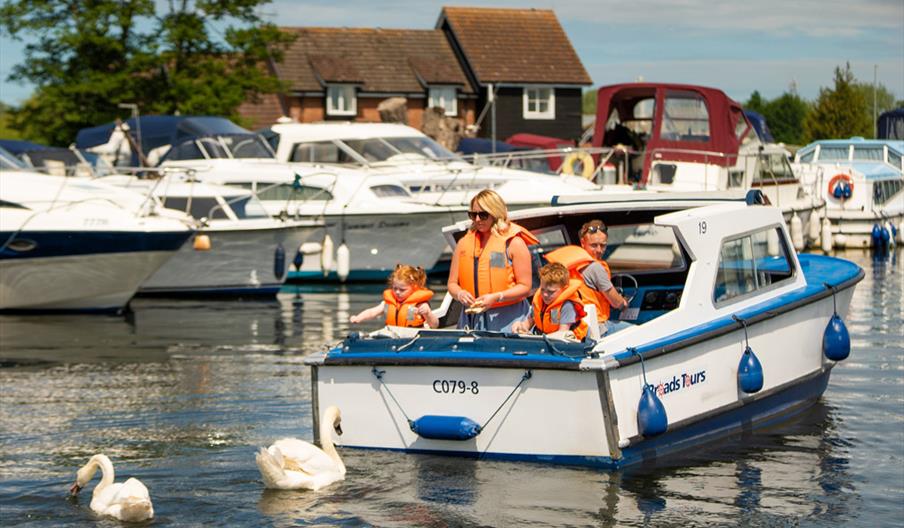
There is a speed limit of 6 mph for all larger Cruisers. The Norfolk Broads Authority is attempting to replace all Petrol and Diesel Boats by Electrically Driven ones by 2040. Small Electrically Driven Boats can be hired for day Trips where again you operate the Boat by yourself. They normally can seat about six people.
Classic and Modern Motor CruisersHiring a Boat for the Day from Many different Locations in the Broads
On Shore Attractions
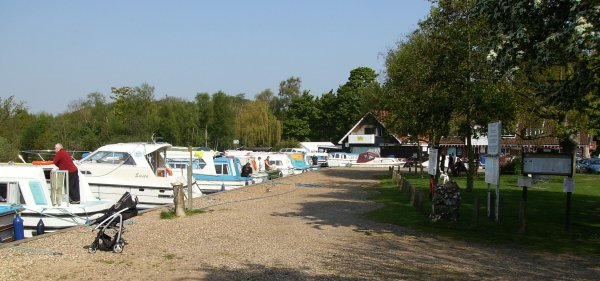
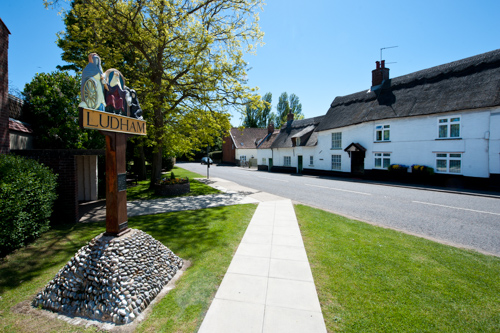
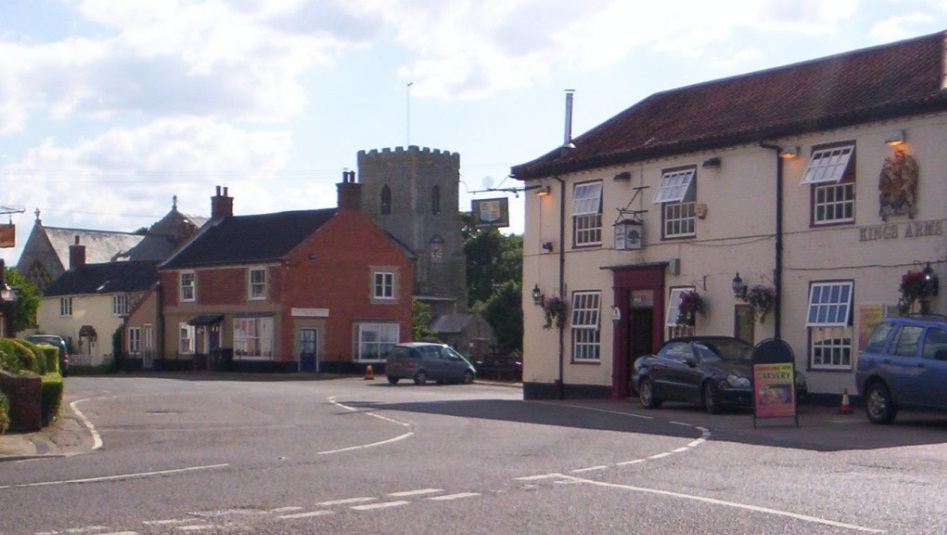
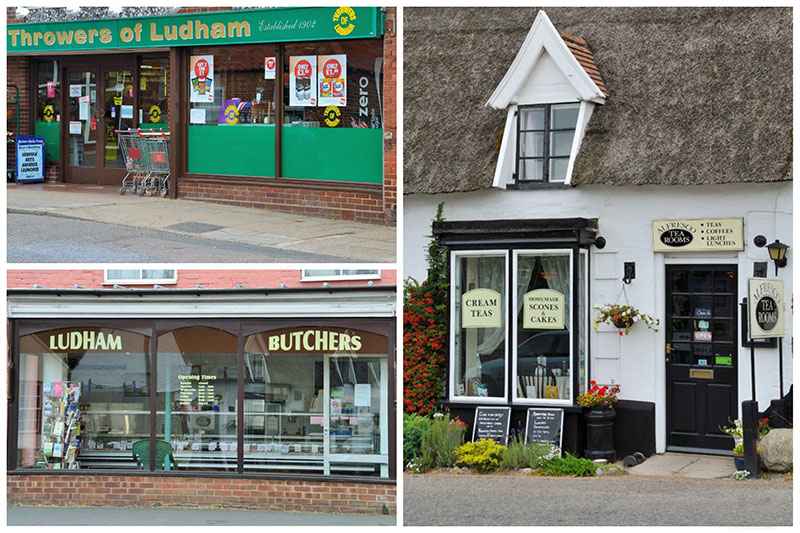
In the Early Days the amount of On Shore attractions were mainly stopping at the Main Villages located near the Rivers and Inlets and the Broad. You Moor the Boat and then walk to the nearest Village for Sightseeing, Shopping and call at the Local Pub. Ludham Where I lived was one such Village. The Throwers Shop belongs to my School friend. Even today you can Moor the Boat at Womack Staithe just off the River Thurne and walk to Ludham Village taking 10 mins. You can see the Wildlife and try Fishing from your Boat. You can still do this for most Villages near the Rivers and Broads.
Womack Staithe – Ludham VillageThe Road and entrance to Ludham Village from Womack StaitheLudham Village and the Kings Arms Pub and RestaurantThatched Houses and Small Cafe round the corner from the Kings Arms in Ludham VillageShops in the Village of LudhamBroads Wildlife found all over the National Park including Ludham Staithe
River Bank Attractions
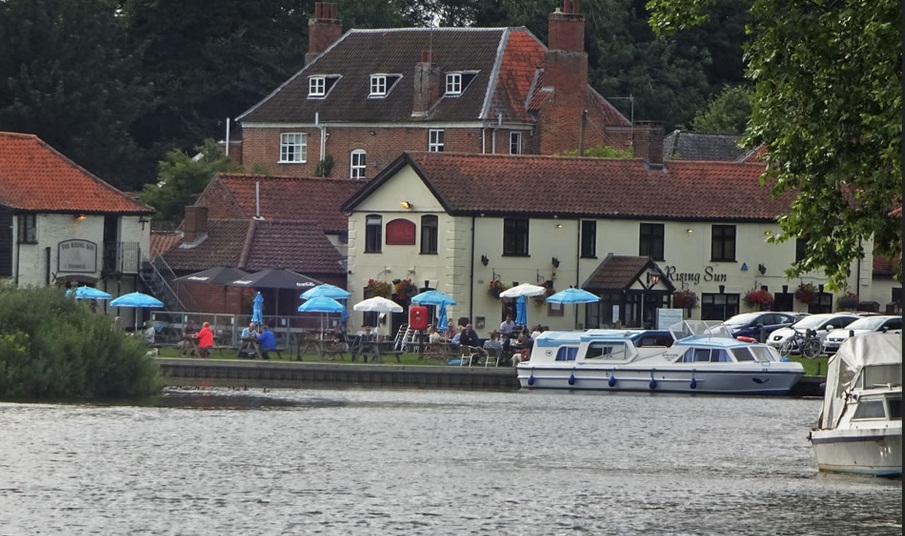
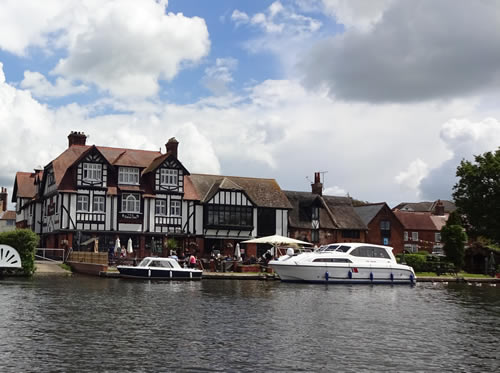
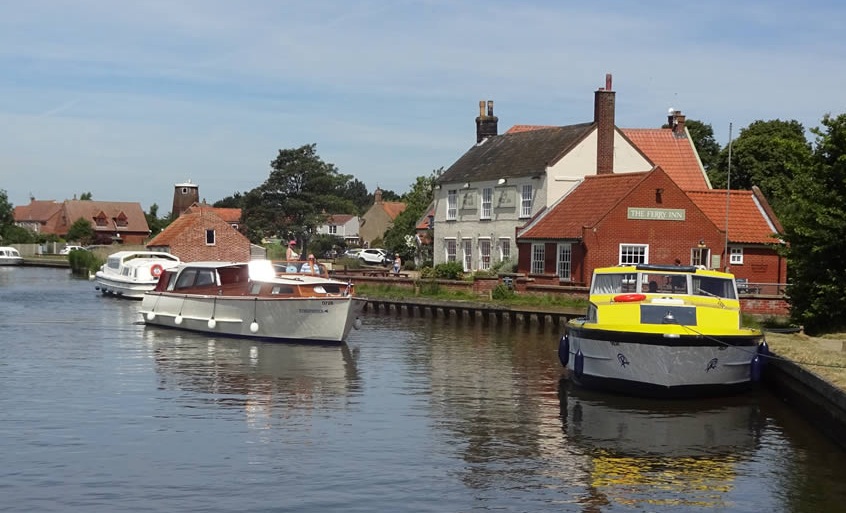
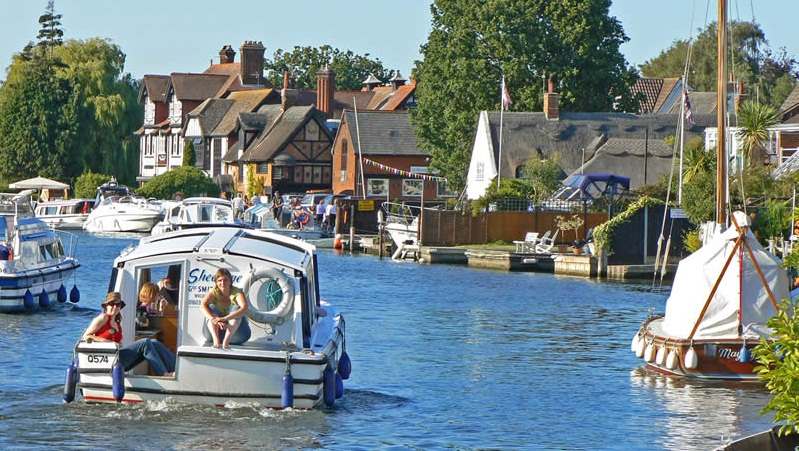
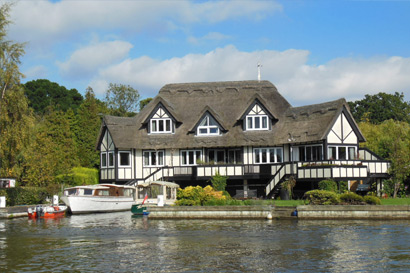
There are many Mooring places on the River or Broad Banks that you can stop and visit the Pubs and Restaurants some of which are shown below. These can be accessed by Land as well as from the Water, where local people also visit. This is especially true during the colder seasons, when the visitors are far less. Also when traveling along in your boat there are many places to see, including the Countryside, different types of River Banks and Houses and Buildings some of which are beautiful Old Thatched Cottages and Houses.
The Ferry Inn – Horning near Ludham – I have visited it many timesThe Rising Sun Pub and Restaurant – Coltishall near WroxhamThe Swan Pub and Restaurant – Horning near Wroxham – I have visited it many timesPub and Restaurant at the small Town of Acle on the River BureCruising through the On Shore Villages – Horning Village Water FrontWater Front House with Thatched Roof near Wroxham
Typical Cruiser Hire Cost and Training
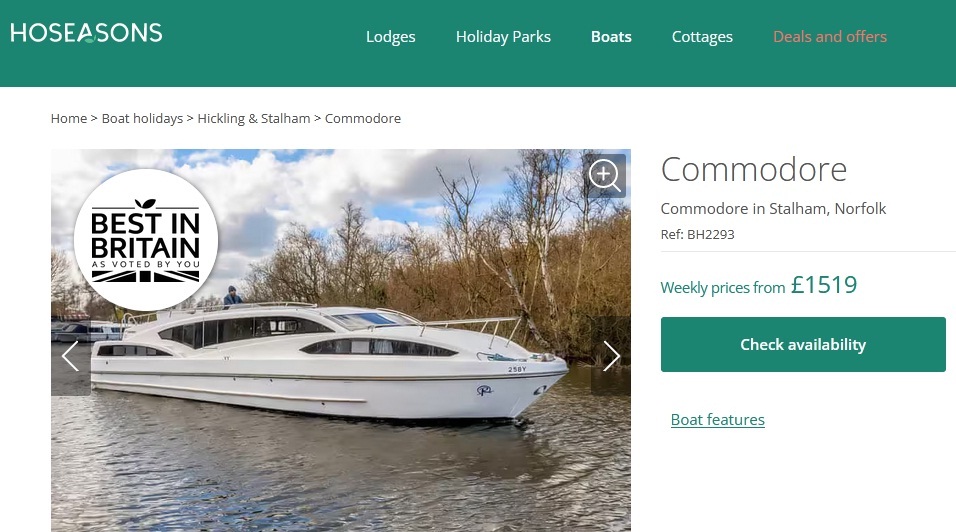
There are many places you can Hire Cruisers and Day Boats from which are shown on the map and appear on the Internet. Hoseasons is just one of them. The Cost depends upon the Hire Length. How Many People etc just like a Hotel Booking. Additional Fuel maybe at your own Cost. Below is Weekly Cost for two people for the Cruiser Shown. The Hire company will Train you to Operate and Maintain the Cruiser and you do not need any previous experience. Insurance if required maybe an extra cost, just like hiring a Car.
Website Page for Cruisers
Riverboat Excursions
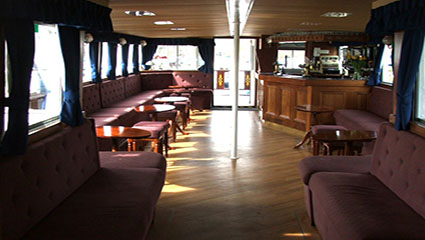
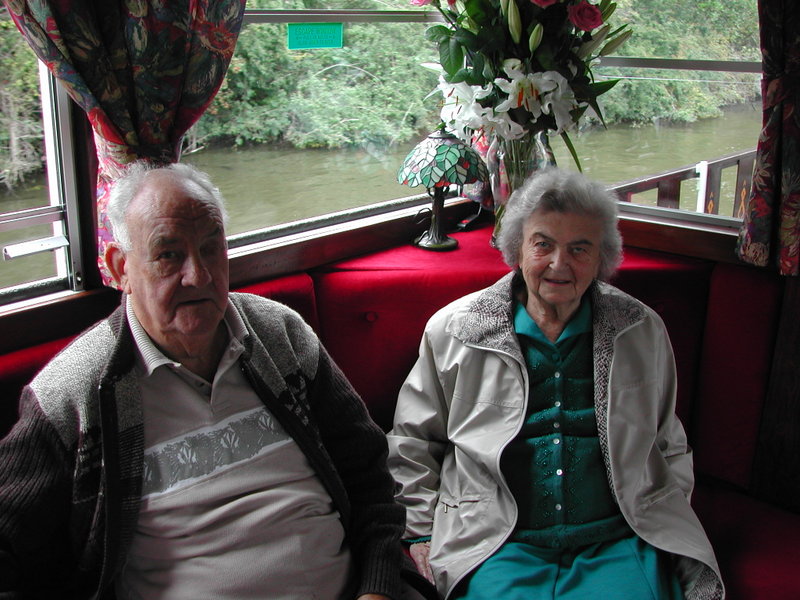
For those who wish to see the Broads there are Excursion Riverboats. The one shown below is based at Horning next to the The Swan Pub and Restaurant. There is a large area inside for sitting with a small bar and areas outside for more options of sightseeing. My family went on board in 2003 and image shows my Mum and Dad inside.
Horning Riverboat near Swan Pub and RestaurantRiverboat – Inside Lower DeckMum and Dad inside Lower Deck of Riverboat in 2003
Fishing (Angling) on the Rivers and Broads
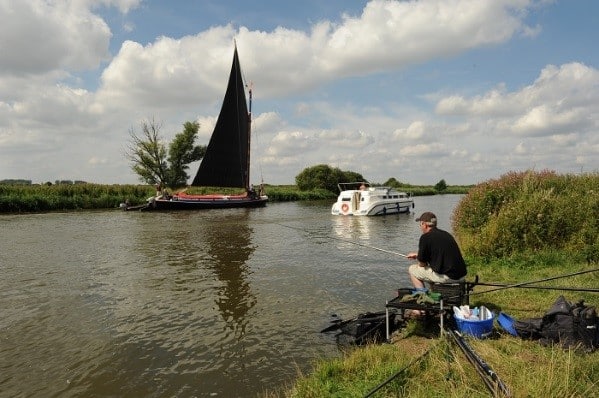
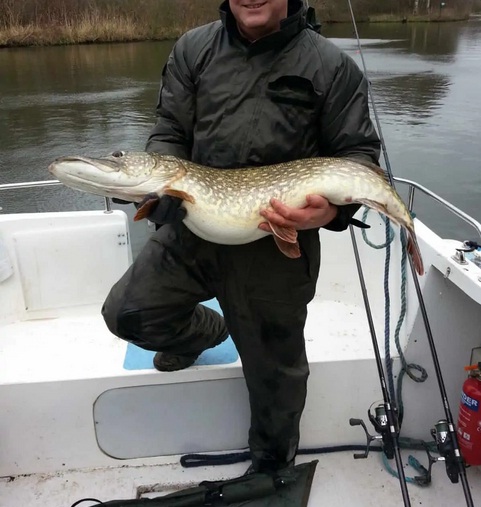
Course Fishing using Rod and Bait or Rod and Fly is allowed between the 16th June and the 14 March ever year. All other times the Rivers and broads are closed for Fishing. You need a Government Fishing Licence and you can only Fish in designated River or Broads Bank Areas. However you can Fish anywhere from a Boat. There is an abundance of Fish of many different types Including the infamous Pike, which quite a large Predator Fish and much sought after by Anglers. Fishing Competitions are held and Fishing Holidays are arranged during the Fishing Season.
Typical Fishing Spot of the Norfolk BroadsFishing at St Bennets Abbey Ludham where I used to go Fishing as a boyA Typical Pike Fish caught in the Norfolk Broads
The Broads in Winter
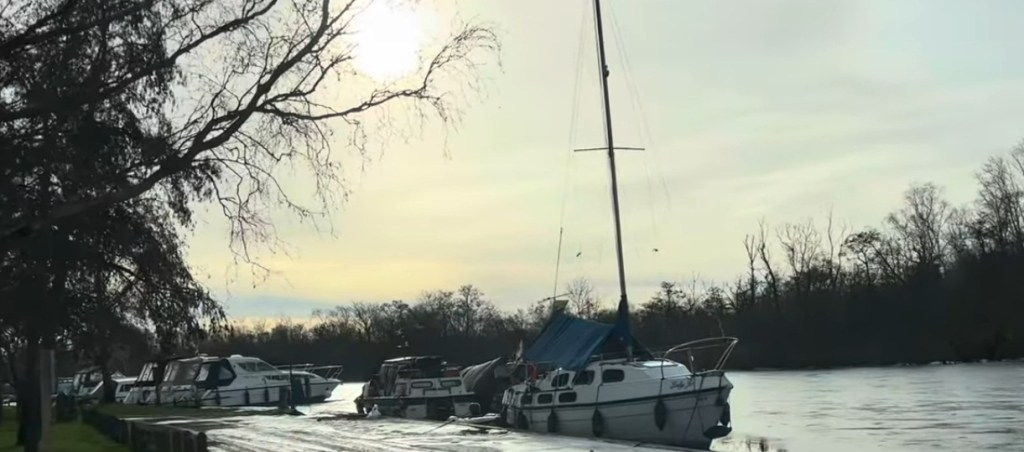
The Broads can be very beautiful in the Summer months when there are a lot of tourist but also a raw beauty in the Winter when the Trees have lost their leaves. Winter is also a time when the wildlife plays a dominant role, especially the water birds of which there are many that Migrate to the Rivers and Broads. In Winter it can be very cold in the flat countryside which surrounds the Rivers but many people go to see the migrating birds.
Womack Staithe Ludham in the WinterBirds on the Norfolk Broads in WinterWinter Moorings at LOddonHuge Amount of Migrating Birds during Winter on the Norfolk Broads – Early Morning
Found Memories of the Broads
People who live in the small Towns Villages of the Norfolk Broads like I did in the 1940’s and 1950,s are very conscious of the special environment and habitat in which they live and work. In those days it was in its infancy as a Tourist Area which made it so peaceful and a place where you could go Boating and Fishing in almost your own world. Today the Norfolk Broads from what I see and hear from my extended family is that it is now very commercialised in terms of Boating but also in the small Towns and Villages like Wroxham. However the beauty of the Broads is still there for people to enjoy.
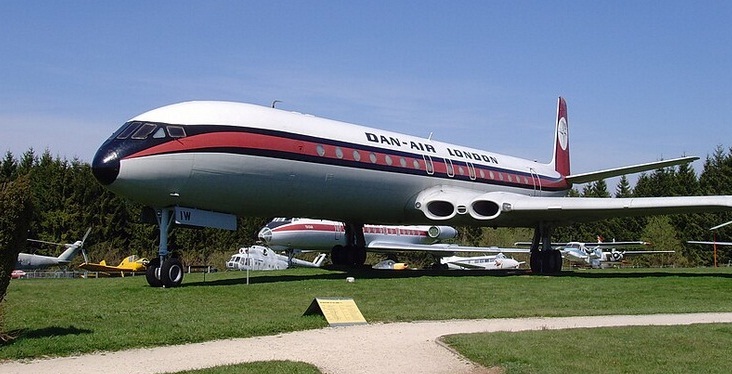
The following is the story of the Evolution of Jet Airliners from 1952 to the present day There are so many types of Aircraft so I have selected what I think are the most consequential ones to tell the story. Today we think nothing about flying on an Jet Airliner as though we are getting in a bus or train, going from one destination to another. What you may not know the first prototype Jet Airliner, the UK, de Havilland Comet Mk 1 was in 1949 (75 years ago) with its world’s first Jet Airliner Commercial Flight in 1952. The Mk1 Comet was a Narrow Body (NB) Aircraft which was Pressurised, the first time anyone had done this. It was found after an accident and fatalities that the fuselage design including the materials used were not adequate even after all of the testing. Even Boeing admitted later that they learnt from the Comet experience. Later versions were upgraded to prevent the Pressurisation and Metal Fatigue affecting the Comet.
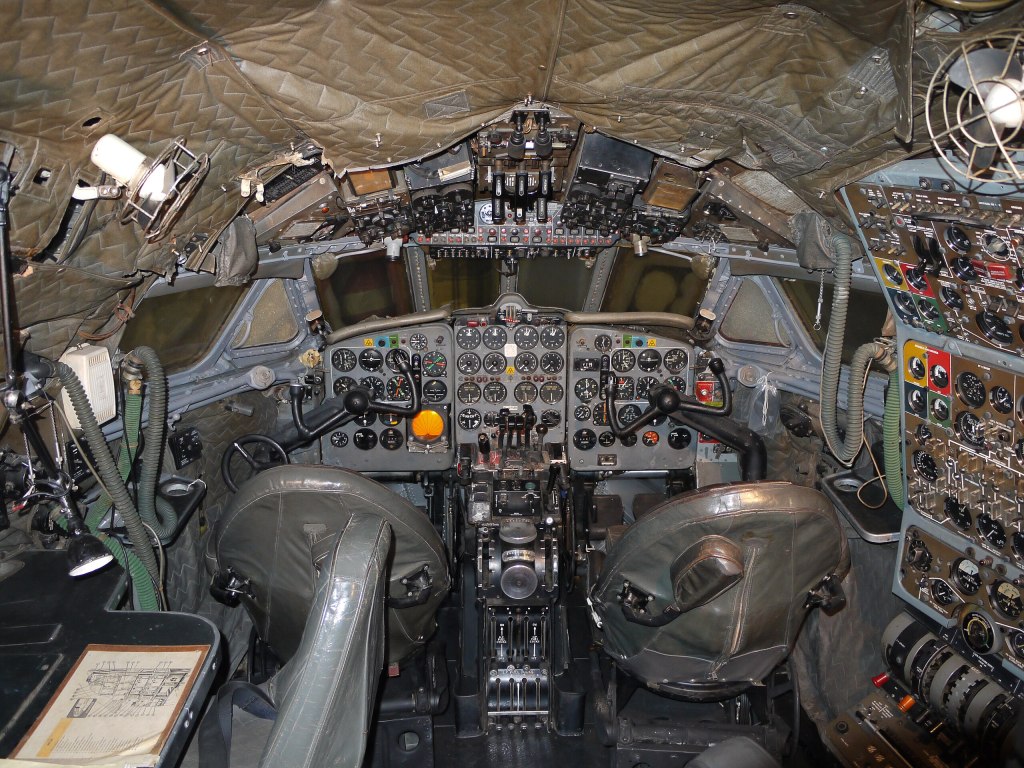
Mk 1 Comet Prototype 1949, The worlds first Commercial Jet Air LinerMk1 Comet Cockpit: left: Pilot & Navigator right: Co Pilot & Flight Engineer
de Havilland Comet Mk 4
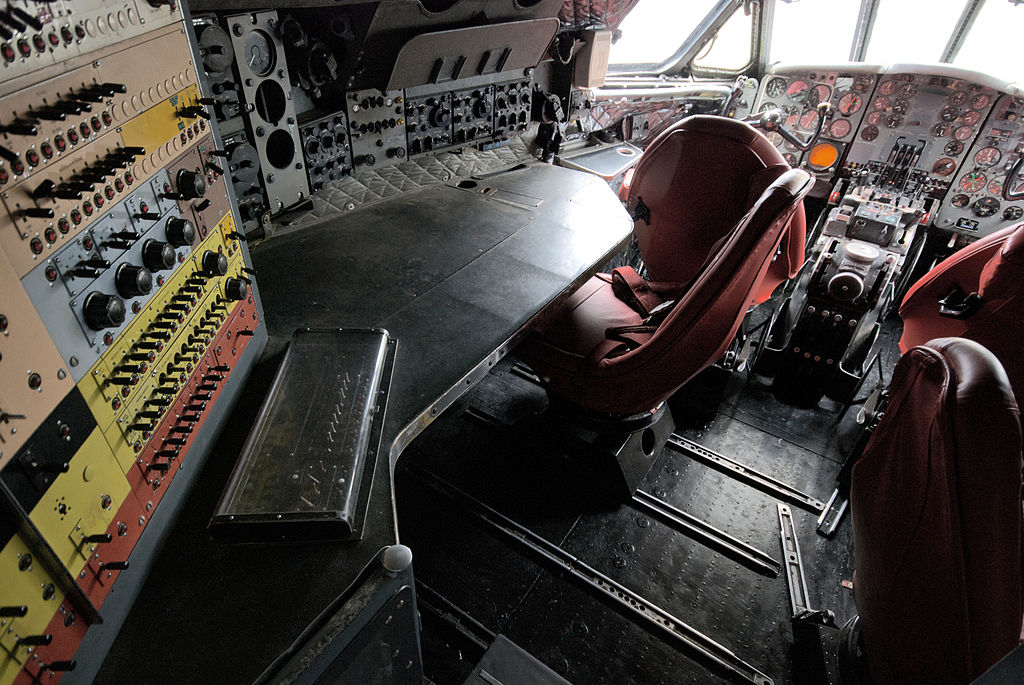
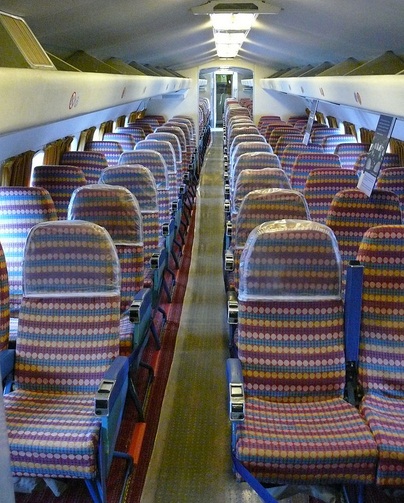
The Comet Mk4 was introduced in 1958 and flew commercially until 1981. The de Havilland Comet Mk 4 had been redesigned with round windows, which created and industry standard. It had four Rolls Royce Avon Axial Flow Jet Engines. The Comet Mk2, entered commercial service in 1958 with British Overseas Airways Corporation (BOAC), but was continually upgraded to Mk3 and Mk4 versions until it ceased commercial operations in 1981. The latest version could seat up to 80 people. The Comet Mk4 had Mechanical linkage Power Flying Controls and a simple type of Autopilot. The Cockpit Instruments were almost all mechanical (Analogue). In the later versions it was fitted with a nose Radar and upgraded Radio systems.
Mk 4C CometRolls Royce Avon Axial Flow EngineMk4C Comet Cockpit: left: Pilot & Navigator right: Co Pilot & Flight EngineerMk 4 Comet Passenger Cabin
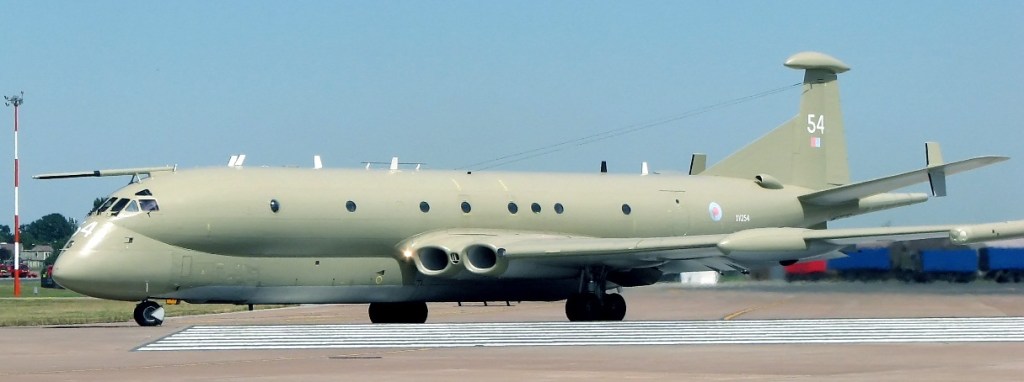
After the cessation of the Comets Commercial Flights ,The Royal Air Force (RAF) acquired a total of three Comet Mk 4C Aircraft and converted them into the RAF Nimrod Maritime Aircraft which operated until 2011. I went on this Aircraft and designed and produced a Simulator for this Aircraft’s Surveillance System for the RAF.
RAF Nimrod Maritime Aircraft
Boeing B707
The USA Boeing Company produced the Boeing B707 was a narrow body four engine Aircraft which was slightly bigger that the Comet Mk4 and could carry more than 100 people. This was the second Jet Airliner which commenced Commercial Flights in 1958 with PAN AM. The B707 had Navigator position in the Cockpit for long haul flights but due to the introduction of the new technology in the 1960’s, such as the Inertial Navigation System (INS) and other Radio Navigation Aids, the Cockpit only had Pilot, Co-Pilot and Flight Engineer Stations. The Cockpit Instruments were almost all mechanical (Analogue). However, the B707 had a more complex PB-20 Autopilot operating the Power Flying Controls and maintaining the Aircraft’s Heading and Stabilising the Pitch, Roll and Yaw of the Aircraft.
Boeing B707 Boeing B707 Cockpit: left: Pilot right: Co-pilot and Flight Engineer
The Boeing B707 versions had four Engines, the Pratt & Whitney JT3D or the Rolls Royce Conway Turbofan Jet Engines. These were the forerunner to the modern day Turbofan Engines as they use a Large Fan at the front of the Jet Engine. This was different to the Axial Jet Engine that does not have a large Front Fan which generates even more Thrust (Jet Engine Output). The cabin was fairly basic like the Comet Mk4C but had 3 abreast seats either side of the Aisle. Note no Electronic Entertainment Systems, Magazines only!!!
B707 Cabin Seating up to 130 Passengers
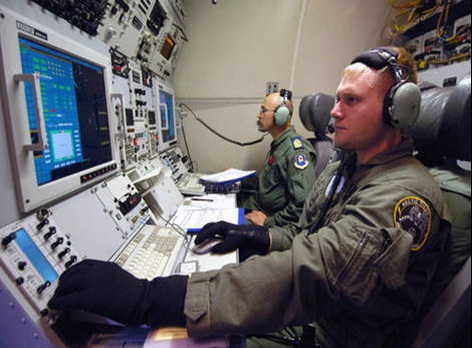
The Boeing B707 was adopted for the USAF E3 Sentry Aircraft (AWACS) which has a very large Radar Dome fitted above the Fuselage. Inside there are very sophisticated Electronics. The RAF also had some Upgraded versions of the E3 Sentry (AWACS) which I went on many times to help me design and produced the Electronic Systems, Simulator for the RAF.
USAF E3 Sentry Aircraft
Vickers VC10
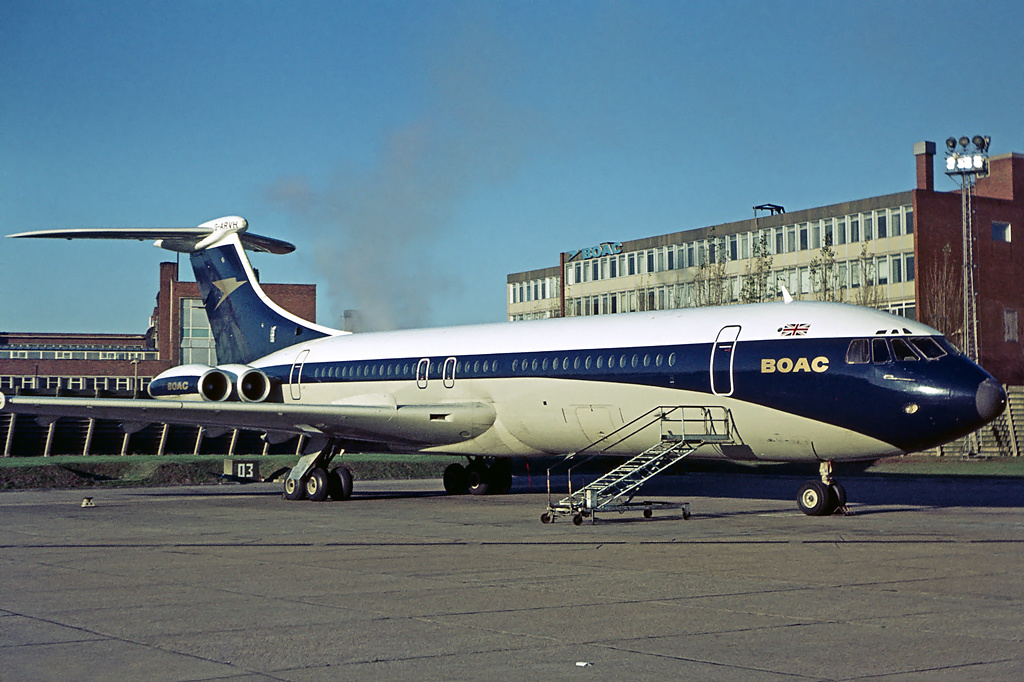
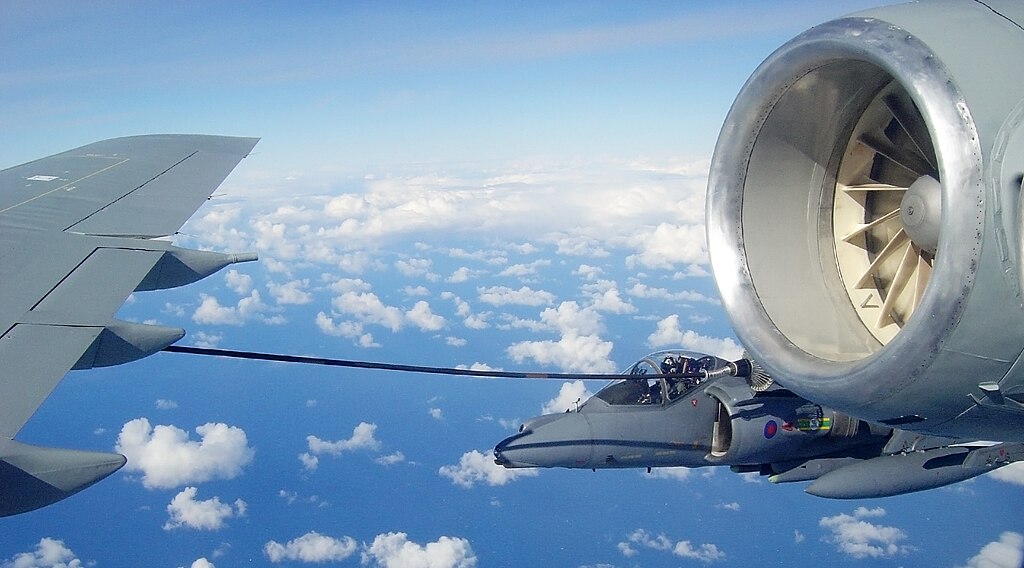
The Vickers VC10 was a combined UK Civil and Military Aircraft designed and Manufactured by Vickers-Armstrongs (Aircraft) Ltd, to be able to take-off and land on short runways or non concrete runways. It also was designed for High Altitude, High Speed and Long Range, International Travel. It held the Atlantic Crossing Speed for 41 years until 2020. It really was the link between the start of Jet Airliners to the start of the New Technology of the modern day Jet Airline Aircraft. The VC 10 operated Commercially from 1962 to 1985 and the RAF 1962 to 2013 as Passenger Aircraft and Fuel Tankers for Air to Air Refueling.
BOAC VC10
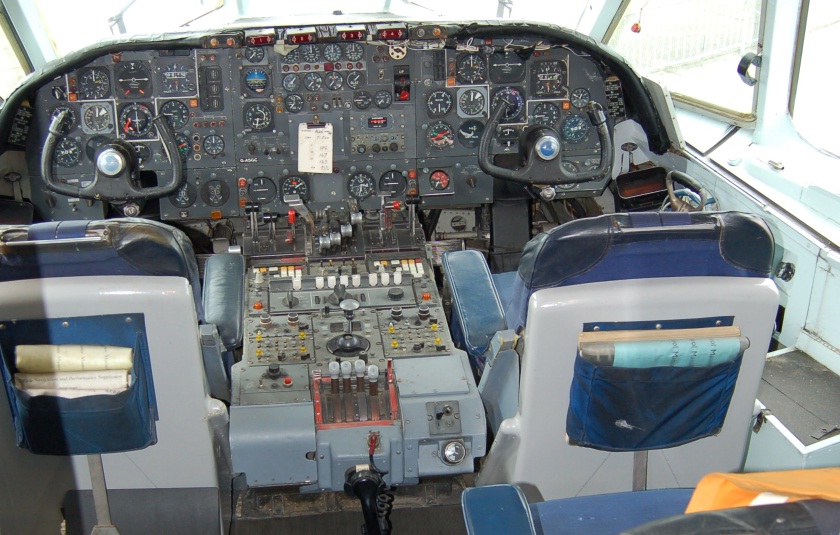
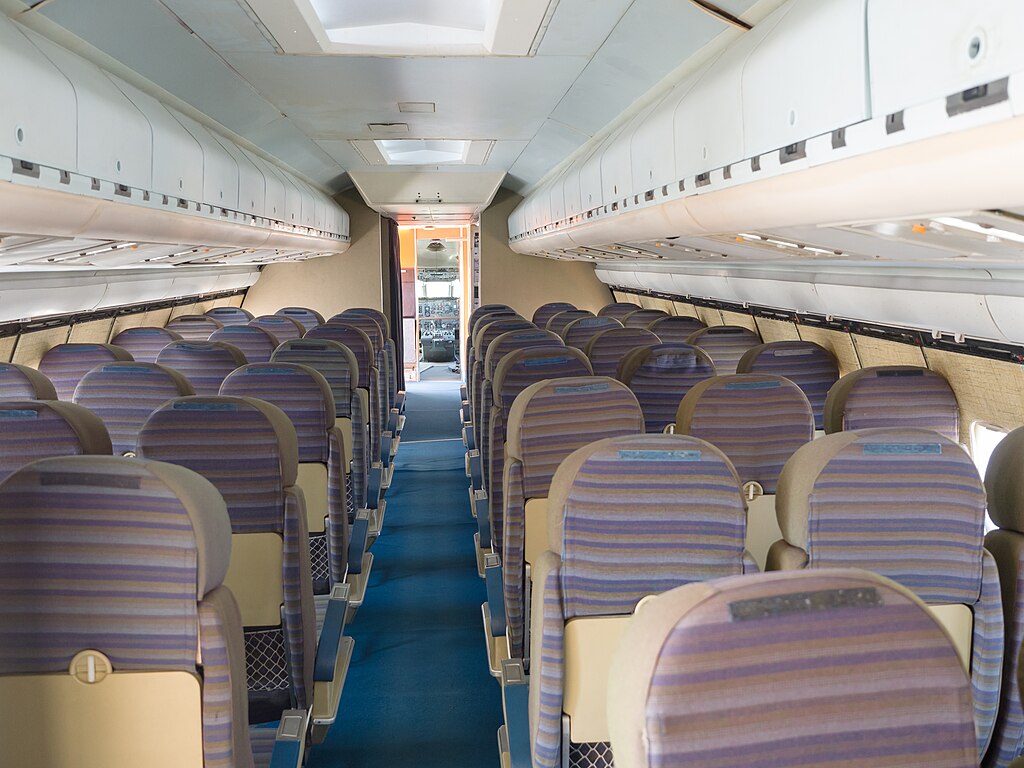
The VC10 was unique in that it had four Tail Mounted, Rolls Royce Conway Turbofan Engines including Reverse Thrust, with the Aircraft’s Pitch Flying Controls on the Top of the Tail. The onboard Avionics (Aviation Electronics) were extremely advanced at that time. It had a Elliot Quadruplicated Automatic Flight Control System (Twin Autopilot) with Auto-Throttle, which was designed to enable Fully Automatic Zero-Visibility Landings using the Airports Instrument Landing System (ILS) Localiser and Glideslope Radio Beams. The Flight Instruments were mainly Analogue. On the later versions of the VC10 up to 200 Passengers could be accommodated in the well lit Cabin.
VC10 Cockpit: left: Pilot right: Co-Pilot & Flight EngineerVC10 Cabin with Overhead Hand Luggage Lockers
The RAF version of the VC10 had increased Engine Thrust and Passenger Seats facing Rearward for Safety Reasons especially when Braking on Short Runways. The Passenger versions operated from 1966 to 1970 and then they were converted into Air Refueling Aircraft. I have flown on the RAF VC10 shown in the image 5 times in the 1960’s, Singapore to UK, UK to USA Las Vegas, Nellis USAF base via Goose Bay Canada, and return USA to UK, UK to Singapore and Singapore to UK. It was a Superb Aircraft.
RAF VC10 Passenger VersionRAF VC10 Refueling a Harrier Aircraft
Boeing B737 Series
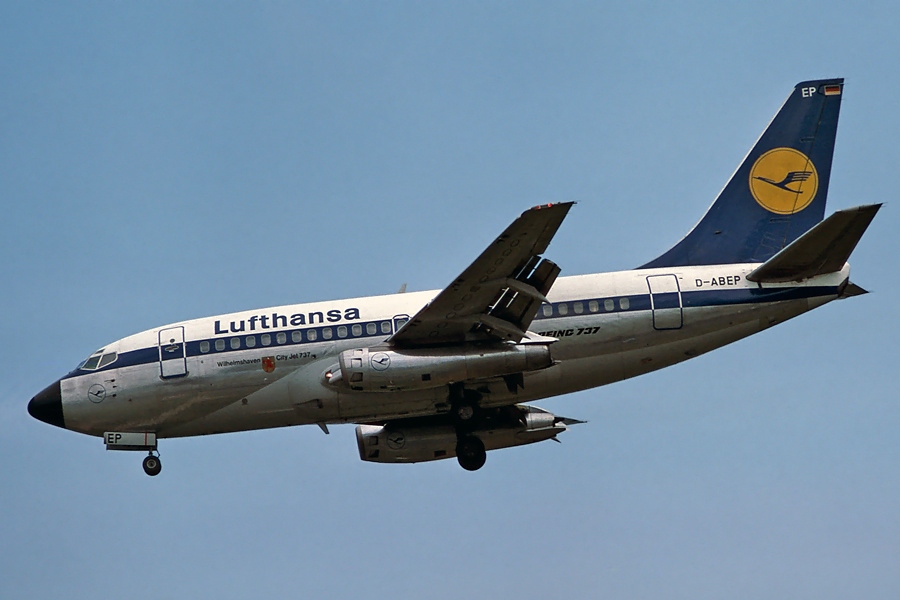
The first Boeing 737-100 was delivered to Lufthansa in 1968 it was the follow on from the Boeing B707 Narrow Body (NB) Aircraft. However, it has had many upgrades over the years and has and still is the workhorse for Airlines throughout the world. At present 12,000 are in service and 16,000 on order. The B737-100, 200 was the First Generation (1968). The second Generation was the B737-300, 400 and 500 (1979) the third (Next Generation) B737-600, 700, 800, 900 (1993) and the Forth Generation and latest is the B737 Max Series 7,8,9 and 10 (2011).
Boeing B737-100 First GenerationBoeing B737-200 Cockpit First Generation
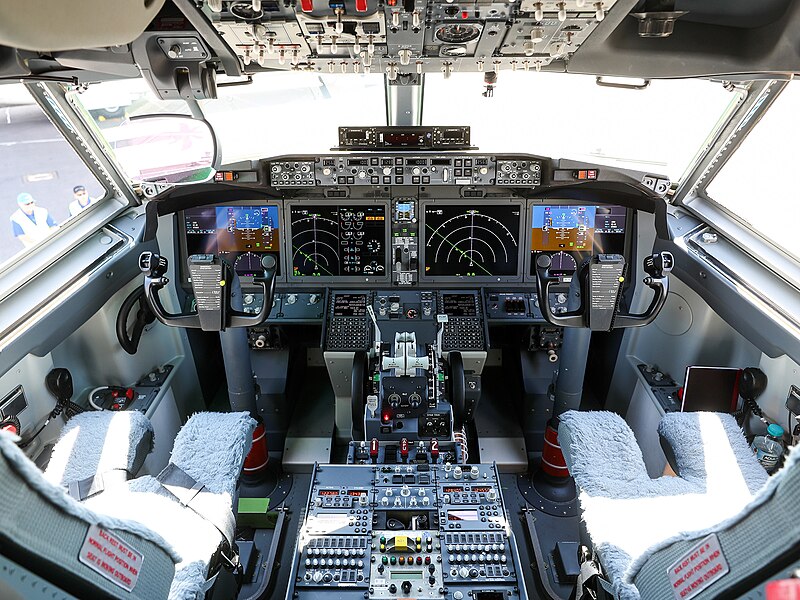
The older Generation had many older design Flight Instruments but had an Autopilot, Autothrottle and ILS Landing facilities. The Flight Controls on all Generations are Power Assisted Mechanical Linkage. The Later third and fourth Generations have most of the Flight Instrumentation and Engine Information and Navigation Information displayed on Glass faced Monitors generated by the Aircraft Electronic Systems which is know as the ‘Glass Cockpit’. The latest Cabin designs vary between Airlines but all of them employ new LED for lighting and in some cases back seat screens for In Flight Entertainment. I have flown on the B737-800 several times for holidays and work.
Boeing B737 Max 7 (Fourth Generation)Lufthansa B737 Forth Generation Cabin
Boeing B747 Series
The Boeing B747 affectionately known as the ‘Jumbo Jet’ changed the world International Travel more than any other Aircraft to date. Almost 1600, B747 have been delivered up to the last production in 2019. However some Airlines are still flying Passenger Services and Modified Freight Aircraft. The Series started in 1969 with the B747-100 and progressed to B747-200 (1971), 300 (1983) and the most important of all the B747-400 (1984). A B747-800 is likely to come into service soon. The B747 was the first Wide Bodied (WB), Two Deck Jet Airliner which can seat over 400 Passengers. In October 1958 PAN AM Airlines wanted an Aircraft 2.5 times bigger that the B707.
Boeing B707 left and B747 right (2.5 Bigger than the B707)
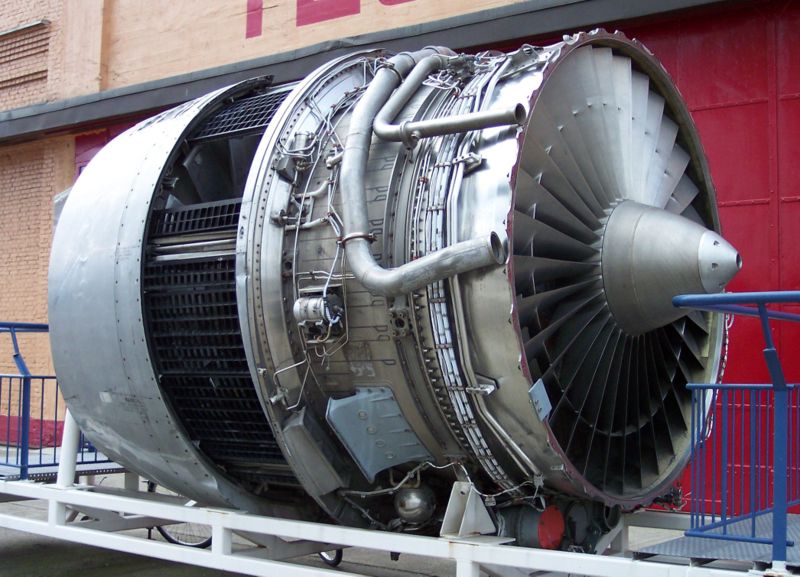
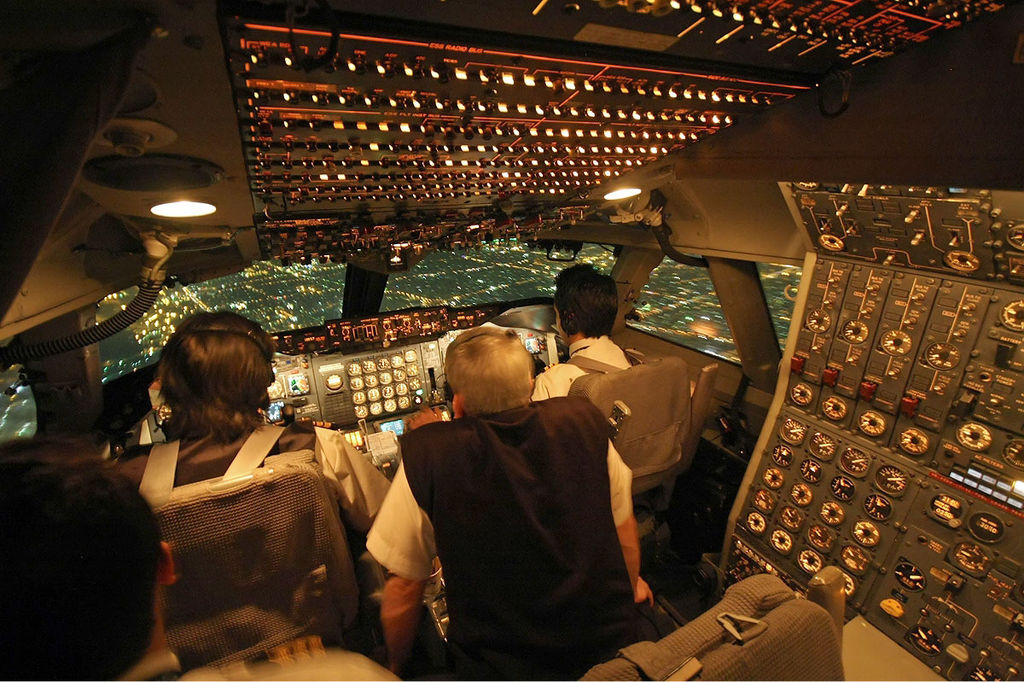
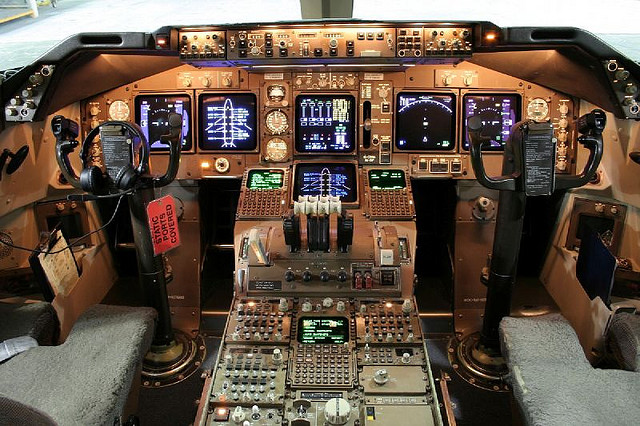
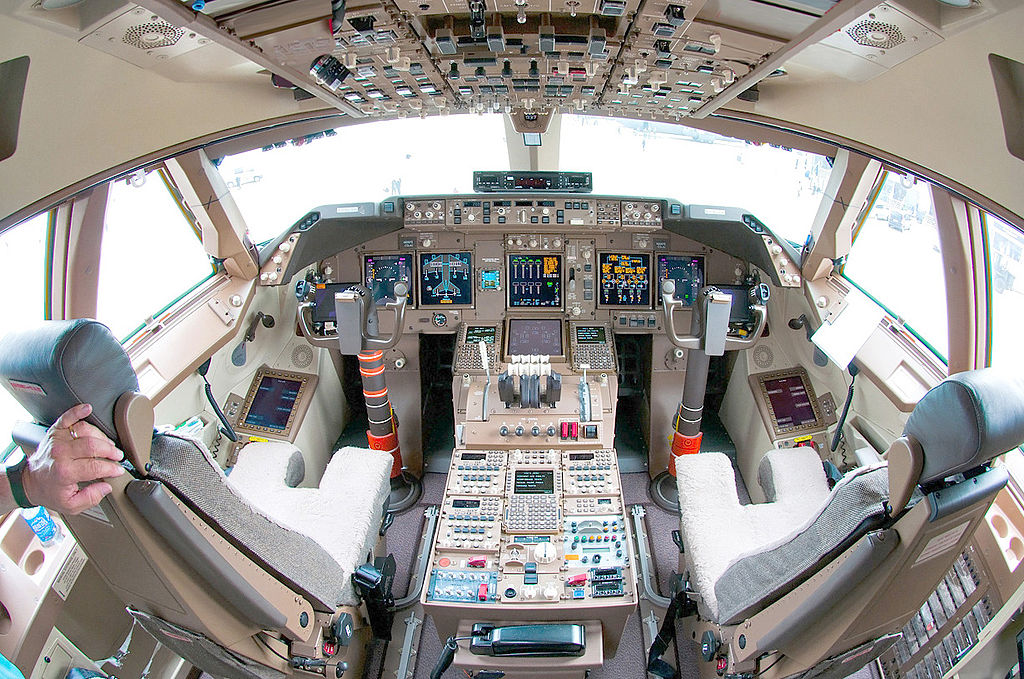
It has four Engines provided by different Manufactures such as the Rolls Royce RB211 Turbofan each producing 41,000 lbf to 60,000 lbf of Thrust. A foot-pound (lbf) is a unit of Energy that measures the amount of Energy required to push one pound with one pound-force for a distance of one foot. The higher the lbf the more Thrust Power from the Engine. The B747-400 had a full Glass Cockpit with Advanced individual Flight and Autopilot Computers, Inertial Navigation Computers, Radio Navigation and Flight Management System. The Flight Controls were Mechanical Power Assisted. The Lower Cabin had First Class, Business Class and Economy Passenger Seating. the Upper Cabin was for Business Class and Flight and Cabin Crew Areas.
Rolls Royce RB 211 Turbofan EngineB747-200 Cockpit with Pilot, Co-Pilot and Flight EngineerB747-400 Glass Cockpit – Pilot and Co-Pilot No Flight EngineerBoeing B747-400 An Economy Part of the Cabin
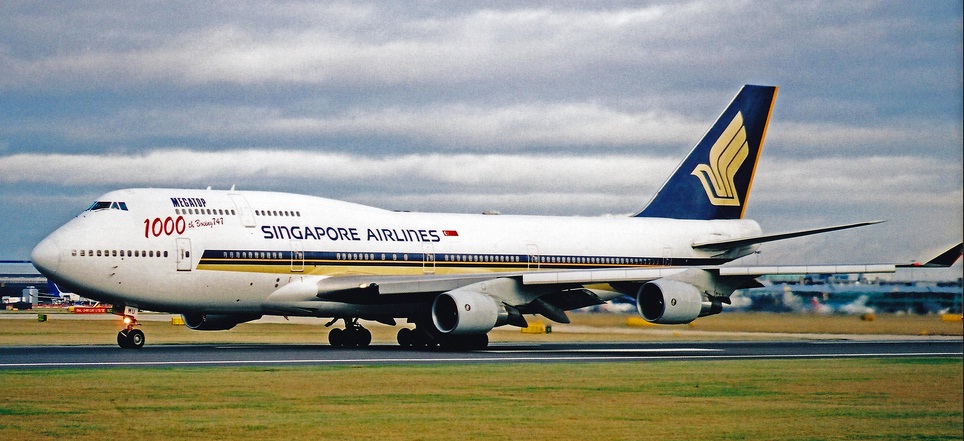
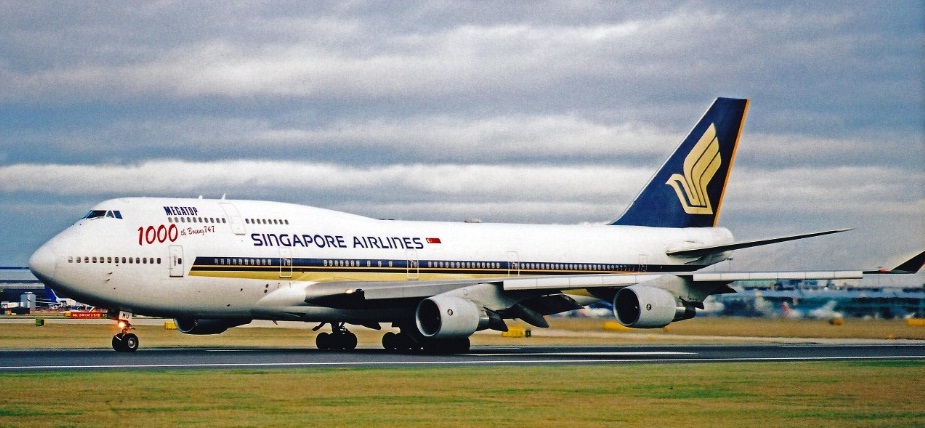
I have flown in the Singapore Airlines (SIA) B747-400 flights almost 70 times between the UK and Singapore and return during my business dealings in Singapore and Malaysia, in Economy and Business Class. This included the the Contract for Training Software with Singapore Airlines Engineering and B747-400 Cockpit Simulator for the Civil Aviation Authority of Singapore (CAAS). I have also been fortunate during the early days to have flown in the B747-400 Cockpit for a while with my friend and Captain Pilot (Rudi) who was flying it from the UK to Singapore.
B747-400, 1000th Aircraft which I flew First Class, Seat 01, from Malaysia to Singapore Courtesy of SIA
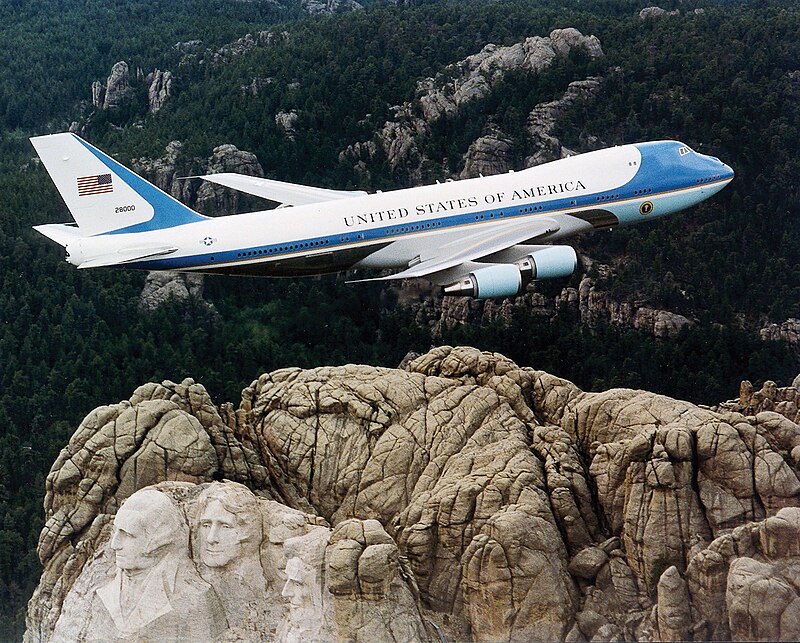
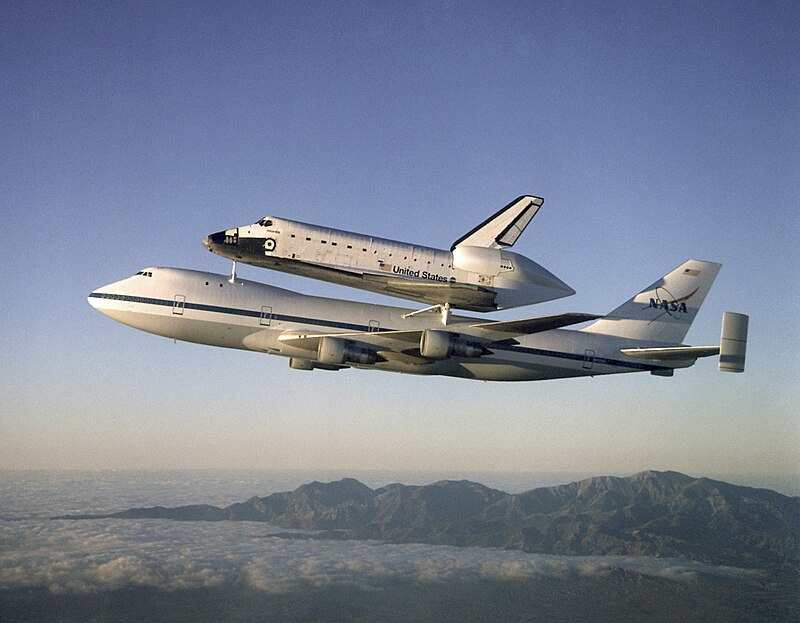
The other two 747-200B (VC-25A) upgraded customised Aircraft are the USA Presidents Aircraft ‘Air Force One’, which have been in service since 1990. Two new B747-800 Aircraft are on order to replace the existing ones. NASA also used a specially modified B747 for transporting the Shuttle Space Craft.
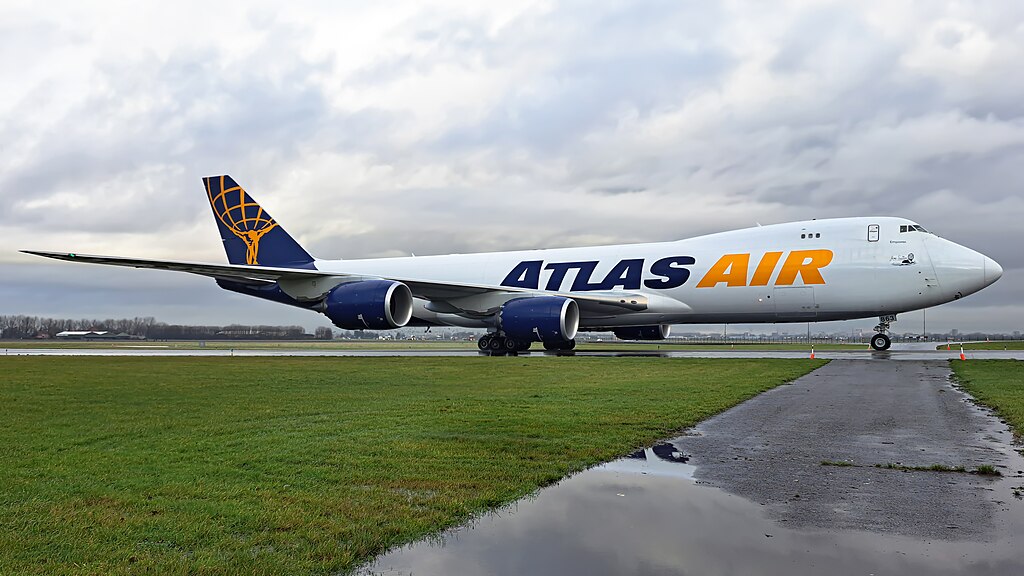
The B747-8 project has been very limited due to the requirements of Airlines for more advanced Aircraft which we will discuss later. Most of the Aircraft were for the Cargo Sector B747-800F (Freighter) but some for the International Passenger Aircraft B747-800i. The Final B747 Delivery was a B747-800F. The Boeing B747 was truly Change Maker and Favourite for International Passengers over Years.
B747-800 CockpitThe Last B747 to be Built by Boeing Delivered in 2022 (B747-800F)
Fly-By-Wire (FBW), Integrated Modular Avionics (IMA) and the Side Stick-v-the Yoke Era.
At this stage it is important to know that there was a major shift in Technology from those Jet Airliners we have discussed to that of the following Commercial Jet Airliners we are going to discuss which is still being upgraded as new Commercial Jet Airliners are being Designed and Manufactured. This involved Fly-By-Wire (FBW), Integrated Modular Avionics (IMA) and the Side Stick / Yoke Flight Controls.
Fly-By-Wire (FBW) System
As a simple to understand description of FBW is that the Mechanical Linkages between the Pilots Flight Controls and the Flight Control Surfaces are removed and replaced with Electrical Sensors on the Pilots Controls which send Signals via Electrical Cables and Computer System which then processes them and then sends Signals to the Flight Control Surfaces which move the to the appropriate positions. Note these Systems are very complex. FBW systems have been experimented with prior to 1969 which was the first time FBW was used in a Commercial Jet Airliner.
Integrated Modular Avionics (IMA)
Once again a simple to understand description of IMA is that the Avionics are controlled via the Flight Management System (FMS) Controllers in the Cockpit and associated Computers which are connected via a Wire or Fibre Network System to all the other Aircraft Systems Computers. These are able to communicate with each other to Control Systems ; for example FBW and Automatic Pilot System to the Air Data System, Fuel System, Engine Control System, Navigation Systems and Communications Systems etc etc automatically. There two types of IMA System, the Common Core System used on Boeing Aircraft and the Open IMA used on Airbus Aircraft both of which are fully Integrated Systems using a version of the Avionics Full Duplex (AFDX) Switched Ethernet.
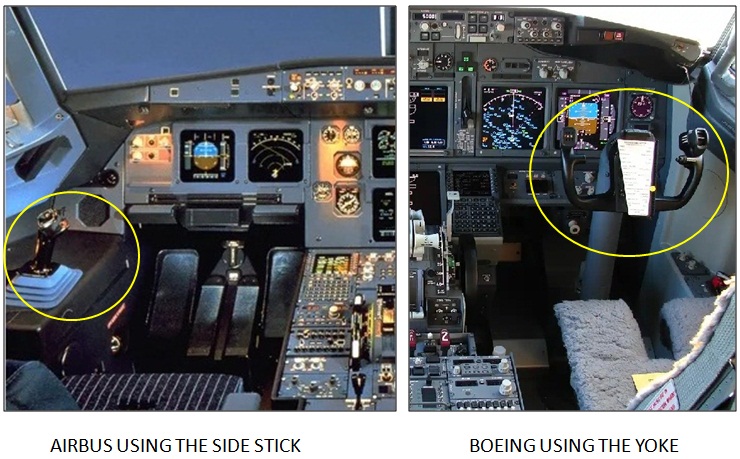
Side Stick and Yoke for Controlling the Flight Controls
Another major change in Technology was the adoption by Airbus Aircraft to use the Side Stick for controlling the Pitch and Roll Flight Controls (FBW). However the Boeing Aircraft still used the Yoke (FBW) for controlling the Pitch and Roll Flight Controls. Both Airbus and Boeing Systems use the Rudder Pedals for the Yaw Flight Control.
Concorde
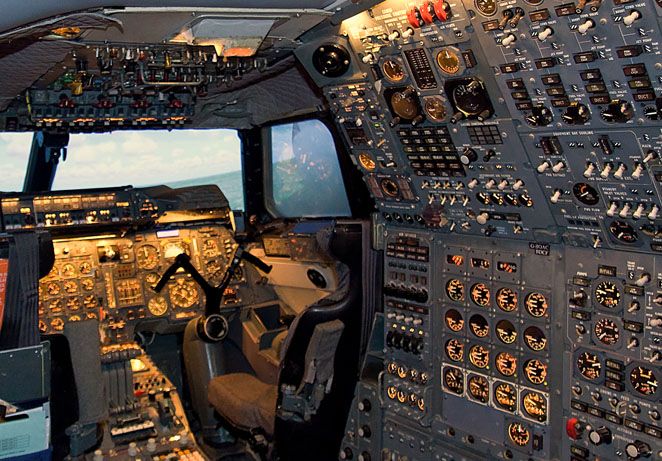
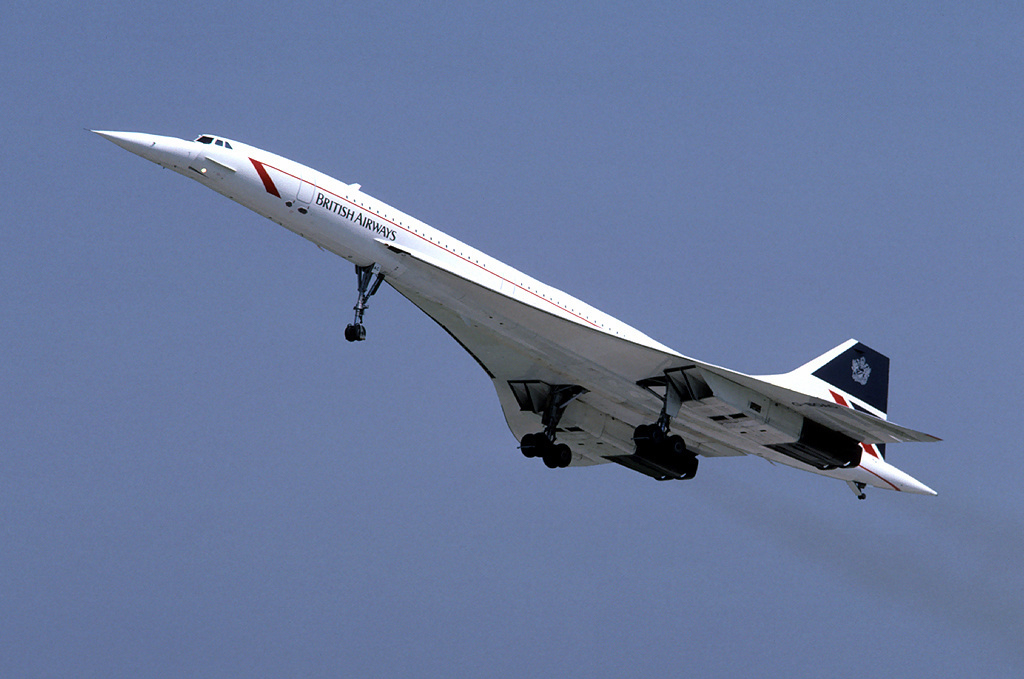
Concorde the only Supersonic Aircraft first flew in 1973 from the UK to the USA with the first Commercial Jet Airliner Flights. It was Designed and Manufactured by the British Aircraft Corporation (BAC) and the French company, Aerospatiale. The first Commercial Flights were on January 21st 1976 by British Airways (BA) from the UK to Bahrain and Air France (AF) from Paris, France to Rio de Janeiro, Brazil. The Concorde was the first Commercial Jet airliner to have a FBW System. It also had a very futuristic Avionics System for its time but not an IMA. Only British Airways and Air France operated the Concorde from 1976 to 2003, 27 years due to the only Concorde crashed after Take-Off due to punctured Wing Fuel Tank and resulting Fire, caused by Metal Part from previous Aircraft Take-Off. Only 14 Commercial Concorde Jet Airliners were built 7 for BA and 7 for AF.
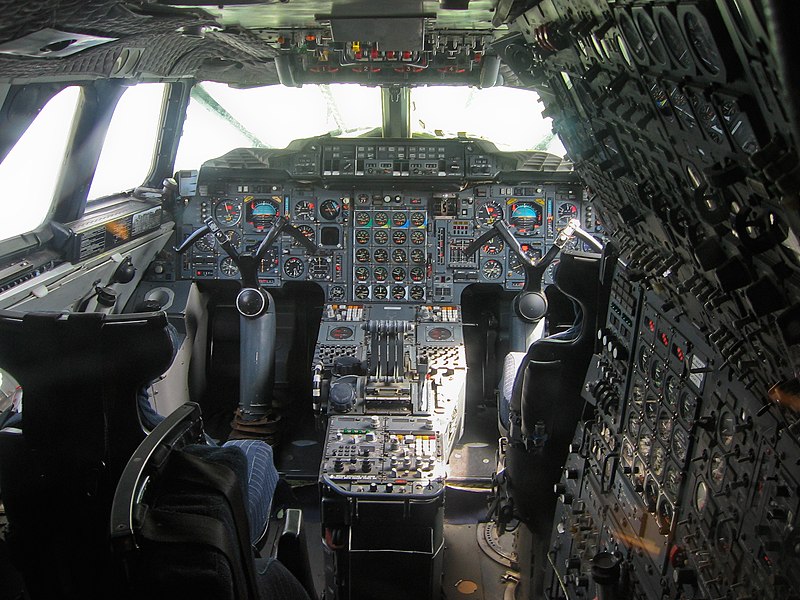
British Airways Concorde after Take OffConcorde Cockpit; left; Pilot, right; Co-Pilot and Flight Engineer
Airbus A320 Family
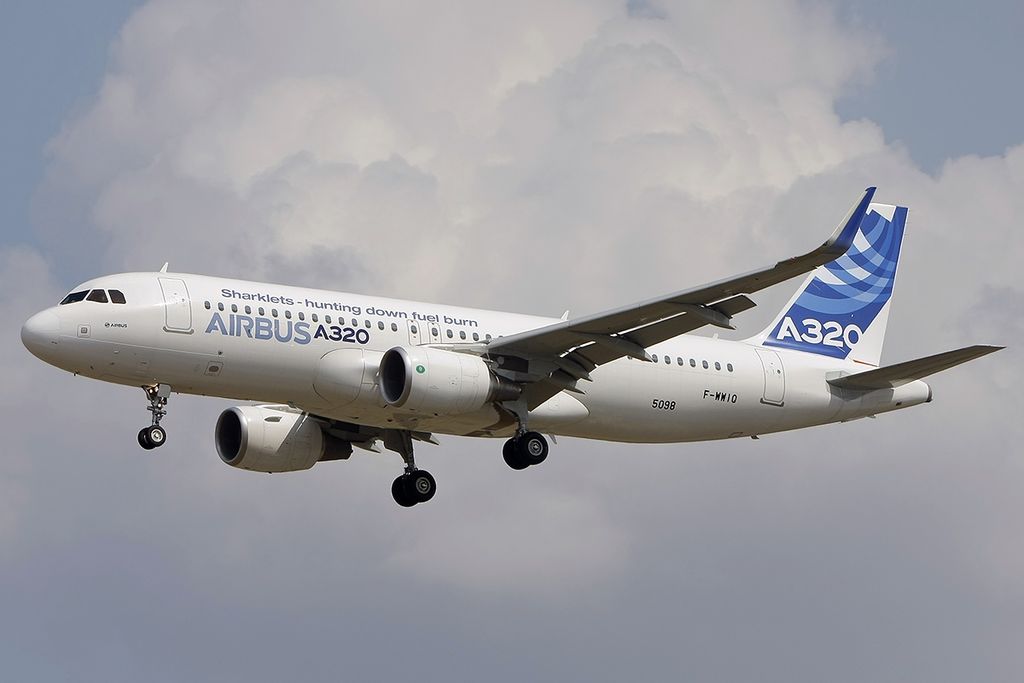
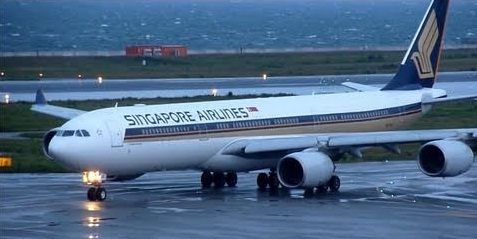
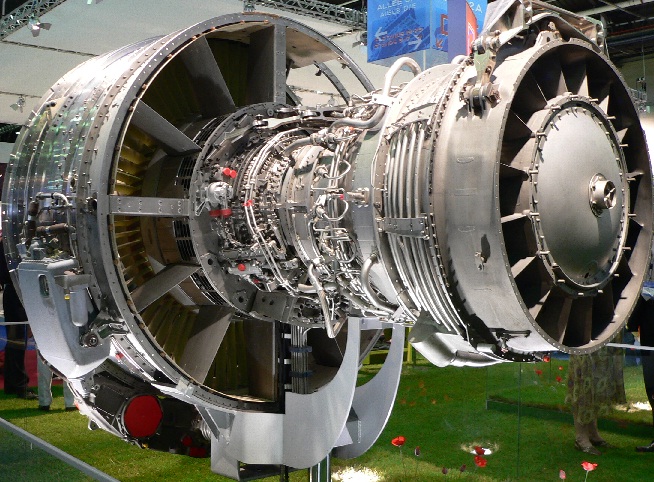
Airbus is a consortium of European Airline Manufactures including France and UK in 1970. It is in competition with Boeing in the USA and is now in 2024 almost equal. The Airbus family started with the Wide Body (WB) A300 in 1972 and the WB A310 in 1981. From there the A320 family Narrow Body (NB) Aircraft with Twin Engines, mainly the CFM56 Engine producing around 23,000 lbf of Thrust each, emerged all using the same Cockpit Layouts. It started with the largest and then decreased in length, A320 (1987), A321 (1993), A319 (1995) and A318 (2002). Other WB Aircraft A340 (4 Engines) (1991), A330 (1992), A330neo (2018), A380 (4 Engines) (2005) and the latest A350 (2013). We will discuss the A380 and A350 later. It should be noted that the A340 flew from Singapore to New York (SQ 21) over the North Pole non-stop for 18 hours Piloted by my Singapore Airlines Captain friend (Rudi) .
Airbus A320 Airbus A340-500 Singapore to New YorkRear View of the A 320 Family CFM56-5 Turbofan Engine
The Airbus A320 was the first Commercial Jet Airliner to use full FBW with Cockpit Side-Stick Flight Controllers for the Pilot and Co-Pilot which Airbus adopted for all of the Aircraft that followed the A320. The Side Stick Produced Position Electrical Signals to the FBW System for Pitch (Elevators) and Roll (Ailerons) Flight Surfaces. The Rudder Pedals also had Position Electrical Transmitters for Azimuth (Rudder) Flight Surface. The Airbus Family (A320 to A318) had the Electronic Flight Instrument System (EFIS) and Electronic Centralised Aircraft Monitor (ECAM) Systems. These were a major improvement using the Glass Cockpit.
Airbus A320 Glass Cockpit and Side-Stick Flight Controllers
Boeing B777
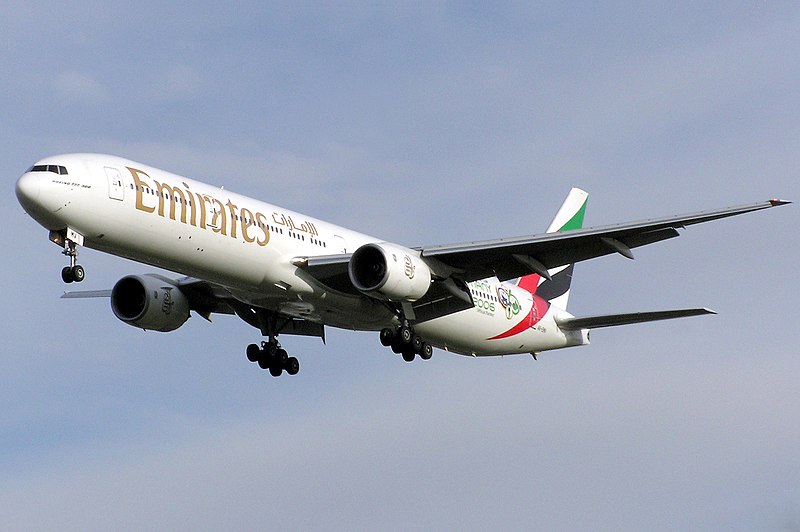
The Boeing B777 Jet Airliner played a big part in the Evolution of new Technology, especially related to the Airframe, Engines, FBW and IMA. The B777-200 was introduced in 1995 commonly known as the ‘Triple Seven’ and is the most built Wide Body, Twin Engine Aircraft in the world. It was also the first aircraft to be Designed using Computer Aided Designed (CAD) using 3D Graphics. The B777-300ER (Extended Range) is used extensively by many Airlines but Emirates Airlines have a fleet of 160 Aircraft. The B777-300 was introduced in 1997 and can accommodate 350 plus Passengers. I have flown on the B777-300ER many times and it is a superb Aircraft. I also used the B777-300ER to Design and Produce the Avionics Training Media for Malaysia Airlines (EASA Part 66) by my Company in Malaysia.
Emirates Airlines Boeing B777-300ER
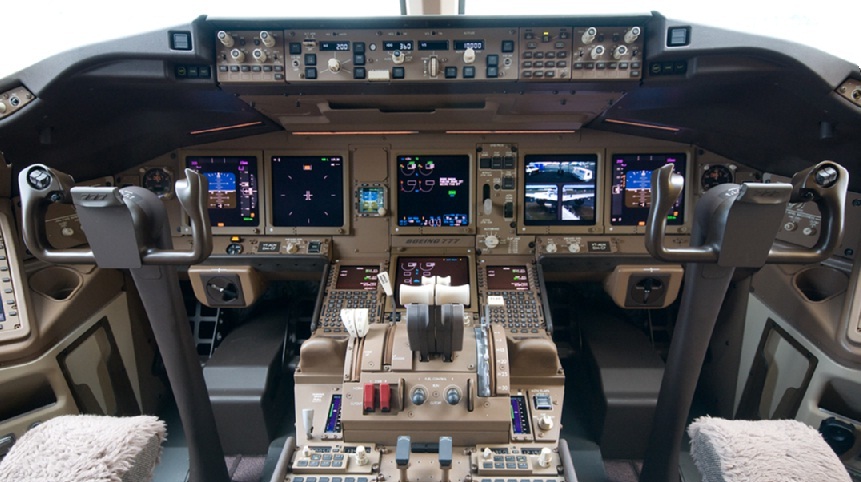
The B777 was the first Boeing Aircraft to have full FBW using the standard Cockpit Yoke and Rudder Flight Controls which was part of the first Integrated Modular Avionics (IMA) System to be used on a Commercial Jet Airliner in the world. It used the Common Core System and the forerunner of the AFDX Network System and IMA Computers for Processing all of the Flight Management System (FMS) functions. An additional function of the IMA was to allow the Avionics Engineers to do On – Board IMA Testing using a dedicated Computer Station in the Cockpit.
Boeing B777 Cockpit
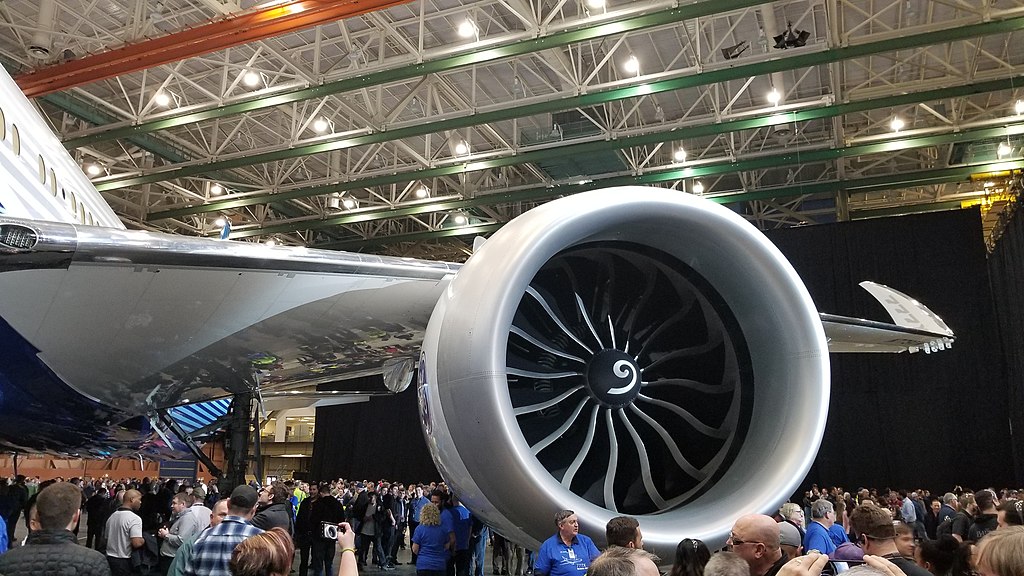
The Boeing early B777’s were fitted with the Rolls Royce Trent 800, a large but the lightest Turbofan Engine fitted to the B777. However the B777-300 aircraft introduced in 2003, were fitted with a new GE90 Engine using the technology of curved Fan Blades producing over 100,000 lbf of Thrust, almost twice as much as each Boeing B747-400 Engine.
Boeing B777-300ER GE90 Turbofan Engine with curved Fan Blades
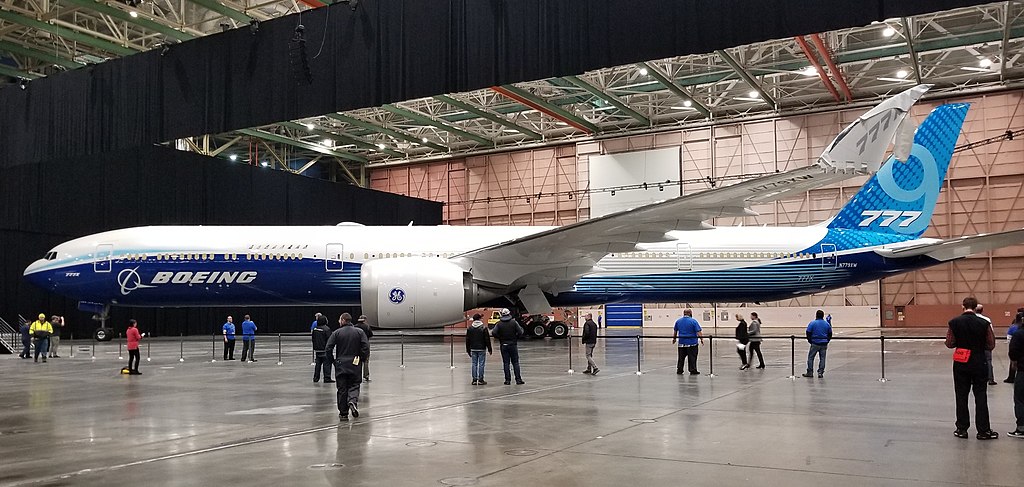
The B777x Series is the latest which is much larger than the B777-300ER and again advanced Technology. The Wings are made of Composite Material and are so long the Wing Tips fold upward until ready for flight. The Engines are the GE9X the largest Jet Engine in the world surpassing the B777- 300 GE90 Engines. The Glass Cockpit has been upgraded including Head Up Display (HUD) Systems, inline withe the advanced IMA. The B777-8 Passenger Capacity is 395 with the B777-9 having 426 Passengers. However, due to Technical and Production the major introduction of the B777-8 and 9 are being delayed until 2025.
Boeing B777x Aircraft with Folding Wing Tips.The Boeing B777x Aircraft with the GE9x Engines, the largest in the world.Boeing B777x Advanced Glass Cockpit with HUD.
Airbus A380
The Airbus A380 is the largest Wide Body (WB) four Engine Jet Airliner in the world. It has a full length, Double Deck Passenger Cabins, that can seat over 500 Passengers but each Airline have their own Cabin Configurations. The first delivery of the Airbus A380 was to Singapore Airlines (SIA) in 2007, followed closely by Emirates Airlines both of which are the major Operators of the majestic Jet Airliner.
Airbus A380 Singapore Airlines first delivery in 2007Airbus A380 Emirates Airlines second delivery in 2008
The Airbus A380 is powered by the Rolls Royce Trent 900 Turbofan Jet Engine, which SIA selected, and the GP 7200. Each of the four Trent 900 Engines produces 84,000 lbf of Thrust. The A380 is Designed and Manufactured by companies from France, Germany, Spain and the UK each having their own specialty. For example the Wings are made in the UK. Then all of the parts are transported to Toulouse in France for final assembly. The transportation of the Wings is by Land and Sea from Wales in the UK on huge barges to France. Therefore transportation from all donor countries is a huge undertaking. Except for the Wings most of the A380 Fuselage is constructed of Aluminum Alloys.
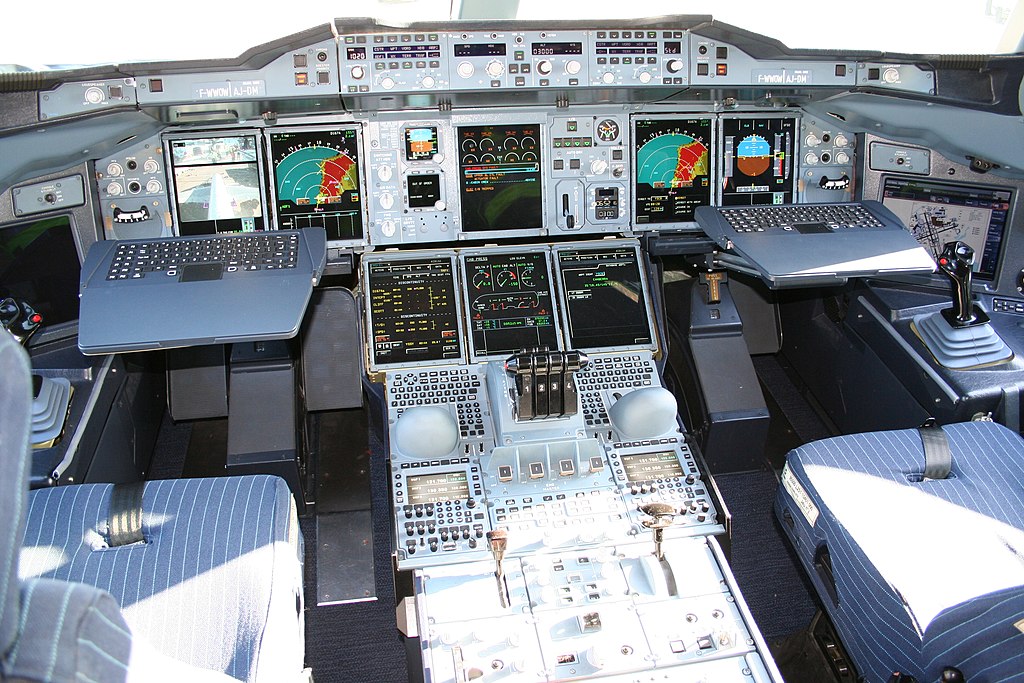
Airbus A380 Cockpit with Side Stick Controllers
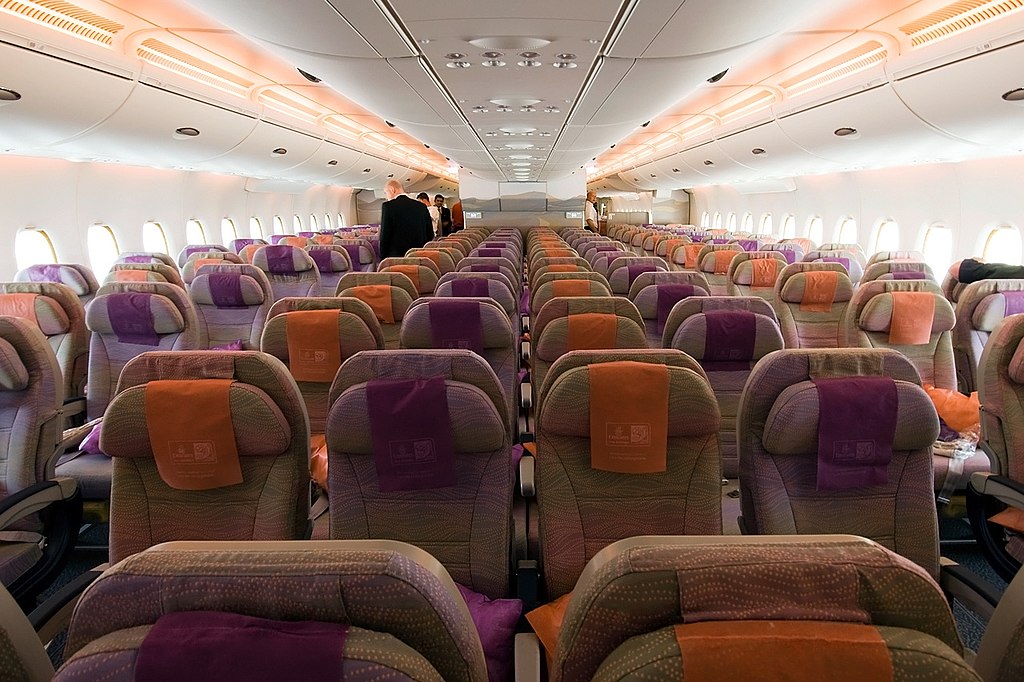
A major Technology change was from the use of Copper Electrical Wiring to Aluminum Electrical Wiring which also required new techniques. This was to reduce the weight of the A380. The A380 uses the Open IMA using AFDX combined with the Glass Cockpit. Due to the huge size of the A380 the AFDX Ethernet Data Cables are extensive. The Flight Controls which are full FBW Side-Stick are also more complex especially the secondary Control Surfaces such as the Flaps and Spoilers etc. It is hard to imagine controlling such a Huge A380 Aircraft with Side-Sticks similar to that that we play Computers games with. The Cabin Configuration depends upon the Airline Operators however the A380 is designed to be able to accommodate up to 800 people. For example Malaysian Airlines only operates the A380 for religious Pilgrimages that seat 700 people for each flight.
Only a small part of the Airbus A380 Lower Deck Cabin Economy Seating
Boeing B787
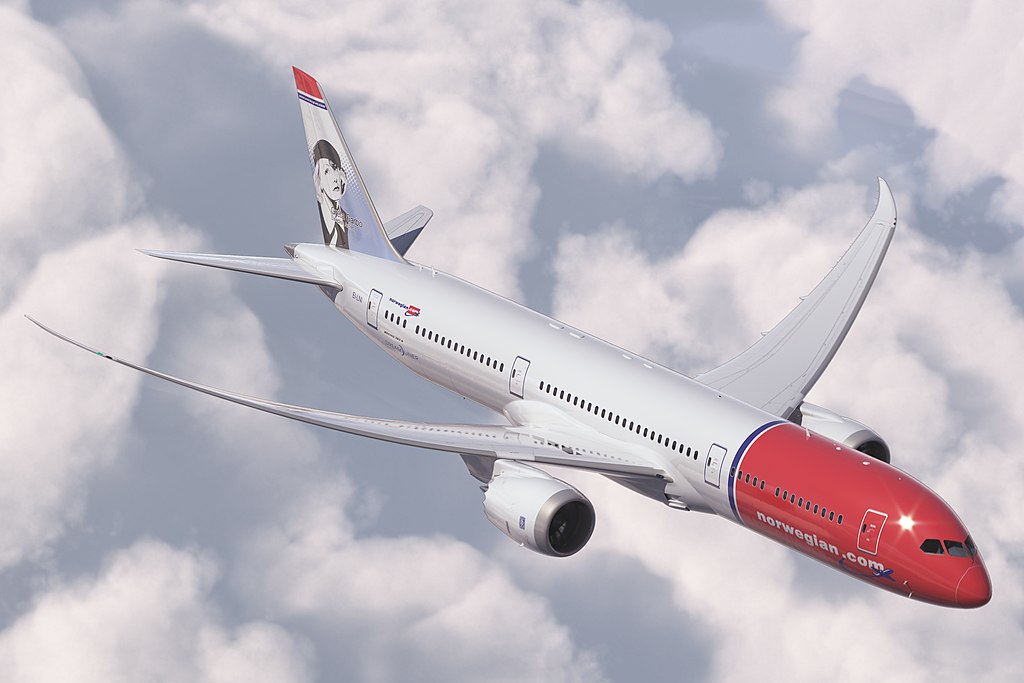
The Boeing B787 known as the ‘Dreamliner’ is a ‘Technology Explosion’ in the Commercial Jet Airliner Evolution. It first came into service with Japan’s All Nippon Airways (ANA) in 2011. It is a large Wide Body (WB) Aircraft seating up to 425 Passengers. The Boeing B787 has many versions but the latest is the B787-10 which is the largest B787, that Singapore Airlines (SIA) took the first delivery in 2018.
Boeing B787 Delivered to ANA in 2011Boeing B787-10 Delivered to SIA in 2018
The modern Boeing B787 Commercial Jet Airliner was the first to be constructed using Carbon Fibre Reinforced Polymer (CFRP) not Aluminum Alloys like other Aircraft we have discussed. The majority, (80%) of the Aircraft’s Fuselage (Body) and Wings, Tail and most of the Flight Control Surfaces are made of CFRP. This has allowed the Cabin Windows to be larger and fitted with ‘Smart Glass’ which can Change from ‘Dark to See Through’ using Electronics. There are no Window Shades. The Aircraft Wings are flexible as normal but actually Curve Upward when Flying.
Part of theB787 Fuselage made from CFRPB787 showing the Wings Curved Upward when Flying
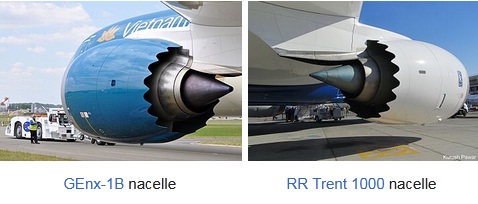
The Boeing B787 uses the GEnx, Rolls Royce Trent 1000 and the latest Rolls Royce Trent XWB Turbofan Engines. Each Trent XWB Engine produces 70,000 lbf of Thrust. The Engine Nacelle’s are also unusual as the are Serrated at the rear to reduce Noise. The Cabin Air Conditioning does not use Engine Bleed Air like other Aircraft but uses Electrical Air Conditioning Compressor’s just like a house Air Conditioner System.
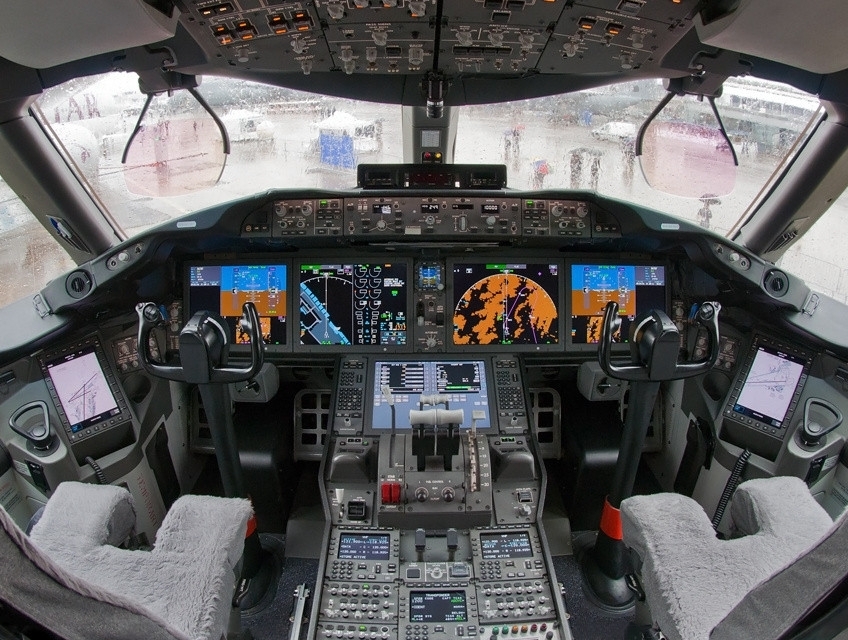
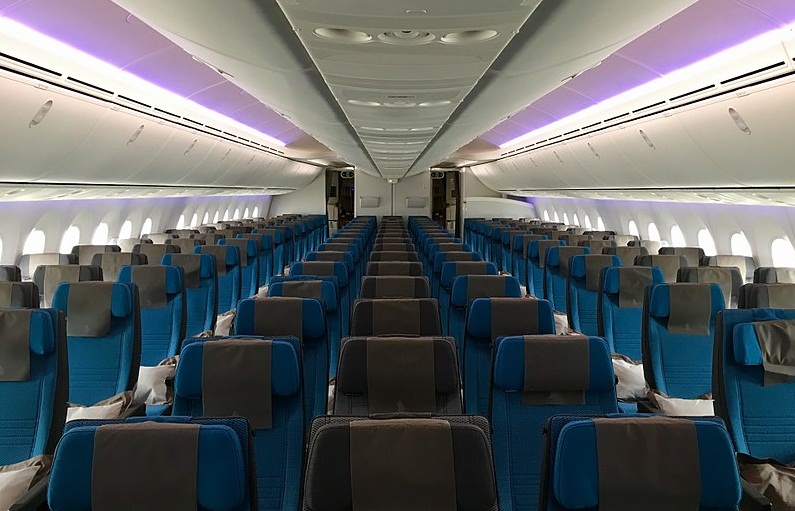
The Boeing B787 uses the latest Common Core IMA system with upgraded Cockpit Display Systems that have Dual Information Screens on a single Display Unit. Additionally, Head-Up Display (HUD) Systems are fitted for both Pilots. It has full FBW system including Autopilot and Autoland System using the Boeing standard Yoke and Rudder Pedals. All of the Cabin Lighting is LED allowing several Colour’s and Brightness to be selected by the Cabin Crew.
Boeing B787 Cockpit Dual Screen Displays and Head Up Displays (Top)Boeing B787-10 Cabin, Smart Windows and LED Lighting
Airbus A350
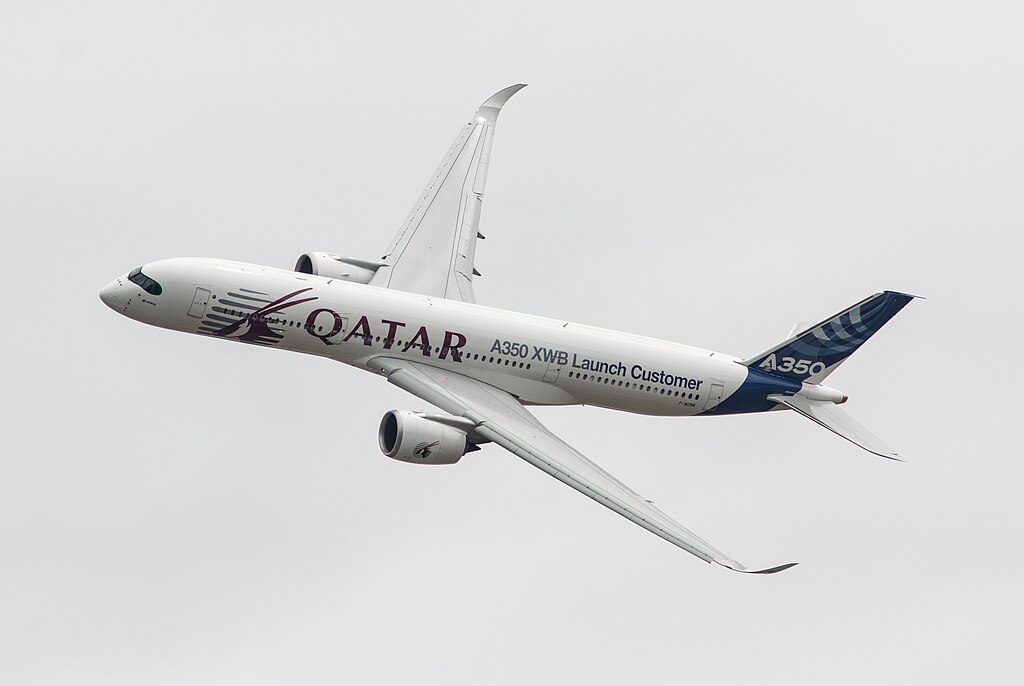
The Airbus A350 is and Extra Wide Body (XWB) Aircraft which was designed to compete against the Boeing B787 Dreamliner. The first Commercial Flight of Airbus A350-900 was in 2015 by Qatar Airways. the main variants of the the A350 is the A350-900, A350-1000 and the latest A350neo.
Qatar Airways Airbus A350-900 First Commercial Flight 2015
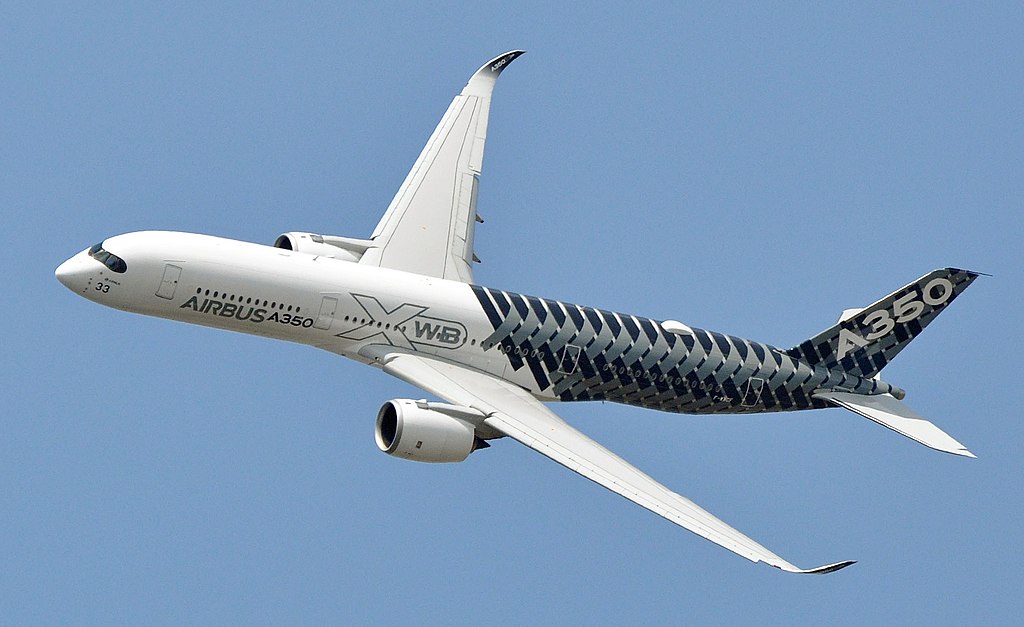
The Airbus A350 Fuselage and Wings are constructed using Carbon Fibre Reinforced Polymer (CFRP) following the Boeing B787 construction. However, Airbus construction was based upon Panels fitted to a Rib Construction made of Aluminum-Lithium Alloy, which was completely different to the Boeing B787. The Airbus A350 Ribs gives the Fuselage more Strength and Conductibility against Lightning Strikes. The Wings are also unique in that the Wing Outer portion is Curved Upward to enhance the Aerodynamics. The Engines in the main are Rolls Royce XWB Engines with Curved Fan Blades, specially designed for the Airbus A350, each with up to 97,000 lbf Thrust. The Air Cabin Air Conditioning is from the standard Engine Air Bleed System.
Airbus A350 with Curved Outer WingsRolls-Royce Trent XWB on the Airbus A350-941
The Airbus A350 variants have the Open IMA system based upon that used in the Airbus A380 including the enhance Cockpit layout and Dual Information Liquid Crystal Displays (LCD’s). It has Full FBW and Autopilot and Autoland using the Airbus Side-Stick Configuration. The Cabin can accommodate 400 Passengers in the latest A350-1000 and A350neo owing to the Extra Wide Cabin Design and 3×3, 9 abreast Seating.
Airbus A350 Cockpit with Dual Information LCD DisplaysAirbus A350 with 3×3, 9 Abreast Seating
Future Commercial Jet Airliners
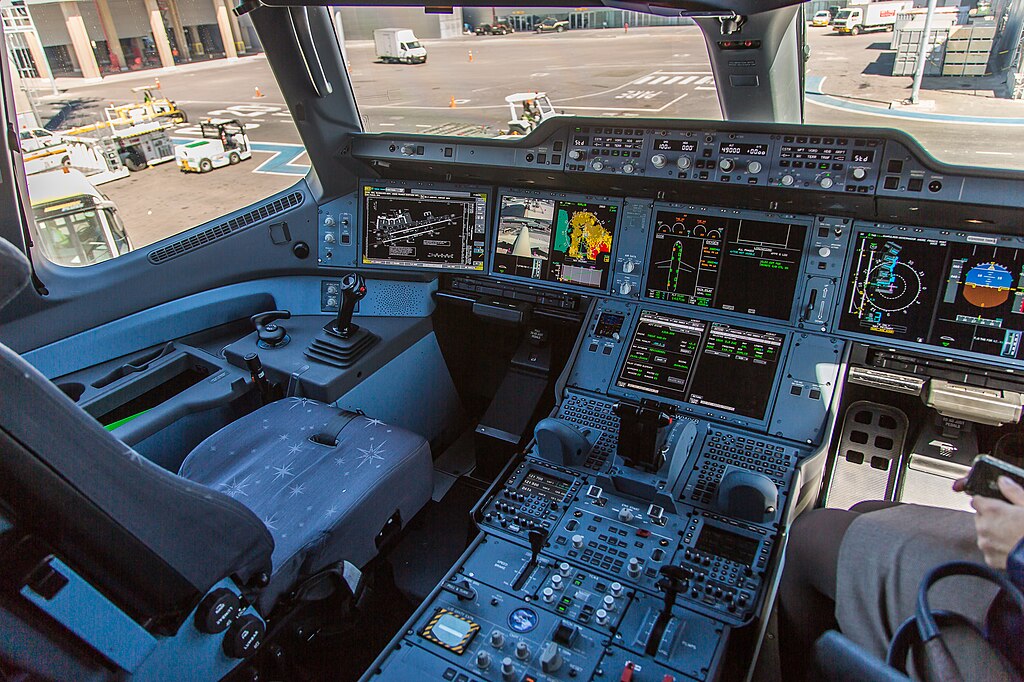
Throughout my 60 years being an Aircraft Engineer in the Royal Air Force and associated with the Commercial Jet Airliners what have been discussed has basically followed the same Design Format, Fuselage, Wings, Tail and Engines. However there are new Designs ongoing known as Blended Wing Aircraft. This stems from the Military Flying Wing Bombers Designed and Flown by the USAF. These will not be introduced in my lifetime but these are serious Design Considerations for the future. The move by the Commercial Aircraft Industry is the Electrification of Aircraft moving away from Fossil Fuels and Oil known as More Electrical Aircraft (MEA) Project. However, the Technology there will be an increasing demand for Air Travel especially as the Population Expands over the coming decades.
A Blended Wing Design Concept
Thank you for your time viewing this quite large Article, I hope you found it interesting and not too technical for you to understand.
Today, I want to consider the Fossil Fuel and Electric Vehicles from a technical, environmental, drivers and future use world wide point of view.
Fossil Fuel Vehicle Electric Vehicle
Technical Point of View
Internal Combustion Engine Vehicle (Car)
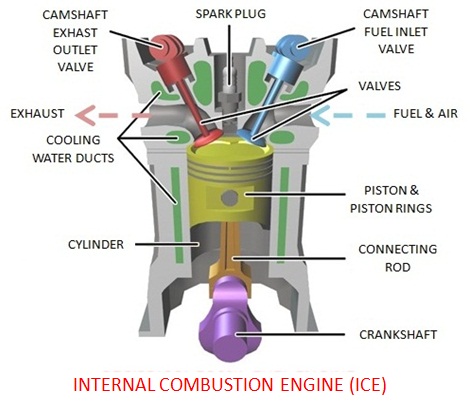
The first modern Internal Combustion Engine (ICE) was created by Nicolaus Otto 1867 known as the Otto ICE. The ICE is a Machine that requires Fossil Fuel (Petrol, Diesel and Lubrication Oil) to operate. In the case of an ICE, Combustion is a chemical reaction between, pressurised oxygen and fuel known as the Fuel/Air mixture and when subjected to an electrical spark causes a mini explosion known as Combustion which produces Power and Heat. The ICE can be a 2 stroke or 4 stroke engine which operate in a similar manner.
The basic operation of a 4 stroke ICE is as follows; refer to the image below: To produce Power and Rotation to the Vehicle Gear Box, the Piston moves Up and Down in the Cylinder and via the Connecting Rod, Rotates the Crankshaft which is connected to the Gearbox and Clutch mechanism. To achieve this when the ICE moves with 4 Strokes as follows: (1; Intake Stroke) As the Piston starts to move to the Bottom of the Cylinder the Fuel/Air mixture is allowed in via the Fuel Inlet Valve. (2; Compression Stroke) As this is happening the Piston moves up to the Top of the Cylinder, Compressing (Pressurising) the Fuel/Air mixture. (3; Combustion Stroke) As this occurs a Spark from the Spark Plug ignites the Fuel /Air mixture causing the Combustion. This forces the Piston Down to the bottom of the Cylinder producing the Crankshaft Rotation. (4; Exhaust Stroke) The residue Gas from the Combustion is ejected via the Exhaust Outlet Valve as the Piston starts to move up to the Top of the Cylinder and the Cycle starts all over again.
The image below is a modern Fuel Injection ICE which totally Computer Controlled which adjusts the Fuel/Air intake and complete timing of the ICE Components for maximum efficiency which reduces the amount of Exhaust Gasses (Carbon Dioxide CO2) transmitted into the Environment. This ICE is connected to the Automatic Transmission and the Front Wheels which also referred to as the Power Unit & Transmission.
My Honda Accord 2.4 Litre Power Unit & Transmission
Electric Vehicle (Car)
Most people think that Electric Vehicles (EV’s) are a new technology which is far from the truth. Thomas Parker built the first EV production Car in 1884 in England. However, over a period of time many others were produced by the USA and France. However, they all had the same problem in that, the Battery and Motor Technology in those days was in its infancy, therefore the Power produced was comparatively low which could only give a short range before Recharging the Battery.
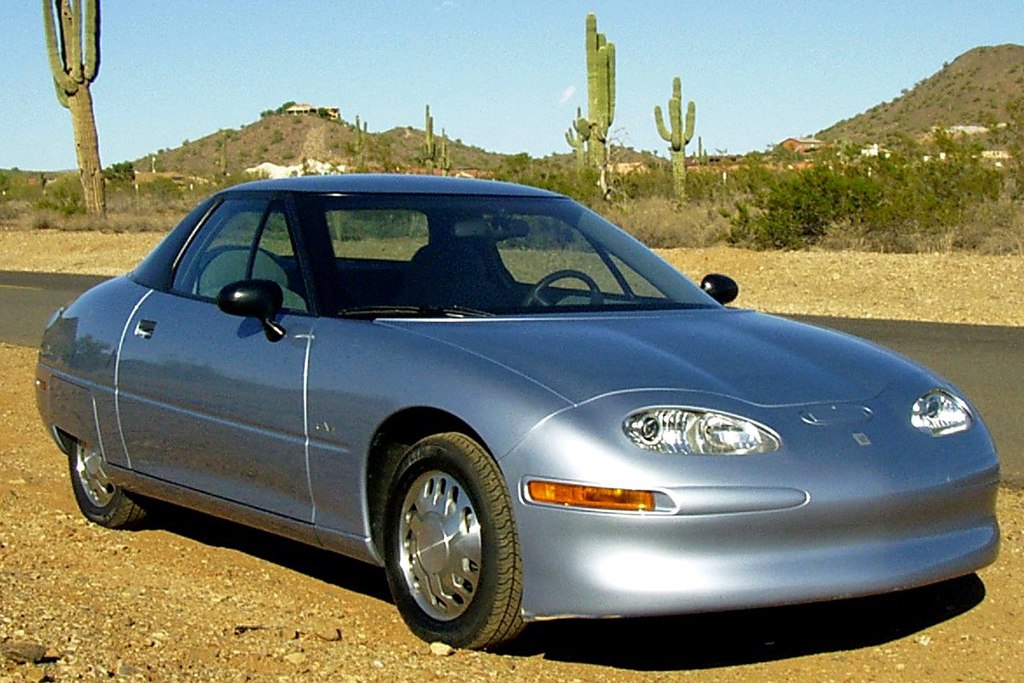
Since the early 1990’s the concerns of Global Warming and a world Fossil Fuel Crisis, gave an opportunity to apply ‘Green Technology’. The first modern EV car was the USA General Motors EV1 which was mass-produced after its debut in 1996 but only lasted until 1999. The original EV1 had 32 Lead-Acid Rechargeable Batteries, with an Electronic Drive System, that produce a Range of 70-100 miles on a Single Charge. Later models had Nickel-Metal Hydride Batteries (NiMH) that gave a Range of 120-140 miles on a Single charge that took 6 to 8 Hours. The EV1 had one 3 Phase AC Electric Motor with a Single Reduction Unit to the Drive Wheels. However, General Motors decided that commercially the EV1 was not viable and stopped production in 1999.
General Motors EV1A014
Today’s EV’s are dominated by TESLA a USA Company and BYD a Chinese Company, However, many of the major Fossil Fuel Car manufactures are also increasingly producing EV’s. In all of these cases the principle of driving the Front and or the Rear Wheels through a Drive System, using an Electric Motor or Motors (Power Unit & Transmission) energised by a Large Battery, is the same. However, the technology is evolving very fast in both Power Unit & Transmission and especially the Batteries. It is the Battery Technology which is enabling very Fast Speeds and Long Ranges well over 500 miles on one Charge which has also been significantly reduce in time. The main Battery Technologies are the Lithium-Ion Manganese Cobalt Oxides (Li-NMC), Lithium-Iron Phosphate (LFP) Blade Battery and the latest, the Solid State Battery being developed by BYD and others.
Typical BYD EV Arrangement
Power Unit & Transmission Comparison Summary
Both the latest Fossil Fuel and Electric Vehicles a Power Unit & Transmission (PU&T) are designed for the same purpose to Drive the Car Road Wheels. Both are reasonably Complex and Electronically Controlled.
The Fossil Fuel PU&T has many more moving components such as Pistons, Valves, Camshaft, etc which require a Oil Lubrication system ; that are subject to friction resulting in wear. Due to the Combustion, produces Heat, Exhaust Gas and Noise. Most Power Units have to have a complex Liquid Cooling System to dissipate the Heat.
The Electric Vehicles PU&T still has moving components but related to the Electric Motor which a very limited amount of friction and wear. There is no Combustion therefore there is no Exhaust Gas, less Heat and very little Noise. However, there is either and Air Cooling System and/or a Liquid Cooling System to dissipate the Heat especially from the Battery.
The most Consequential Difference is that the Electric Vehicles PU&T does not produce Exhaust Gas (CO2) like the Fossil Fuel PU&T which affects the Atmosphere. The other Marked Difference is the Electric Vehicles PU&T is very Quiet.
Environmental Effects
It has been established that the creation of Carbon Dioxide CO2 from many sources including Fossil Fuel Vehicles including Cars is affecting the Earths Climate and Overall Temperature. There are many new Technologies evolving to overcome this problem including the Electric Vehicles (EV’s). As a side advantage there is another form of Pollution that is not normally highlighted which is Noise. The Electric Vehicles (EV’s) also addresses this problem.
Driver Experience
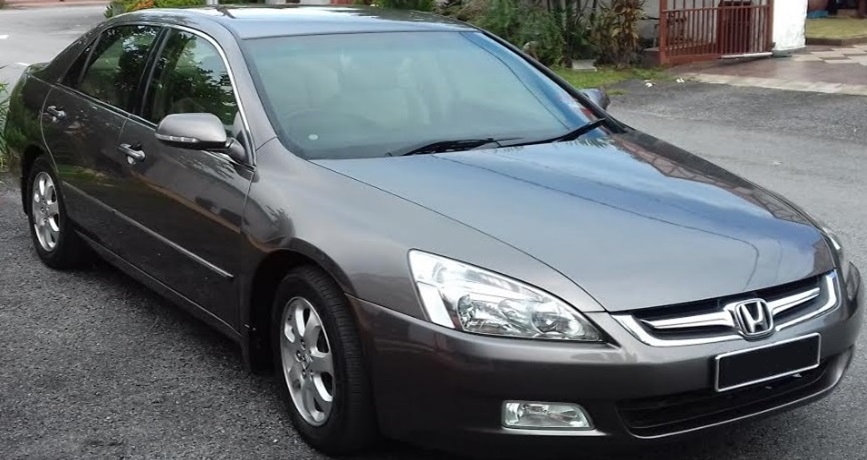
My experience driving Fossil Fuel Vehicles including many types of Cars spans over 60 years. However, for my Driving Experience Comparison, I have chosen my 2006 Honda Accord 2.4L which I have had since new and my friends 2022 BYD Atto3 which I have driven many times.
Honda Accord 2.4LBYD Atto3
Honda Accord 2.4L
My Honda accord 2.4L is a large high quality family car that has a high performance Power Unit & Automatic Transmission. It can accelerate from 0 to 60 mph (100 Km/h) in 9,5 seconds. Its Fuel Consumption averages at 30 mpg. It is reasonably quiet with very good sound installation. However, there is still engine noise and slight vibration which all Fossil Fuel Engines experience, especially when first starting the car. Its general overall performance is very good. As an experienced driver the sound and feeling driving this car can be exhilarating and a pleasure.
BYD Atto3
The BYD Atto3 is a completely different Driving Experience. The Controls are the same as the Honda Accord. However, right from pressing the Start Button on the BYD Atto3 there is no noise. The drive selector is only a small unit and when the accelerator pedal is pressed again no noise except for the tyre noise. The Atto3 can accelerate from 0 to 60mph in 7.9 seconds. When driving and accelerating the BYD atto3 is extremely responsive to a point where you have to be careful as there is no real feedback noise like a Fossil Fuel Car. However, after driving the BYD Atto3 several times you become accustomed to this situation. As a relatively new driver of an Electric Vehicle the feeling driving this car can be exhilarating and a pleasure, especially the significant reduction in noise levels.
Fuel and Power Infrastructure
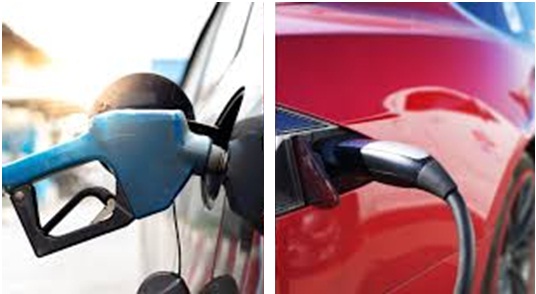
We are all familiar with the Fossil Fuel Infrastructure which is universal and adequate for filling up the car with ease at many Service Stations that have been created over the years. This allows us to travel almost anywhere knowing that Fuel is available when we need it
Fuel (top) and Power (bottom)
The Electrical Power Infrastructure for charging Electrical Vehicles (EV’s) is still in its infancy (bottom left). That being the case there is a great deal of fear in the public that buying an EV may not be as convenient as a Fossil Fuel Car. Some of this fear can be reduced by having a Home Charging Unit (bottom right) allowing unlimited travel close to home. Some of this hesitancy is being addressed by the manufactures improving the Battery Technology as we have seen to extend the EV Range on a single Charge. They are also decreasing the time it takes to Charge the EV Battery. As time goes on and more EV’s are used the Power Charging Infrastructure will improve.
Future of the Electrical Vehicles
At present the expansion of Electric Vehicle including Cars is reasonably slow but increasing especially in China and Europe with the USA cautiously moving forward but with many still wanting Fossil Fuel Cars and the USA Government pushing to drill for more Oil and Gas. Surprisingly, Norway has the highest number of Electric Vehicles 95% of all Vehicles. One of the biggest threats to the complete move to Electrical Vehicles comes from the Oil and Gas producing Countries who rely upon these Fossil Fuels for their income. Another important issue is the Generation of Electric Power to a Level required to sustain the total conversion to Electrical Vehicles. It is also very true that to Generate Electric Power most Power Generation Stations use Fossil Fuels, Coal, Oil and Gas. Therefore for the foreseeable future, even with the expansion of Electric Vehicles, the world will still be using Fossil Fuels for Vehicles and Energy production.
My Conclusion
Whilst I have had some extremely high quality and powerful motor cars such as the BMW 750iL which was the ultimate driving machine and of course my Honda Accord 2.4L which I have thoroughly enjoyed driving, I have to say the BYD Atto3 Driving Experience impressed me very much due to Smoothness, Quietness and Responsiveness. Therefore, I do see the demand for Electric Vehicles rapidly expanding given that the Infrastructure to Support them is available.
The world today is experiencing some very complicated Country groupings for different spheres of life on this earth. These include, Economic, Trade, Defence and Security Alliances and Cultural, that seem to overlap each other in many cases that does not make sense and complicates Countries relationships. One such Country that stands out is India, that has its fingers in all Groupings like others to come, as we shall see.
Economic Groupings G7 and BRICS
G7
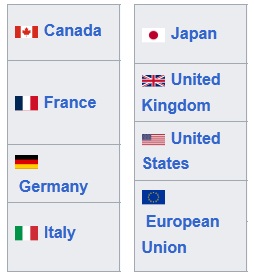
From 1997 there was recognised Intergovernmental Organisation Economic Group based upon the US Dollar currency, called the ‘G8, including the USA, Canada, UK, Germany, France, Italy, Japan and Russia. However, in 2014 Russia was suspended due to the annexation of Crimea and withdrew permanently in 2017. The G7 in 2024 has about 780 million people (10%) of world population, 50% of net wealth and 30% of the worlds Gross Domestic Product (GDP). The G7 does not have a treaty and is based upon ‘leading democracies’ and ‘rule-based democratic order’. including Australia and South Korea. Those acting as observers are India, Indonesia, Poland and Spain.
BRICS
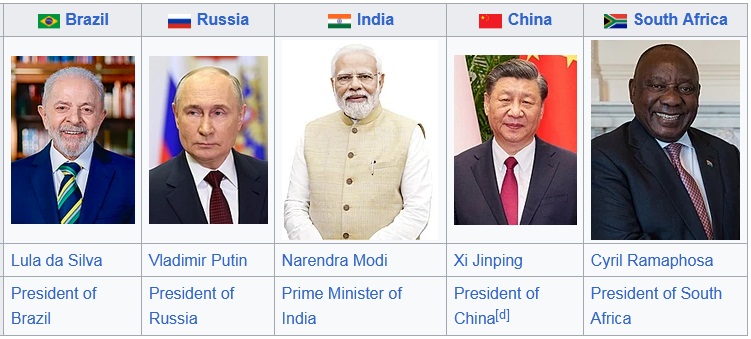
However in 2009 a new Intergovernmental Organisation Economic Group was formed called the ‘BRICS’, Brazil, Russia, India, China and South Africa, which has its own Central Banking System (New Development Bank (NDB)) and eventually with its own currency possibly based upon the Chinese Yuan Renminbi (CNY), moving away from the US Dollar. It is also developing a new Inter-global Payment System (BRICS Pay) to replace the current G7 SWIFT system. BRICS in 2024 has 45% of the worlds population and 35% of the worlds Gross Domestic Product (GDP).
Trading Currency Limitations
Whilst BRICS is developing its own in house Trading Rules much of the worlds trade is between the USA, Europe and other aligned Countries and China and BRICS countries. The G7 still hold the power of the US Dollar for almost all of their Trading Transactions. In addition, many of the BRICS Countries have significant Currency Reserves in US Dollars. It has to be remembered that the G7 are still the richest block with 30% of world GDP. I look at this situation as the G7 has the quality Countries and BRICS has the quantity of Countries that may bring pressures on China and the major BRICS countries who will need to support them. This support may well be in the form of Loans which the smaller Countries may not be able to repay and end up being subservient to the BRICS main Country, China.
Rapidly Expanding BRICS
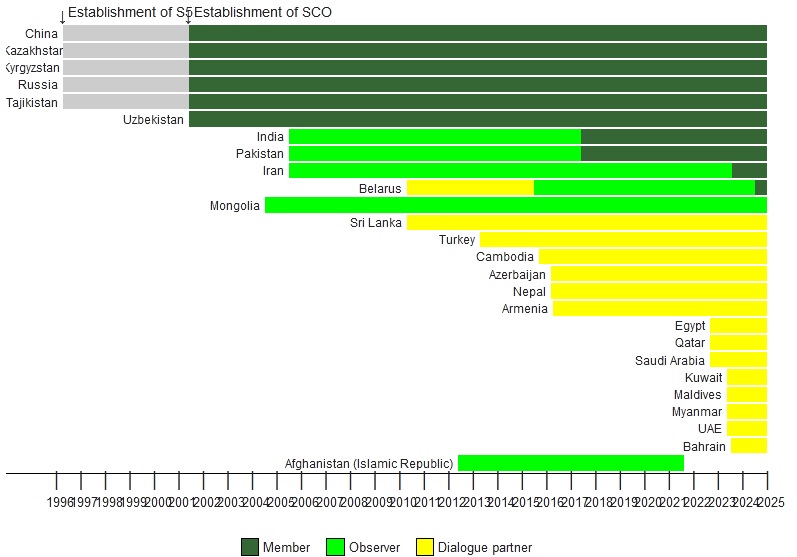
BRICS is starting to expand by including many other Countries and is in discussions with even more at a meeting in Russia. Those that have been accepted as members are shown in the image below. However, recently in 2024 Argentina withdrew and Saudi Arabia is still considering ratifying joining.
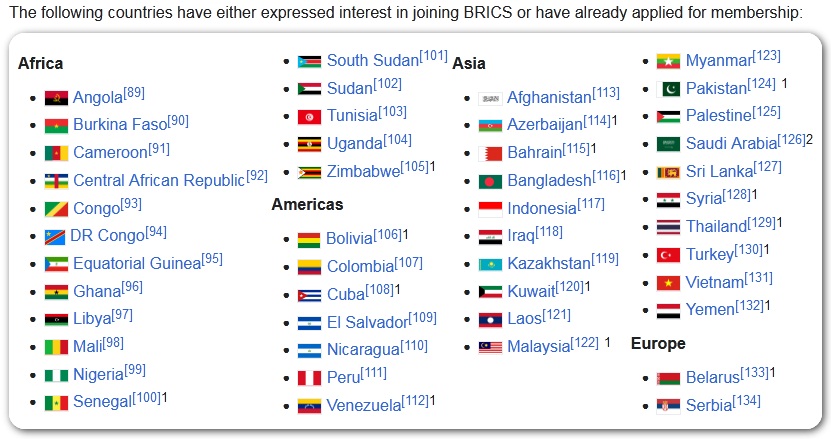
Many other Countries wishing to become members are shown below. However many of these countries are not ‘leading democracies’ and ‘rule-based democratic order’ as the G7. In fact quite the opposite.
Geopolitical Rivals
The G7 and BRICS are now Geopolitical Rivals not only in terms of Economic Power but includes Trade, Cultural and far more complicated Defence and Security Alliances known as the ‘Shanghai Cooperation Organisation’ (SCO). The SCO is an Eurasian Multilateral Security and Defence Organisation. China is the primary executive body of the SCO based in Beijing.
Two countries stand out from the list above, India and Turkey, which have Defence Alliances with the G7 Countries. On 15 September 2021, India, Australia, the United Kingdom and the USA announced that they had formed AUKUS, a new mini-lateral grouping focused on security in the Indo-Pacific. Turkey is a major part of NATO which includes all of the G7 countries. The question must be where do the loyalties lie given a conflict between G7/NATO and the BRICS. This situation may also apply to smaller countries in SE Asia such as Thailand and Malaysia if they become part of the SCO.
New Axis Powers
In the WWII the axis powers were Germany, Italy and Japan, however today the new emerging Axis Powers include, China, Russia, Iran and North Korea. This is very concerning for the NATO and associated Alliances, especially when North Korean Troops seconded by Russia are being readied for action against Ukraine. There will come a point in the Ukraine/Russia conflict when NATO and its Allies will have to decide its way forward to counteract the Russian actions. This will also depend on the outcome of the US Presidential and Government elections on the 5th November 2024.
Polarisation on Two Fronts
There are now two fronts of Polarisation, Economically G7 v BRICS and Militarily, NATO and Allies v New Axis Powers and those who are part of the BRICS SCO. This is becoming a very serious situation especially regarding Ukraine and the South China Sea and Taiwan tensions. As we have discussed previously where does India a major populous Democratic Country stand. India gets most of its Defence Equipment from Russia, it gets it Oil and Gas from Russia and much of its trade is with China and Russia. Therefore, how can India be in an Alliance with AUKUS given that a world conflict breaks out. This maybe also be the case with some of the smaller South East Asian Countries such as Thailand, Vietnam and Malaysia who are, or want to become part of BRICS.
The G7, NATO, Europe and Allies Under Threat
Much of the immediate future of the G7 and Allies will depend upon the outcome of the USA Presidential Election. I am sure that the BRICS and Axis Powers would prefer Donald Trump to win. However most of the G7 and Allies would prefer Kamala Harris to win. The way things are shaping up Donald Trump may win which means that Ukraine will be sacrificed to Putin, Trumps friend and Xi Jinping will be pleased as Trump will also sacrifice Taiwan and the problems of the South China Sea. In doing so the Credibility of the G7 and Allies will diminish allowing the BRICS to expand and overtake the leading Role of the World. This will be devastating for Europe and NATO and Allies like Australia, New Zealand, Japan, Philippines and South Korea especially related to North Korea another friend of Trumps. As my previous article says ‘Trump Win Goodbye USA’. More importantly Goodbye to Europe’s Security and Defence Capabilities and Way of Life thanks to Donald Trump and his Supporters. ‘God Help Us’.
I am a British Senior Citizen. The following is my own personal opinion:
Trump is like a Pied Piper (a person who persuades a lot of other people to follow them or do something with them). The USA public who follow him is known as his base. The majority of these people are also members of the USA Republican Party. Even in the USA House of Representatives and the Senate many Republicans support him. Also on the USA main media outlets some pundits are very vocal in their support for Trump. Myself and millions of others ask WHY?
Convicted Criminal, Indicted and Habitual Falsifier
Trump is a Convicted Criminal, he has been Indicted of several crimes related to the last USA Presidential 2020 Election and has been found guilty for matters related to abuse of women. All of which he totally denies and calls them a “Witch Hunt”. He has no shame in telling false and misinformation statements about an array of subjects, in fact its part of his strategy to gain attention and sow confusion and mayhem.
Trump Image: Claudio Olivieri
Demeanour
The way in which Trump presents himself as a strong man punching his fist to the sky and strutting around as though he owns the world and everyone should bow to him is always evident. He expresses himself in a manner that in most cases is insulating and at times hurtful to less fortunate people, at the same time enjoying the positive responses of those listening to him. That makes his audience complicate in what he is saying . However, his base, Trump politicians and the pundits always try to say its nothing “its just the way Trump talks and behaves”. This is their way of justifying Trumps low class, unacceptable behaviour and speech.
USA a Divided Nation
Over the past 10 years the USA has become an increasingly divided nation, those supporting the Republican Party and those supporting the Democratic Party. Since the introduction of Trump into politics in 2014 this division has been increasing. Also the composition of the Republican Party has changed significantly with the more moderate party members being forced out and replaced by the Trump supporting members elected by the Republican Party electorate. This has increased the division of the USA into a Cult type following of Trump who now controls the Republican Party.
Republican (Red) and Democrat (Blue)Party SymbolsPolitical Map after 2020 Election -Red Republican and Blue Democrat
Threat to USA Democracy
Ever since the conclusion of the 2020 Presidential Election which Biden won, there has been a significant movement within the Republican Party and associates to portray the Election as ‘Stolen’. They also Invaded the USA Capitol on January 6th 2021 (known as an Insurrection) motivated by Trump, to try to stop the Presidential Election Certification. This resulted in deaths and injuries to the Police and others. However, Trumps Vice President Pence continued to Certify the Election in Congress, confirming Biden would be the next President.
Trump still did not accept the result and said would not Transfer the Presidential Power in a peaceful manner. Eventually, he had to relinquish Power but much later he was Indicted for Inciting the Insurrection on the Capitol Building and an attempted Coup.
January 6th 2021 Riot at the Capitol Buildings housing all of the Lawmakers
The House of Representatives and Senate 2024 Elections
Before we consider the Presidential Election we must consider the Consequences of the House of Representatives called the ‘Congress’ with Congressmen and the ‘Senate’ with Senators. The 2024 Elections will have a major effect on the next 4 years of Government, who ever is elected President. At present the Congress is controlled by the Republicans (R) by a few seats and the Senate by the Democrats (D) by one seat. This makes it more difficult to pass laws but there is a system of ‘Checks and Balances’.
There will be several outcomes after the 2024 Elections: (1) Congress R and Senate D, (2) Congress D and Senate R, (3) Congress D and Senate D, (4) Congress R and Senate R. The latter (4) poses the most danger to the USA Democracy as I will explain later.
Likely Consequences of Trump Loss in 2024
What if Trump Looses the 2024 Presidential Election? The consequences for the USA could be very serious especially loosing to a Women, Kamala Harris the present Vice President of the USA. I can only speculate based upon the reaction to Trumps last failure to win the USA Presidency. The reaction may depend upon the margin of victory for Harris in terms of the Electoral College Votes (ECV’s). To win the Presidential you must have 270 of the 538 ECV’s.
If Harris exceeds 270 by a good margin it will be difficult for Trump to say the Election was Stolen, Unfair or not Valid. However, he could still contest the Election in Courts as he did last time even when Biden had 306 to Trumps 232 ECV’s . If, however, Harris just wins 270 with a small margin the Trump will definitely contest the Election in all sorts of ways, which could lead to violence by his supporters, similar if not the same as January 6th 2021.
USA States showing the amount of ECV’s each State has for the Presidential Election.
Having said that, the Security around the Capitol Building and Lawmakers for Certification in 2024 will be substantial to prevent any entry into the Capitol Building or danger to Lawmakers. It is also possible that the Leader of the House of Representatives , being a Trump supporter, may also intervene before or during the Certification process.
Likely Consequences if Trump Wins in 2024
If trump gets 270 ECV’s or more he wins the Presidential Election and will become the President of the USA for a second term of 4 years in accordance with the USA Constitution. What happens next depends upon the outcome of the Congress and Senate Elections. If the Congress and Senate are controlled by the Republicans (4) then the USA is in great peril from Trump.
First, the Constitution could be changed to allow a President a third or forth consecutive terms or even worse that a president could serve for life just like the USA Supreme Court Members which is akin to being a Dictator. As Trump said “I will be a Dictator on Day One”.
Second, Women’s freedom to make their own decisions about their healthcare and abortion will be at huge risk as it is possible Trump will make abortion a Federal issue although he said he would not (can you Trust his words).
Third, Trump will threaten the existence of NATO or undermine its mandate by aligning himself with Dictators in charge of Russia, China, North Korea and others. This will cause immense friction with European and other Allies especially Canada and Australia. It will also affect the support for Ukraine as he brags he can get a finish to the war ‘in days’ by allowing the Russians to win by keeping Ukrainian Land and forbidding Ukraine from joining NATO. He may also give China the green light to invade Taiwan by backing off the defence agreement with the Island.
The USA Immigration Issue could be another that Trump could cause extreme disruption, threatening to deport millions of Immigrants not all illegal ones from the USA. Trump forgets that the USA has created its reputation for accepting Immigrants who have contributed substantially to the USA’s success over many years. He will continue to build his Mexican Border Wall which will also affect relations with Mexico.
Financially, Trump prefers to put Tariffs on imports which may threaten USA manufacturing or agriculture which will have a major negative impact on the USA economy. Trump blames the present inflation situation on the Democrats forgetting the rest of the world has inflationary problems not just the USA. Trump will also put the US Dollar at risk related to the BRICS Countries ambitions of eliminating the US Dollar in their trading pacts including Oil and Gas which has already started. The BRICS countries will no doubt put their own Tariffs on imported USA goods, which will have a negative impact on the USA economy.
Goodbye USA
If Trump Wins the 2024 Presidential Election, I believe, generally the USA will become a inward looking isolationist country divorced from the rest of the world, allowing China and others to become world leaders and to have increased influence in other countries such as Africa, South America, India and the Middle East. The European and other Alliances will be marginalised both in the Defence agreements and Trade agreements. The threat to the ‘USA Way of Life and Democracy’ will be real with the possibility of Trump becoming Dictatorial supported by the Congress and Senate controlled by Republicans. If Trump wins, supported by the Republican Congress and Senate the rest of the world can say Goodbye to the USA as we know today.
Footnote
If Trump gets elected President, that is a matter for the USA population. However it will also indicate that a substantial amount of people support the Rhetoric, the total lack of belief in the Rule of Law and the Low Class behaviour of a man like Trump, which is so sad for the USA’s Democracy and Decency. Lets hope that Trump never again sees the inside of the USA’s Presidential Oval Office for the sake of the USA people and the world.
After World War in 1945 the United States, Great Britain and the Russians agreed to carve up Europe into the Eastern Block and the Western Block. The Eastern Block became the Union of Soviet Socialist Republics USSR), known as the ‘Soviet Union’ and the Western Block with the exception of East Germany as an Alliance with the United States and Canada which became the North Atlantic Treaty Organisation (NATO) in 1949. The separation line of the Eastern Block and the Western Block was known as the Iron Curtain. From this point onward this caused significant tensions both in ideology and militarily which was called the ‘Cold War’ until it officially ended in 1991 when the Soviet Union collapsed and 15 of the Eastern Block Countries became independent nations again with Germany being reunited. The major threat area during the Cold War was the Iron Curtain area along the East Germany and West Germany borders. Therefore it was essential to protect West Germany Border from an attack from the USSR. The ‘Harrier Force’ was part of that protection.
The Harrier Aircraft
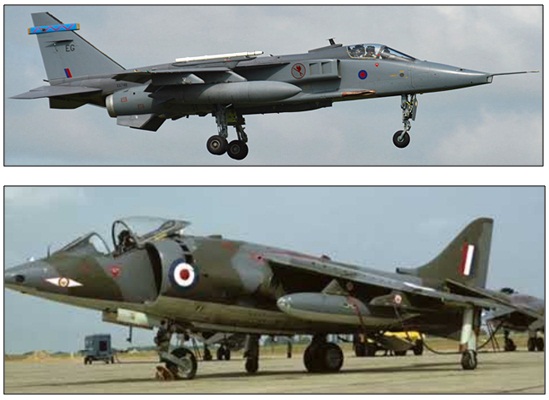
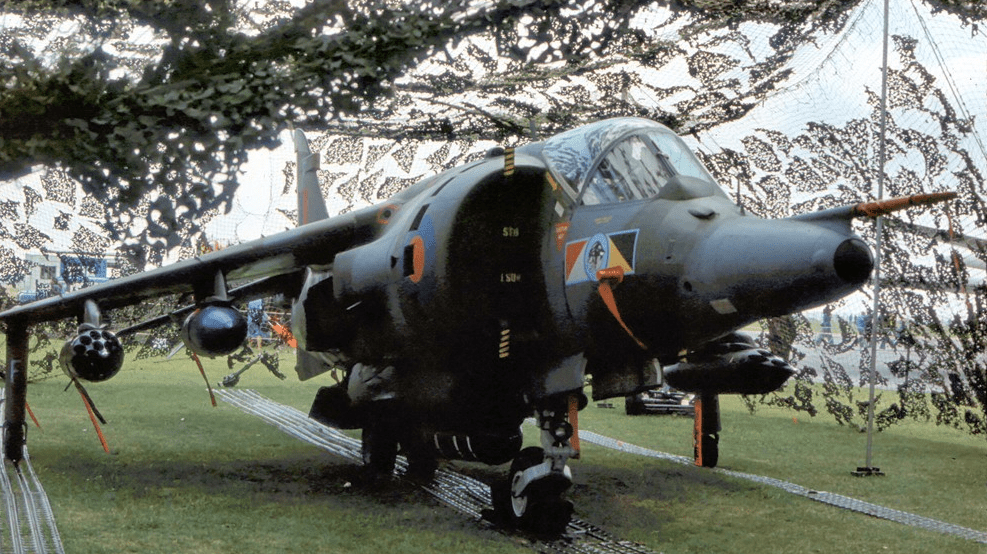
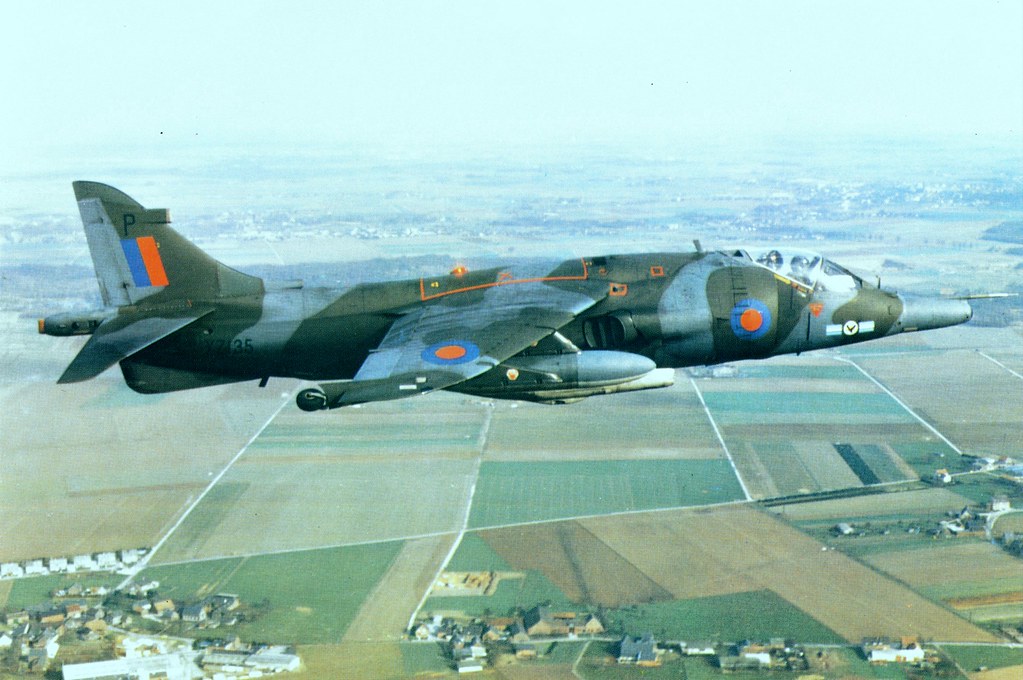
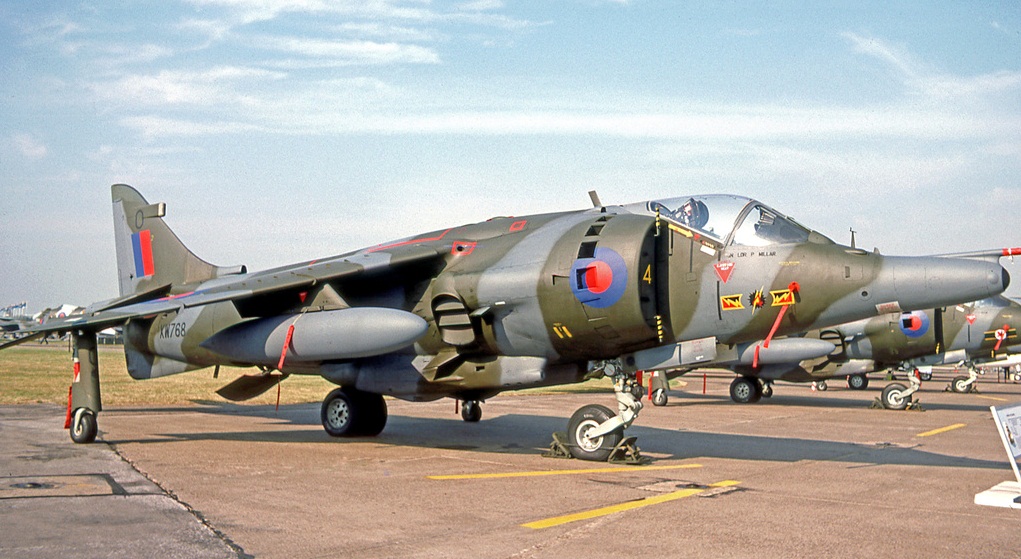
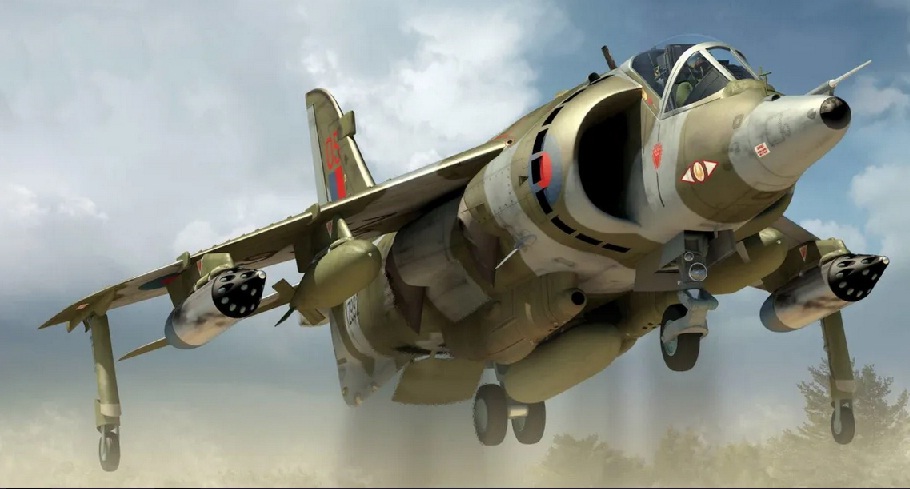
The Royal Air Force (RAF) ‘Harrier’ Aircraft was unique in that it was a Short Take Off and Vertical Landing (STOVL) Aircraft known as the ‘Jump Jet’. The Harrier design was even more unique in that it could operate from almost anywhere not just normal Airfields but Grass fields. The secret of its success were the 4 moveable nozzles that directed the Engine Exhaust Thrust either Downward for Hovering, Fully Backward for Flight and partially Down and Backward for Take Off. To maneuver the Harrier in the Hover there were small Exhaust Ducts at the ends of the Wings ,Nose and Tail called Puffa Ducts. In addition it had an advanced Inertial Navigation Attack System (INAS) including the Head-Up Display and could carry an array of Weapons from Bombs, Missiles and Rockets as shown in the image. Therefore this was a very powerful Ground Attack Aircraft to support Ground Troops ideal for protecting NATO countries West of the Iron Curtain.
The RAF Harrier Aircraft
The Harrier Force
The Harrier Force was a combination of Army Units, RAF Regiment and RAF Aircraft Personnel with all of the Squadrons Harrier Aircraft and Support Equipment, all working together throughout the year training for the protection of NATO. The effectiveness of this training was tested by Deploying the Squadrons to dispersed Sites somewhere in North East of West Germany at least three times a year, early Spring, Summer and late Autumn for 2 to 3 weeks at a time. This included moving all the Support Equipment and Personnel by Road and Setting Up the Site to receive Aircraft ready for Operations out of the Site. At times this was under combat conditions by NATO assigned enemy Troops. In addition each Squadron was sent to Decimomannu in Sardinia for Armament Practice once a year.
20 Squadron Harrier – RAF Wildenrath
As a Flight Systems, Sergeant, I joined 20 Squadron (Sqn) Harrier part of the Harrier Force in September 1975 after a posting from RAF Wittering, servicing the INAS equipment for 1 year. This was the first RAF Squadron that I was assigned too and I had much to learn about Squadron Life, the Harrier Aircraft and the Servicing Team Operations. I therefore asked my team to allow me to do all the rectification work with them in attendance to allow me to learn as much as possible in a short space of time. This was invaluable for my future on the Harrier Force and beyond. However, my time on 20 Sqn Harrier would be short lived as it was disbanded in January 1976 due to a Strategic decision to move the Harrier Force to RAF Gutersloh North East of West Germany closer to the Iron Curtain.
4 Squadron Harrier – RAF Gutersloh
In January 1976, 3 Sqn and 4 Sqn were allocated to the Harrier Force now at RAF Gutersloh, in the North East of West Germany. My RAF Records show I was posted to 3 Sqn and 4 Sqn at the same time but actually I went to 4 Sqn. This was probably due to my promotion to Chief Technician (C/T) and Avionics Trade Manager of 4 Sqn. In addition I was tasked to Supervise and Plan the Sqn’s Vehicles, Servicing, Loading and Deployment at the appropriate time. Most of the Sqn Aircraft were modified Harrier GR3’s with a Laser Nose. I remember, I had several Harrier Aircraft in 4 Sqn and 3 Sqn that showed 500 ft per minute climb all of the time on the Head Up Display (HUD) in the Cockpit, that equated to a signal of 125 millivolts, which was not good for the Pilots. After almost pulling the Aircraft’s Avionics System apart over 18 days looking for a 125 millivolt signal, I found that an earlier modification to the HUD Power Unit, the Earth connector was connected to Virtual Earth and not True Earth. The difference was 125 millivolts which equated to a signal of 500ft per minute climb display on the HUD. After that both 4 Sqn and 3 Sqn Aircraft were rectified and the fault was cleared.
Harrier GR3 with Laser NoseHead Up Display (HUD)
4 Sqn Deployments and Sites
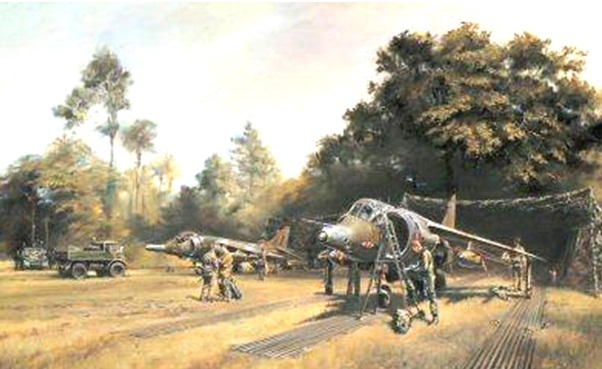
The most Demanding and Exciting part of being on the Harrier Force was the Deployments. The Deployments were a military Exercise that involved the Army Units of the Royal Engineers that prepared the Aircraft Hides and Aircraft Steel Foundations and the Signals Regiment, providing Communications on each Site. Each Sqn was allocated 3 Sites, a Prime Site, and 2 other Sites all in different but nearby locations. Each Site had 6 Harrier Aircraft and appropriate Pilots, Ground Crew, Catering and Medical Crew and Support Equipment. All personnel had personal weapons with blank ammunition when required. The Prime Site normally included the Sqn Boss, in this case, Wing Commander Tony Chaplin, Senior Management and Command and Control Responsibilities. The RAF Regiment were the front line Defenders of each Site based outside the Site, resisting any incursions by ‘Enemy Forces’ approaching the Site. If the enemy broke through to the Site then all Site RAF Personnel were called upon to defend the Site and Aircraft using their personal weapons and combat skills. This happened a few times whilst I was on 4 Sqn with injures to personnel including myself. One of our Officers had his front teeth knocked out by a Belgium Commando, so it was not all fun but plenty of Excitement.
A Typical Harrier Site in the Fields and WoodsBelgium Commando’sRAF Regiment Unit
4 Sqn Preparation and Deployments
As I said earlier, I was tasked to Supervise and Plan the Sqn’s Vehicles, Servicing, Loading and Deployment at the appropriate time. Most of the Vehicles were 4 Ton Bedford Lorries a few with 5 Ton Trailers and Landrovers some with small Trailers. There were some Specialised Vehicles with fully equipped Test facilities for Avionic Units. We had Specialised Towing Vehicles called, Mercedes Unimogs which were acquired by the 3 Sqn Boss, Group Captain Black many years earlier who borrowed one from a German Farmer to pull out a Harrier Aircraft Nose Wheel which sunk into the Mud on Take Off. The MoD bought them for the Harrier Force.
4 Ton Bedford M type Lorries, Landrover and Mercedes Unimog
When the Exercise Alerts went off normally very early morning, the 4 Sqn Vehicles had to transport everything from Gutersloh to there specific Site. I planned all of the Vehicles Loads which included almost every equipment we had on the Sqn, Drivers and Personnel responsible for loading each item onto the Vehicles and where Personnel would sit in Vehicles. By the way this included the Beer Lorry. Although I was the Supervisor for all of this I preferred to Drive the 4 Ton Lorry with a 5 Ton Trailer with Air and Nitrogen Bottle Trolleys on Board, not a Landrover. We traveled in Convoys on per-determined routes to the Sites, however, when we reached the Sites it was a nightmare parking and camouflaging the vehicles especially if it was raining with mud all over the place. Then we had to unload a lot of equipment some of which was very heavy especially Gun Cocking Trolleys. However, that was part of the ‘Fun’ of a Deployment and morale was high. When the weather was good and we could have a break during the exercise we would get together and play cards. Like Robbie Airframe (left), Alex Electrician (right) and myself Avionics (centre).
We were housed in 12 x12 Tents, with Camp Beds and Sleeping Bags. This was fine during good weather but at times especially the early Deployments there was early morning frost and the water containers were iced over, so washing and shaving was rather cold but refreshing. However every few days we would go to a local Army Regiment Barracks for a Shower and change of clothing and a beer with the Army guys who were very good hosts.
4 Sqn Operations
The Sites varied from runways using existing Roads, Metal Clad on Grass Fields and purely Grass Fields given that the ground was confirmed firm enough for the Harrier Aircraft to Take Off. However, using Grass and Ground only did at times cause problems with the Aircraft Nose Wheel sinking into the Ground. Very scary for the Pilots and very difficult to remove the Aircraft, hence the use of Unimog with its 24 gears.
The Harrier Aircraft were parked in make shift Hides made of Poles and Camouflage Netting normally within a Tree Line which made them less visible from enemy air surveillance. Most Aircraft Servicing was done in the Hides. The Aircraft would Start and Taxi from the Hides to the area for Take Off. After the Sortie the Aircraft would land Vertically in the Hover to Touch Down and the Taxi back to the Hide location. During Servicing especially in the Cockpit it was very easy to drop a screw or bolt in the grass which was almost impossible to find. Whilst on 4 Sqn, I designed a simple attachment to enable the tool box and a container for the items. It was affectionately known as the ‘Bird Table’.
Harrier in a Hide and Taking Off in the FieldMe in the 4 Sqn Harrier Cockpit Servicing using the ‘Bird Table’
Armament Practice – Decimomannu in Sardinia
Once a year the Squadron were sent to Decimomannu in Sardinia, Italy (Deci), to allow the Pilots to experience Live Firing of Weapons from the Harrier Aircraft using the Inertial Navigation Attack System (INAS) that I and my men were responsible for. This also gave the Armourers chance to practice Loading Live Weapons on the Aircraft. We traveled from Gutersloh with our Specialised Testing Unit in a Hercules C130 Aircraft for about 4 hours which was quite noisy and uncomfortable. The Harrier Aircraft had a Moving Map Display, which I had to load a special 35mm map for navigation to Decimomannu and the pilots had to select this at 45 degrees North. However our Boss, Wing Commander Chaplin, which I had a very good working relationship with, never used the Map. We all new he was affectionately known as a ‘Pilot who flew by the seat of his pants’. At Deci Wing Commander Chaplin invited me to fly with him in the Harrier Training Aircraft (known as the ‘T Bird’) back seat, however I hated flying so I did not accept his offer. Just prior to my last visit to Deci I was awarded the British Empire Medal (BEM) which was really for the hard work that was put in by all on 4 Sqn. My great Avionics Team decided to do a ‘This is your Life skit’ and carved a wall with 4 Sqd Avionics and team names in Deci.
RAF Hercules C130 AircraftHarrier GR3 Firing all 4 pylons of Sneb Rockets at once known as ‘Ripple Firing’4 Sqn Harrier Training Aircraft (known as the ‘T Bird’)
Finally the Squadron celebrated that the Pilots had scored the Highest number of hits on Target than any other Squadron. We also had the least number of faults recorded on the INAS. As the Ferranti Senior Management happened to be there, Wing Commander Chaplin invited me to the final Officers Mess Dinner, which was a great honour. In July 1979 my time on 4 Squadron came to an end which I enjoyed so much. I was posted to RAF Cottesmore to the Tornado Planning Team and after my Tornado Course to become SNCO IC the Tornado Aircraft Servicing Flight accepting the first Tornado Aircraft into service in June 1980. However, I would be involved with the Harrier Aircraft again in a different but important role. In April 1983 I was promoted to Flight Sergeant and was informed I would be the Officer IC of the Harrier Ground Servicing School at RAF Wittering with immediate effect.
Harrier Ground Servicing School (HGSS)
I arrived at HGSS on the 7 April 1983. The Instructional Staff include RAF and two RN personnel. They were very helpful on arrival and knew who I was and my background in the Avionics Bay in Wittering and my time on the Harrier Force with 20 Sqn and 4 Sqn. I was also welcomed by the RAF Wittering Station Commander Group Captain Dodworth as HGSS was located in the Headquarters building. Just after arriving at HGSS, I was awarded the Air Officer Commanding- In- Chief Commendation for Meritorious Service to RAF Strike Command. Only a few days later I was contacted by Support Command saying that they had been contacted by the Harrier Force in Germany to rapidly improve the quality of Harrier Avionics Personnel Technical Training. I was told that I should consider this situation and provide a plan urgently to address the situation. After consulting with the Wittering Station Commander he agreed to installing a Aircraft Power Supply Generator in HGSS to allow a disused INAS Training Rig with actual equipment to be powered just like a Harrier System. This allowed me to connect the specialised Test Equipment which my team used in Germany. I also decided to reduce the Training Time from 13 weeks to 7 Weeks for personnel working on Aircraft concentrating on Fault Finding. The responses some time later from the Harrier Force was very positive. During my time at HGSS I was selected to lead a Team from 1 Sqd and 4 GR3 Aircraft to operate from HMS Invincible to find a better way to Align the INAS which I did over 4 weeks at sea. Soon after I was awarded a Certificate of Merit for an Invention on the Tornado and the Station Commander arranged for a Tornado flown into RAF Wittering to be parked next to a Harrier GR3. On a lighter note we used to have HGSS Charity Draws with Group Captain Dodworth pulling out my ticket number. In May 1985 I was informed I would be posted to 20 Sqn operating Tornado Aircraft at RAF Laarbruch in Germany. So this would be the last time I would be involved with the Harrier Aircraft and Harrier Force in the RAF. I resigned from the RAF after 25 years service in June 1986 to Join British Aerospace and then Start my own business, Computeriesd Training Systems Ltd, which designed and developed Computer Based Training for the RAF Harrier and Tornado Aircraft.
In my HGSS Office with Group Captain Dodworth RAF Wittering Commanding OfficerA Unique Image of Harrier and Tornado together for presentation of my Certificate of Merit by RAF Wittering Commanding Officer Group Captain Dodworth, Wing Commander Engineering and Flight Lieutenant AdministrationHGSS Charity Draw – Group Captain Dodworth pulling out my ticket number.
The end to an Exciting, Challenging and Enjoyable Life in the Harrier Force.
Footnote 1:
Sadly many people mentioned or seen in this article are no longer with us.Wing Commander Tony Chaplin passed away April 2018.
Group Captain Dodworth – Retired as an Air Marshall in 1996. He is 84 one year older than me.
Footnote 2:
The Harrier is no longer in RAF Service – 1969 to 2010
The Tornado is no longer in RAF Service – 1980 to 2019
My Sister, Audrey and I are 81 and 83 years old respectively and from our perspective we had absolutely fantastic Parents. However, it may have been different from their perspective regarding us as children. However, one thing am I certain of that both my Sister and I loved and still love our Parents who departed many years ago because we were extremely lucky to have loving and understanding Parents from small young children to grown mature adults. Our own Children and their Grandchildren also loved their Grandma, Margaret (Peggy) and Granddad, Joe very much.
Dad and Mum 1951Me and Audrey
Gateshead-On-Tyne, Co Durham
Audrey and I were born in Maxwell Street near Saltwell Park, Gateshead-Upon-Tyne during WWII. The main North/South Railway Line was at the bottom of the Street. My Dad was working at Swan Hunters Shipyard Foundry with my Granddad Hogg, building Warships and Mum was a housewife looking after us. We were constantly bombed by the Germans but Mum and Dad looked after us well using the Air Raid Shelters and we survived the War years. Thank Goodness our houses were not bombed. These years were not easy for Mum and Dad as food was Rationed using a Ration Book and Identity Card, therefore Mum had to cook for us with limited food but she made sure Audrey and I had enough to eat. During the War in Maxwell Street, Audrey and I caught Scarlet Fever a very contagious and deadly disease. Mum and Dad had to have the whole house Fumigated, to prevent it spreading and it was very stressful for them. During the War when everything was clear, Mum and Dad took us to Saltwell Park which was quite close, at the weekends.
Maxwell Street, Saltwell, Gateshead also showing the Railway Line at the bottom of the StreetGateshead and Newcastle (Tyneside) a small example of the WWII Bombing DamageWarship built at Swan Hunters during WWIIRation Book and Identity Card ( I have original)Scarlet Fever Example
Ludham Village, Norfolk
After the War in 1946 my Parents moved to the Countryside to a small Village in Norfolk called Ludham. My Dad was a partner in a small Non-Ferrous Foundry and Mum helped in the Ludham Manor House. We lived in the Manor House Grounds. We used to play in the garden and Dad made us a Swing which was attached to a big tree branch in the garden. Audrey and I went to the local Primary School. Mum and Dad did not have much money but we had basic clothes to wear that were always clean and I had boots to wear to go to school. As Ludham was part the Norfolk Broads there was a lot of Rivers and large lakes called the ‘Broads’. At that time there were also Yachts with Sails and Motor Cruisers which the public families hired and lived on, and operated them by themselves for perhaps a week or 2 weeks. As I got older my Dad and I went Fishing a lot at weekends using our Bicycles to go to different Rivers and Broads spending all day from 4 am to 6pm which we both enjoyed very much.
Audrey and I playing cards in the garden and us on the Swing that Dad made
I used to go with my Dad to his Allotment near our home where we grew all types of Vegetables, Tomatoes and Marrows. Audrey and I made friends from Primary School and the Village and used to go to our friends Farm many times. staying out to late at times which Mum and Dad were not pleased about, but they were always understanding, but worried about us.
My Dad was offered the Mangers job at a much larger Foundry in Norwich City, about 20 miles from Ludham. However, the nearest Train Station to catch a Train for Norwich was at Wroxham 7 miles from Ludham. My Dad used to Bike to Wroxham very early in the morning and back late at night from Monday to Friday which made him very tired. For that reason Dad decided to move from Ludham to Norwich, the capitol City of Norfolk in 1951. However, many years later Mum and Dad would return to Ludham to live for the rest of their lives.
Norwich City showing City Hall Clock and the Cathedral
Norwich City, Norfolk
After moving to Norwich in 1951 we lived in a Terraced House at 73, Salisbury Road, Thorpe outside of the City, I was now attending Secondary School called Crome School. However, I did not pass my 11 plus exam to go to High School, but Mum and Dad were not angry. The next Exam was to go to the Norwich City (Technical) College and Art School when I was 13. Both Audrey and I were interested in Art. As part of the Exam I painted the ‘Vesuvius Volcano in Italy Erupting’, at home. It was quite big and Mum kept looking at it and suggesting some changes which I incorporated. In the end it looked very good. This painting together with my improved academic studies allowed me to go to the Norwich City (Technical) College and Art School. Mum and Dad were very pleased, especially Mum, who helped me with the painting. My Vesuvius Volcano painting was framed and hung in the Crome School but I never saw it again. Audrey also went to the same College.
Salisbury Road Thorpe NorwichMy Vesuvius Volcano painting was similar to this oneI have the original City College and Art School Report from 1956
I had to go to the Norwich City (Technical) College and Art School on St George’s Bridge Street, which was about 2 miles away from home. My Mum and Dad bought me a new Raleigh Lenton Sports Bicycle for my Birthday. Audrey was told not to say anything but she told me where it was. I was also naughty because I took the Bike and showed my Dad who worked in the Foundry at the bottom of the Road. He was very angry as it was supposed to be a surprise. However, the good parents that they were Mum and Dad were happy I was so pleased. It was a Super Bicycle at the time with 3 Speed Gear and Dynamo Lights, that cost them a lot of money.
This was the exact Raleigh Lenton Sports Bicycle and Colour, Mum and Dad bought me for my BirthdayDad, Mum, Grandma Onions, Me and Audrey when I was 10, 1951, Salisbury Road
Keighley, Yorkshire
In 1957 I had just finished Norwich City (Technical) College and Art School and Dad had another offer to Manage a larger Foundry in Keighley in West Yorkshire. Mum and Dad decided to move the family including Gran Onions to Keighley in West Yorkshire. We moved into a small House No 1, Brier Street which was very near the Ingrow Railway Station. Dad bought a second hand Riley 1.5 Litre to go to work in the centre of Keighley. My Mum also found a job in the National Switch Factory (NSF) very near to our house. My first job after leaving College was at Keighley Lifts as a trainee Lift Estimator. This was mainly a Technical Task, selecting the Components and Lift Styles for Customers and then Pricing the complete package providing and Estimate for the Customers. Mum and Dad were very pleased that I started work. In 1958 I passed my Driving Test in a little Austin A35 with a manual gearbox. So my Dad allowed me to drive the Riley.
Riley 1.5Austin A35
In late 1958 we moved into a section of a big Farm House, called High Wood Head in Riddlesden. This was a very old building built in the 16th Century with 27inch thick walls made of Stone. The back garden was full of Trees and was sloped very steeply. The Farm still operated with lots of Pigs. Dad loved gardening so he and I started to clear this very steep area at the rear of the house, digging out the roots of the Trees and then ‘stepping’ the slope to enable us to plant vegetables and flowers. To get to the House from Keighley Main Road there was a steep hill called Banks Lane. However, the view was beautiful looking over all of Keighley Town.
This is a recent image of the High Wood Head Farm House we lived in 1957Arial View of Keighley
l joined the local Riddlesden Football Team and played other local teams in the Keighley area at the weekends whatever the weather. Dad used to come a watch me play and was very proud when I was selected to play for the Keighley and District Youth Team when we used to play other Towns Youth Teams in Yorkshire, like Harrogate.
Keighley Youth Team – I am at the Far Left Back Row
At the same time I had the chance to become a trainee Cost and Works Accountant at a large Dry Cleaning company in Stanningley, Pudsey, between Bradford and Leeds about 1.5 hours by Bus from Keighley. I remember catching the Bus from Keighley Bus station at 7 am every morning but the rest of the Double Decker Bus was filled with Pakistan Immigrant Workers going home to Bradford after a night shift at the Keighley factories. It also meant I had to go to Night School in Leeds and Keighley. I discussed this with Mum and Dad and they were worried about the amount of traveling but agreed it would be a better job therefore I accepted. However later, I decided to stay at a boarding house in Stanningley, during the week to avoid so much travel which Mum and Dad felt better about.
In 1960 Mum and Dad moved to a bigger 3 Story House in Richmond Street near the centre of Keighley and the Foundry where my Dad was Manager. During this time Dad had been back to Ludham with Mum to visit friends and was very lucky to buy a old friends car, an Armstrong Siddley Lancaster (same as image) which had been stored in Barn for many years. I remember Dad and I used to go to Appleyards in Leeds to get the car serviced. At the same time we looked at all the Rolls Royce’s, Bentley’s and Armstrong Siddley Sapphire’s. After about a year Dad changed the Lancaster for a Armstrong Siddley Sapphire (same as image) at Appleyards which was a 3.5 Litre high quality car which Dad let me drive many times as he really was not keen on driving.
In mid 1961, I met my footballing friend in Keighley and he was looking to join the Royal Air Force (RAF). Although I was doing quite well and almost finished my training as a Cost and Works Accountant, I was not looking forward to being stuck in an office crunching numbers, so the thought of joining the RAF sounded exciting. When I spoke to Mum and Dad about it they thought after all the studying I had done it was a shame not to continue. Also I would be leaving home and Mum and Dad and Gran Onions who had been looking after me, whilst Mum was working. However, once again they left the decision up to me and they would support whatever I decided to do. On the 15 November 1961, in the Bradford RAF Recruiting Office, I and my friend joined the RAF .
Royal Air Force
Not long after I joined the RAF I had very bad news, that my Dad was in Hospital after an explosion in the Foundry in Keighley, whilst men were pouring metal into a mould which exploded. My dad happened to be walking past and molten metal went into one of his eyes, the other one was protected by the Trilby hat dad was wearing. He was rushed to a Bradford Specialised Hospital but they were unable to save Dads left Eye which was removed. I was able to return from the RAF only after the operation. However, my Dad was a very strong Man both physically and mentally and recovered relatively quickly, joking he could still beat me at darts even with one Eye, which did many times.
Whilst at Little Rissington, in October 1962 the USSR were planning to put Nuclear Missiles in Cuba, a country next to the United States of America (USA). The USA’s President Kennedy decided to block the Russian merchant ships nearing Cuba with the Nuclear Missiles on board. The USSR threatened to start a Nuclear World War if this was done. That being the case all of the British forces including the RAF was put on a very high state of alert ready for the war including me. Mum and Dad were very worried about the possibility of the UK going to war with USSR. However, this war was averted when the USSR saw that the USA was not going to back down and ordered their ships to return to USSR. During this time the WRAF girl called Jan who was on the same RAF Station as me at RAF Little Rissington in Gloucestershire, became very close. In 1963 we were married. Mum and Dad were a bit surprised but once again accepted the situation and gave us 150 pounds (2880 pounds today) for a wedding present, which I used to buy my first car, a Ford Mk 1 Consul.
Ford Mk 1 Consul
Early 1964 some time after his accident Dad and the family moved to Steeton a small village outside Keighley, which was a new Housing Estate. Dad also changed his car and bought a new blue Austin A60 a new style family Car. I was now in the RAF and married but we came home on leave or at weekends to see Mum and Dad. Dad and I used to go out on a Sunday before12 noon to go to different Pubs in the Area for a few beers and a game of Darts or Dominoes, whilst Mum and Gran used to cook Sunday Lunch. We used to go to Haworth a very famous place, where the ‘Bronte Sisters’ were born, to a pub called the Black Bull which was at the top of the Haworth Hill, which is still there. In September 1964 my Son Kevin was born and Mum and Dad were very happy.
Similar Semi-Detached House in Steeton near KeighleyAustin A60Black Bull Pub HaworthBlack Bull Pub Inside
Dad and Mum were working and my Gran looked after them cooking meals and looking after the house in general. I remember we had a Coal Man delivering Coal for the fire. He used to chat with Mum and Dad about him being a Professional Wrestler in the evenings and weekends, when he had the time. This is when Wrestling was more to do with faking or pre-decided moves (image) which Dad I watched quite often, not the WWW Wrestling you see today.
Wrestling in the 1960’s
Dad liked his Austin A60 but the winters in Yorkshire especially in the Moors districts like Keighley and Haworth it could be very cold and snowy. After having the A60 for some time, Dad changed the A60 for a new VW Beetle 1200 identical to the image. The advantage being, that it was Air Cooled and the car Heater, hot air, was almost instant and the road holding was excellent, ideal for winter motoring. Going to the Black Bull with Dad in winter was no problem for the WW Beetle.
VW 1200 BeetleThe Black Bull Pub in Haworth during winter
In early 1966 I was sent by the RAF to Singapore (RAF Seletar) and Malaysia (RAF Butterworth) to support Malaysian confrontation with Indonesia for three months. In December 1966, I was sent back to Singapore (RAF Seletar) with my family for a 3 year posting. Therefore I lost contact with my Mum and Dad except for the occasional letter. So my recollection of what happened to Mum and Dad during this period is almost non existent. However, what I do know Mum Dad and Gran left Steeton in Yorkshire and moved back to Gateshead in Co Durham, around 1967 for what reason I do not know.
Gateshead-On-Tyne, Co Durham
Mum, Dad and Gran moved back to Gateshead in Brighton Road, Bensham, around 1967. This was not far from Maxwell Street and near Saltwell Park, where we lived during WWII. They were back and able to see my Aunts and Uncles and my Cousins that were still around at that time. Also Gran was back home and near her family again.
Typical Houses in Brighton Road in the late 1960’s
Soon after arriving back in England from Singapore in May 1969, I received a call from my Dad in Gateshead, that my Grandma was dying and could I get back as soon as possible to see her. As my ‘Gran’ as I called her and was very close to me, having looked after me whilst my Mum was working, I tried to hire a car in Bridgenorth where we lived (RAF Bridgenorth). However, because it was June (summer time) all the cars were rented out. I told the garage who rented the cars about my Gran and the owner said I could use one of the cars he had for sale and it was one of the fastest cars at that time. It was a Ford Corsair and because of that I reached my Gran in Gateshead, 200 miles away just in time to see her before she died on the June 18th 1969. Image is my Gran Onions and two of her children Mum and Uncle Ted.
Gran Onions and two of her children, Mum and Uncle Ted
Ludham Village, Norfolk
Not long after my Gran’s passing away Mum and Dad in 1969 decided to move back to Ludham in Norfolk as his previous business Partner wanted Dad to help with the Foundry again. Dad applied for a Council House and was allocated a small semi detached Bungalow, 5, School Close, near the centre of the Village and the Primary School that Audrey and I went to, many years ago. The other part of the semi detached Bungalow No 7 belonged to a previous colleague who worked with my Dad in the Foundry many years earlier.
No 5 (left) and No 7 (right) School Close Ludham
During the 1970’s I was married and had a Son called Kevin. We visited Ludham very frequently as I was stationed at RAF Cosford, Shropshire, England, at that time. One of our family traditions was that the guys went for a beer on a Sunday about 12 o’clock and the ladies especially my Mum would cook Sunday dinner with Yorkshire puddings for us returning at about 1.30pm. My Dad and I always went out together at the Kings Arms in Ludham or the Dog Inn near Ludham Bridge or other local pubs near Ludham. We used to play Darts or Dominoes with friends. Although my Dad only had one eye he was still a good Darts player.
The Dog Inn 1970’s
I was posted to RAF Cosford in April 1969 as a RAF Technical Instructor until May 1975 therefore I was able to visit my Mum and Dad quite often. I believe during this time but I’m not sure of the dates I lived in Ludham with my family for about 12 months at a bungalow Willow Way which was only 5 minutes walk away from Mum and Dad’s house. This gave me the opportunity to be near Mum and Dad and allowed us to go to many places surrounding Ludham together. I remember I had a Lassie Collie dog called Jamie. My Mum and Dad loved Jamie.
Willow Way Ludham
In July 1975 I was posted RAF Wildenwrath West Germany on the Harrier (Jump Jet) Force and my family followed. As Jamie could not go Mum and Dad wanted to look after him. Once again I was outside the country for another 4 years but I did manage to go back to Ludham once or twice during that time. Mum and Dad used to take Jamie to Cold Harbour on occasions. However, sadly Jamie died before I cam back to the UK.
Jamie, Mum, Dad and my Uncle Ted at Cold Harbour
Whilst in RAF Germany in June 1978 with the Harrier Force I was awarded the British Empire Medal (BEM) by Her Majesty The Queen, the highest peace time honour I could be awarded. This made Mum and Dad very happy and on my return to Ludham in July 1979 we had a great celebration.
On returning to the UK in July 1979, I was posted to RAF Cottesmore, Tri-National Tornado Training Establishment ( UK, Germany and Italy) (TTTE) in charge of the new Tornado Aircraft Acceptance Team which the RAF received from British Aerospace in July 1980. This was a very busy time for me but we still visited Mum and Dad in Ludham quite often. I was very honoured to receive a certificate from the TTTE Commanders of all three countries. Also in April 1983 I was promoted to Flight Sergeant to take up a new post. Again my Mum, Dad and Audrey and I had a few beers to celebrate on both occasions in and around Ludham.
My new role in April 1983 was to be the Officer-In-Charge of the Harrier Aircraft Ground Servicing School (HGSS) at RAF Wittering. This was a very important position for me but I was still in the UK so our visits to Ludham continued on occasions.
With the RAF Wittering Commanding Officer in my HGSS Office
In 1985 I was posted to RAF Laarbruch in West Germany in charge of a large team preparing the Tornado Aircraft in case of war with the Russia which was quite tense at this time. Once again I was abroad and it was difficult to make it back to Ludham to see my Mum and Dad. After a very difficult RAF Germany military exercise in 1986 in which for some reason I was selected to be tested to the maximum for 48 hours non stop with my team, I felt perhaps it was time for a change whilst I was only 45 years old. In July 1986 I resigned from the RAF although I was to be promoted to Warrant Officer and joined British Aerospace (BAe) in Warton Lancashire. This meant I could visit Ludham more often. Due to the Trade Unions objection to me being promoted to Senior Training Officer and Manager of the Information Technology Department that I created in a very quick time, the BAe Directors withdrew my promotion. I immediately quit BAe that shocked them.
In August 1988 I started my own Company, Computerised Training Systems Ltd (CTS) in Scunthorpe Lincolnshire. The company name was in fact chosen by my Dad as he asked me what we did, I replied Computerised Training, so he said just call it that. This meant I was extremely busy but I still visited Ludham on a regular basis as it was reasonably near. Little did I know the company would last for 33 years in several forms.
This period was both challenging and stressful but I decided to expand into the Far East and to that end I exhibited at Asian Aerospace 92 which was a great success as I was able to secure a contract with Singapore Airlines Engineering Company and later the Singapore Ministry of Defence. For that reason I spent quite along time traveling back and forth to Singapore. This put a huge strain on my personal life resulting in my wife and I parting. However, we both still visited my Mum and Dad in Ludham when we could.
Over the following years CTS expanded both in the UK and Singapore, I therefore decided to split the company CTS in the UK and CTS in Singapore. I therefore lived in Singapore from 1997 on a full time basis.
During the 2000’s this period was both very happy and very very sad. In 2000 I was married in Singapore to a Malaysian called Linda and in late November 2000 one month early my daughter Natalie was born. My Mum and Dad were very pleased to be Grandparents again. CTS in Singapore was doing well so we planned to go to Ludham at Christmas 2001 to let Mum and Dad see there 1 year old granddaughter. As it happened it was snowing in Ludham which was nice for Christmas. We met up with the family including my sister Audrey who lived not far from Ludham. We visited Tommy my primary school friend and his wife at their home and went to the Kings Arms pub. These are some of the images of our visit which was very enjoyable for all of us.
Mum and Dad and sister Audrey and at the Kings Arms December 2001My wife Linda and Daughter Natalie in Ludham and 5 School Close in December 2001My Wife and Natalie with Tommy and his Wife at their home in December 2001
Natalie my daughter was 3 years old now so we decided to go to Ludham to see Mum and Dad in August 2003. My sister in law also joined us. As it happened the weather was very good. These are some of the images of our visit.
At 5 School Close, Family Group, Mum and Natalie, Dads Flowers and my family at a Market near Ludham 2003Me near Kings Arms and Tommy and Me in his Shop Ludham in August 2003My Sister in Law near the Ludham Sign and The Ferry Inn a favourite place of Dads and mineA Boat Ride from the Swan Inn Horning with Mum and Dad, my Wife Linda and my Daughter Natalie in 2003Meeting Tommy and his Wife in their home in August 2003, Natalie now 3 years old
This image was taken as we were leaving 5 School Close Ludham to return to Singapore in 2003. It is very special as it is the last time I will see my Mum and Dad together.
My Wonderful and Loving Mum and Dad and Grand and Great Grand Parents in August 2003
During 2003 the Severe Acute Respiratory Syndrome (SARS) disease broke out in Singapore after we returned from Ludham to Singapore. This had a major impact on my CTS Singapore company as all government funds were directed at fighting SARS. As it happened CTS UK wanted to provide me with work initially to do in Singapore. However, a big design task need to be done in the UK in 2004. Then things turned even worse.
SARS in Singapore 2003/2004
I returned to Ludham on the 12th December 2004 as my Mum had a Stroke and was in Hospital in Norwich. On the 23rd December at 5am my Mum passed away. I was with my Dad at 5 School Close Ludham and broke the news to him. He was of course heartbroken as they had been together more than 60 years. Also my wife’s Father passed away in Malaysia only 5 days later on the 28th December 2004, so both of us were very upset.
My Mum who I love and miss so much
I decided to stay in the UK and work with my Son on the UK’s projects. I acquired a small bungalow in Messingham near Scunthorpe as my wife and daughter would join me in February 2005. For the next few months we used to visit my Dad in Ludham but during this time my Dad had a Stroke and was in Hospital for some time. After visiting my Dad in Hospital several times, I needed to returned to Singapore and Malaysia regenerating my company CTS which lasted until December 2021 when I retired aged 80. When Dad was discharged it was decided by Dad and my Sister Audrey to move from 5 School Close to a Nursing Home near to Audrey,s house in Caister On Sea. He remained there, with Audrey looking after him and taking him out until he passed away.
Our bungalow in Messingham near ScunthorpeMy Dad and Sister Audrey
After this I never went back to the UK, although I talked to Dad at least once a week on the phone. We had planed to go back in May 2013 to see Dad but unfortunately he passed away on the 6th April 2013 aged 95. Throughout my life my Mum and Dad have always been upper most in my thoughts as they were the best people on this planet who supported all of our families and were loved by all of us. I still miss my Mum and Dad as they wonderful people and parents. God Bless them.
My Dad and my Best Friend who I love and miss so much with Natalie
Recently I have noticed that many Airlines are under increasing pressure to keep Aircraft Serviceable to meet the increased Schedules post COVID 19. During the COVID 19 time many Experienced Aircraft Engineers were laid off or made redundant. In addition Training of new young Technicians and Engineers was stopped due to the COVID 19 classroom rules. Companies producing spare parts Mechanical and Avionic were also affected by COVID 19. Production targets for delivery of new Aircraft with improved Technology were also affected by COVID 19. Manufacturing Faults of brand new Aircraft which caused major Fatalities, delayed deliveries further. Let me be clear COVID 19 has had a significant impact on the Airlines but that cannot be blamed for all the Airlines woes especially regarding the Aircraft Serviceability problems. As a Senior Aircraft Technician and Engineer in the UK Royal Air Force for 25 years and a Designer and Developer of Aircraft and other Training Software, as Managing Director of my companies for 35 years, world wide.
I have included additional personal opinions that I believe need to be considered seriously for the future of Aircraft Servicing Training and Resulting Aircraft Technicians and Engineers.
Airline Servicing Situations to be Considered
Listed below are factors that I am expressing some opinions on:
Aviation Authorities
New Aircraft Technologies
Aircraft Technician and Engineers Selection Criteria
Training Media Content and Quality
Quality of Trainers and Instructional Techniques
Consolidation and Practical Training Considerations
Examination Applicability
Aviation Authorities
There are four important world Aviation Authority Organisations which I need to identify that set the Standards for Aviation including Training from Aircraft Fundamentals; leading to a Licence to Aircraft Type; leading to Certification:
The International Civil Aviation Organization (ICAO) is a United Nations agency which helps 193 countries to cooperate together and share their skies to their mutual benefit. It was established in 1944, at the Chicago, USA Convention.
The Federal Aviation Administration (FAA) was created in 1967 which is responsible for all things Aviation including the standards for Technician and Engineering Licences in the USA and is used by other countries that adopted the FAA Standards.
Civil Aviation Authority (United Kingdom)(CAA) was established in 1972, which again is responsible for the standards for Technician and Engineering Licences in the UK. However, until the establishment of the EASA many other CAA’s in the world adopted the UK CAA standards including Singapore and Malaysia.
European Union Aviation Safety Agency (EASA) was formerly established in 2002, although the concept originated in the early to mid 1990’s, which again is responsible for the standards for Technician and Engineering Licences in the European Union (EU). Many other countries including Singapore and Malaysia have adopted the EASA standards.
However, each Country in the world has its own CAA that is Responsible in Law to its Government. In the case of Malaysia it is the Civil Aviation Authority of Malaysia (CAAM) which has adopted the EASA Training Standards.
New Aircraft Technologies
One of the latest New Aircraft is the Airbus A350 which reflects the latest Technology utilised by the Mechanical and Avionic Systems which are in most cases totally Integrated with one another. This is due to Computerisation of almost all Mechanical Systems, including Engines, Airframe, Flight Control Components and Landing Gear. The Avionics and Electrical Systems are also almost totally Integrated, including Aircraft Power Generation, Flight Management and Navigation Systems, Cockpit Display and Control Systems, Automatic Flight Systems, Communication Systems and Cabin Systems . Almost all of these Systems Mechanical and Avionic are controlled by Integrated Aircraft Software Network Systems such as the (Avionics Full DupleX switched (AFDX) network) to allow the different Systems to communicate with each other. This is known as Integrated Modular Avionics (IMA).
This means there are two elements to Servicing and Aircraft, Physically Replacing System Components which we call Line Replacement Units (LRU’s) and then undertaking the Software Integration Testing using the On-Board Maintenance System (OBMS) and Mechanical Testing when applicable to confirm Serviceability.
Over the past 30 years Aircraft and Aircraft Systems have changed dramatically, especially, the Electrical and Avionic (Aviation Electronics) Systems which now dominate Aircraft Operations.Almost every System; Power Generation, Engines, Flight Controls, Instrumentation and Displays, Communications, Cabin Systems are all Computerised and Interconnected. In the past when Aircraft Systems were not Integrated, Aircraft Engineers had specific Roles and Servicing Responsibilities such as, Airframe, Engines, Electrical, Instruments etc. Today due to Systems Integration the Aircraft Engineers have to work together as a Team when Servicing the Aircraft.As an Avionics Engineer for many years it has been essential to support all Engineers whatever their Specialisation to achieve positive results. In time to come I see that all Aircraft Specialisations will be combined to create an ‘Overall Aircraft Engineer’. This happened when the ‘Avionics Engineers’ incorporated, Electrical, Radio Communications, Instrumentation, Radar and Automatic Flight Specialisations all together.Note: In the RAF, I was an ‘Overall Aircraft Engineer’ for the Tornado and Harrier Aircraft.
Aircraft Technician and Engineers Selection Criteria
The Selection of people to fulfill the Requirements of being an Aircraft Technician or Engineer, I believe, is the most Difficult and yet the most Important aspect of Professional Aircraft Servicing especially the Airlines. However, this Selection Process is entirely up to the Countries CAA and its associated approved EASA Part 145 and Part 147 Aircraft Technician and Engineer Aircraft Licence Training Schools. This is where young people learn Basic Fundamentals in accordance with EASA Part 66 Regulations to acquire their Aircraft Technician and Engineer Aircraft Licence over a period of 3 to 5 years.
As I have highlighted, the Airline Aircraft of Today and the Future are extremely Complex and require the Highest Quality of Aircraft Engineers in particular to ensure these Integrated Aircraft Systems are Fully Operational at all times. Gone are the days when we can isolate an Aircraft Fault but still Certify the Aircraft for Flight.
If there are several approved Schools within the Country, there is going to be differences in the Selection Process not involving the Academic Selection but more importantly the ‘Aptitude and Suitability’ elements. In addition, in some Countries the preferred ‘Race, Religion or Colour’ is necessary to meet the Countries Social Objectives. However, this leads to Inferior Selection Standards, which may involve ‘Academic, Aptitude and Suitability to be a Professional Aircraft Technician or Engineer. This then affects, in a period of time, the Quality of Professional Aircraft Technician or Engineers resulting in the Airlines Serviceability Pressures and Cultural Nature of the Airline. Please note: That all different Races, Religions and Colour people can make excellent Professional Aircraft Technician or Engineers if they meet the Criteria.
Training Content and Quality
As an ex Royal Air Force (RAF) ‘A’ Class Trainer, Manager Of Training and the Officer In Charge of the RAF Harrier Ground Servicing School, in addition to being a Training Officer at British Aerospace, I am fully aware of the Importance of Training Content Design, and the Quality of the Trainers and Instructional Techniques.
In 2013, I became a Training Consultant for an Authorised Part 145 and Part 147 School in Malaysia, to Review their EASA Part 66 Training, especially for the Electrical and Avionic Modules, including Content and Quality, in an effort to produce better Technician and Engineering Student outcomes.
After an Extensive Review and Analysis of the Electrical and Avionic Training for 6 months, I produced a Report which in essence stated that the Training of the EASA Part 66 Avionic Modules shown below needed to be Upgraded to incorporate all of the New Technologies used in the Modern Integrated Mechanical and Avionic Systems and Improving the Quality of all Training Media.
One of the most important parts of Aircraft Training Media is that the Training Notes and the Presentation Slides must have the same Content (Synchronised) or the Student cannot follow the lesson. In addition, the Images and Graphics must be of High Quality and Relevant to the Subject Matter. This was not the case in all of the Modules identified.
For this reason, I Re-Designed and Produced a New Synchronised Training Environment based upon Modern Aircraft Technology which would include Training Notes, Power Point Presentations, Instructors Guides, a form of Consolidation and Updated the Question Bank for the whole of the Electrical and Avionic Modules contained in the EASA Part 66 Regulations 1149/2011 dated 21 October 2011. As part of this Major Upgrade I created hundreds of new Images and Diagrams to enhance the Training. This was a major task which took me 6 years to complete.
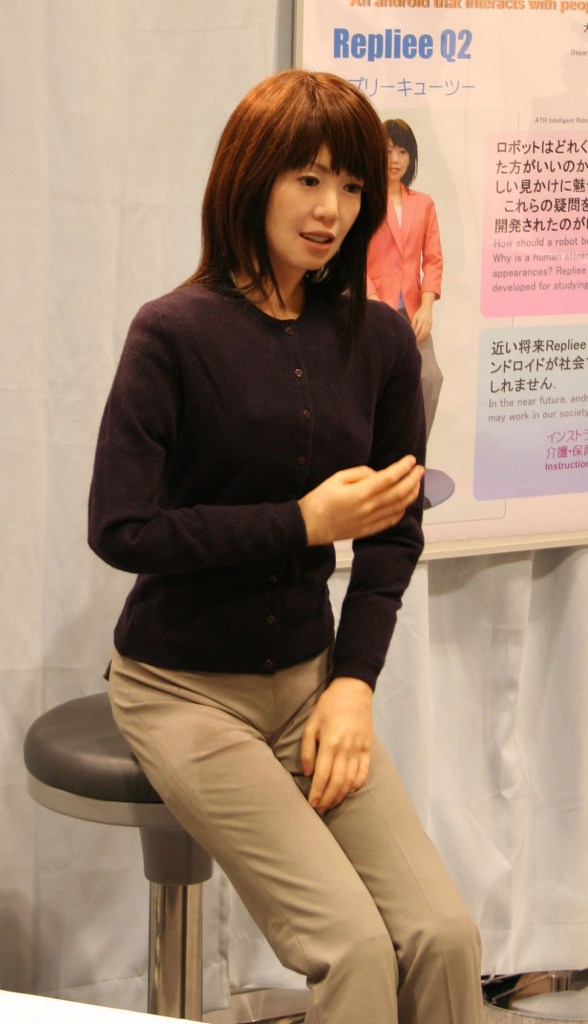
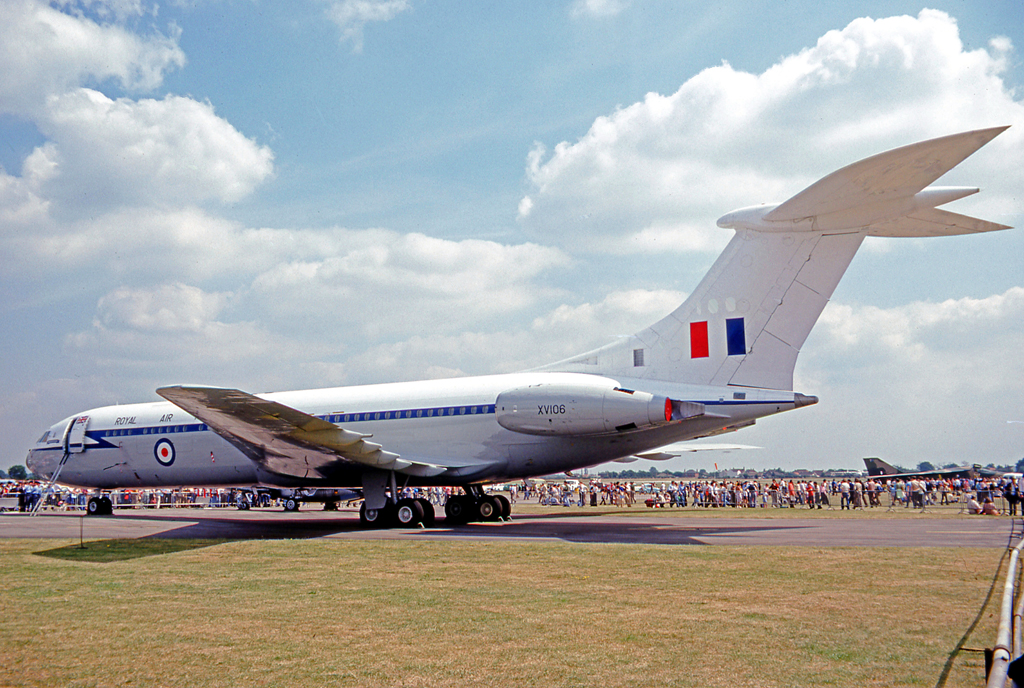
The Training Media in the different Aircraft Training Schools within a Country and throughout the world varies significantly which makes almost impossible to Standardise. I was invited to give a Presentation to many world Airlines at a meeting at Swiss Air headquarters in Basal Switzerland in the 1990’s to Propose that the upcoming EASA Training Syllabus should be a Computer Based Training (CBT), Standardised Training Package for EASA associated Airlines. However, this was rejected on Development Time, Different Views of Training Content and Resource, and CBT was in its infancy within my Company. The other concern is that Examination Questions should reflect what is in the Training Schools Training Media whilst complying with the EASA Requirements which was done in my Upgrade Process. If it were possible to Standardise Training Content and Examinations within the CAA of the Country this would, I believe, provide the ability to monitor performance of the Aircraft Training Schools and the Student Outcomes.
Quality of Trainers and Instructional Techniques
There is an old saying, “If you Cant Do then you Teach”. As a “Do’er and Trainer”, I find this totally ridiculous and insulting to some. “Training others is a Profession” and it takes special skills to Train others effectively. There are many Engineers that are very good at repairing Aircraft Faults but have no idea how to Train others. Like the Selection of Professional Aircraft Technician or Engineers this also applies to the Profession of Trainers. It is important that Trainers must be knowledgeable especially with the New Technology to enable them so explain clearly to the Students. It is also important that Trainers are made aware of Instructional Techniques that will help them convey the Training Content effectively.
I have seen many Trainers that do not have the Aptitude, Skills or the Subject Matter knowledge to be effective Trainers and in some cases have a very Negative impact on the Students attending their Training Lesson. The Selection of the correct type of Trainers is very important for the overall performance of the Aircraft Training Schools and Student Outcomes.
Consolidation and Practical Training Considerations
Consolidation is the Reinforcement of Theory learnt in the Classroom. This can be done through targeted Questions and Answers and by Physical Means using Equipment and Components. Another possibility is to use Simulation. I designed a portable Desk Top Simulation System that utilised commercial Simulation Software and an Interactive Real Time, Boeing B777 Simulator Software, to provide a Dynamic Consolidation for the Students to view on a Big Screen Projection. Typically it was used to show the Dynamics of the Integrated Display System (IDS) System and Flight information in the Cockpit from Start Up, Take Off, In-Flight and Landing. In the case of Part 66 there is a Formalised Practical Part of Training which includes workshop Practices and On Aircraft experiences.
Boeing B777 Cockpit Simulation
Consolidation and Practical Training is vital for in depth learning especially for Fundamentals Training such as EASA Part 66. There is a general Misunderstanding of Fundamentals Training of EASA Part 66 Modules which uses Aircraft Systems to reinforce Fundamental Principles and Activities. I was asked “Why are we using Aircraft Systems? We are not doing Aircraft Type Training.” Using the Aircraft Systems, we first of all relate Theory to a Real System which also acts as Consolidation. For example when we discuss the Generation and Display of Airspeed and Altitude we can relate this to the Pilots Flight Display (PFD) and Standby Instruments on the B777 Dynamic Simulation. This is a Visual Experience which is where 80% of Learning is achieved.It also allows the Students to recognise the modern Display Systems Technology.The Aircraft systems that I used were, Boeing B747-400, Boeing B777-300, Boeing B787, Boeing B737-800, Airbus A320, Airbus A380 and Airbus A350 each of them with there own Specialised Technology, which was included in the Upgrade of the EASA Part 66 Training Media and Training.
Examination Applicability
During my Reviews I found many Inconsistencies with the Examinations that were undertaken after the individual Modules were completed and the Final Examinations. The first problem was the incorrect allocation of the number of Questions related to the Module Content Size and Training Time. The second problem was that some of the Questions were not related to the Training Media information this was before the Upgrade. During the Training Media Upgrade the Question Bank was also Upgraded as part of the Sychronisation Process. The Construction of Questions is also important to ensure that they are Fair and Reasonable and Designed to make Students think logically.
The first and most important part of Examinations is to assess what Students have learnt during a period of Training. Therefore Questions must be related to the Training Media and Training given to the students. It is also important that Questions are constructed by an Experienced and Senior Trainer or Trained Examiner to ensure accuracy and applicability of Questions and Answers.
Summary
This article is a reflection of my own thoughts and activities which may be of interest to others. EASA Part 66 Training is just the start of a young Aircraft Technicians or Engineers hopes and dreams, but is probably the Most Important to provide a Sound Basis for future Aircraft Type Training and an Aircraft Servicing Career which may last for many Years. At the age of 83, I still have Aircraft and Aircraft Servicing and Training in my blood ever since I joined the Royal Air Force (RAF) in the England on the 15th November 1961, at the age of 20.
At the age of 83 and the significant time I spend at home, I have decided to re-open my website, to enable me to write more articles that maybe of interest to others but allows me to keep my creative brain active and provide me once again with a hobby. To access: astra283.wordpress.com