
Cold War Tensions and Threats
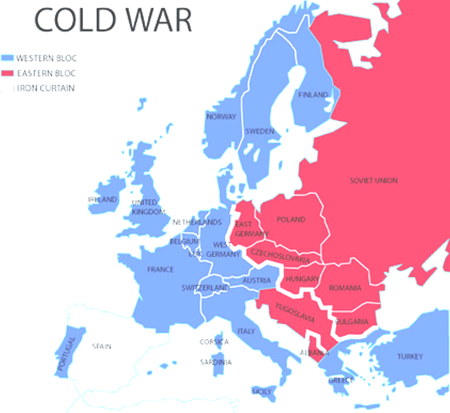
After World War in 1945 the United States, Great Britain and the Russians agreed to carve up Europe into the Eastern Block and the Western Block. The Eastern Block became the Union of Soviet Socialist Republics USSR), known as the ‘Soviet Union’ and the Western Block with the exception of East Germany as an Alliance with the United States and Canada which became the North Atlantic Treaty Organisation (NATO) in 1949. The separation line of the Eastern Block and the Western Block was known as the Iron Curtain. From this point onward this caused significant tensions both in ideology and militarily which was called the ‘Cold War’ until it officially ended in 1991 when the Soviet Union collapsed and 15 of the Eastern Block Countries became independent nations again with Germany being reunited. The major threat area during the Cold War was the Iron Curtain area along the East Germany and West Germany borders. Therefore it was essential to protect West Germany Border from an attack from the USSR. The ‘Harrier Force’ was part of that protection.
The Harrier Aircraft
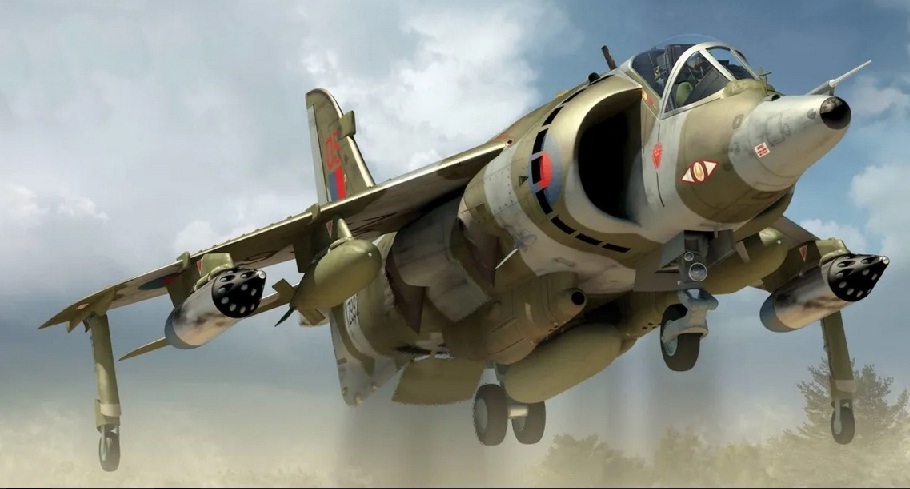
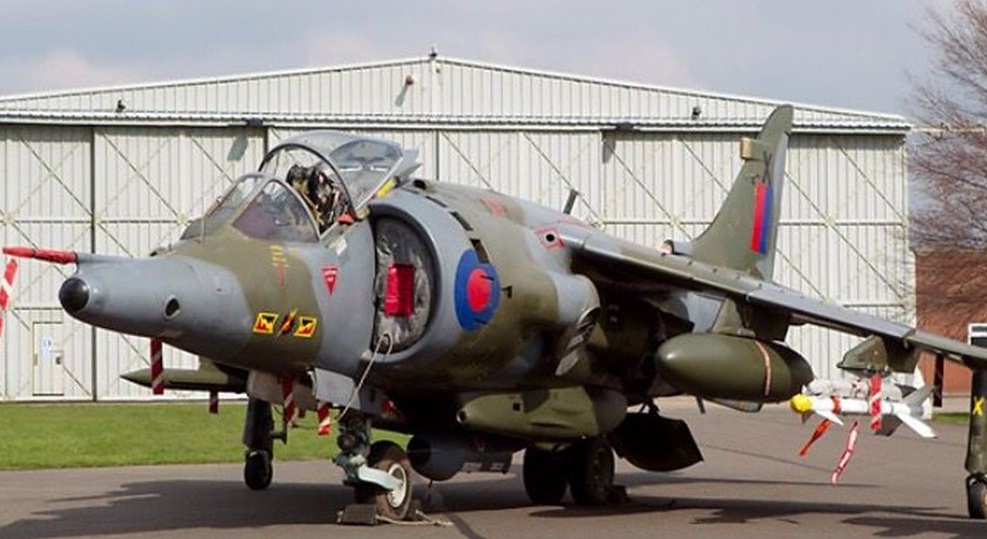
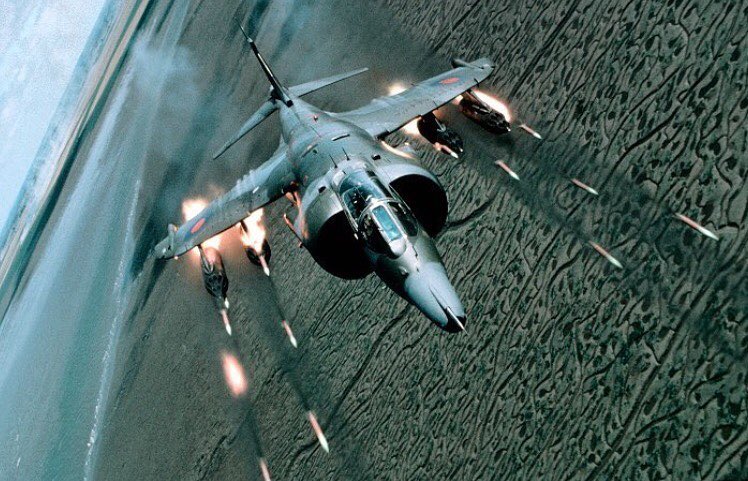
The Royal Air Force (RAF) ‘Harrier’ Aircraft was unique in that it was a Short Take Off and Vertical Landing (STOVL) Aircraft known as the ‘Jump Jet’. The Harrier design was even more unique in that it could operate from almost anywhere not just normal Airfields but Grass fields. The secret of its success were the 4 moveable nozzles that directed the Engine Exhaust Thrust either Downward for Hovering, Fully Backward for Flight and partially Down and Backward for Take Off. To maneuver the Harrier in the Hover there were small Exhaust Ducts at the ends of the Wings ,Nose and Tail called Puffa Ducts. In addition it had an advanced Inertial Navigation Attack System (INAS) including the Head-Up Display and could carry an array of Weapons from Bombs, Missiles and Rockets as shown in the image. Therefore this was a very powerful Ground Attack Aircraft to support Ground Troops ideal for protecting NATO countries West of the Iron Curtain.
The Harrier Force

The Harrier Force was a combination of Army Units, RAF Regiment and RAF Aircraft Personnel with all of the Squadrons Harrier Aircraft and Support Equipment, all working together throughout the year training for the protection of NATO. The effectiveness of this training was tested by Deploying the Squadrons to dispersed Sites somewhere in North East of West Germany at least three times a year, early Spring, Summer and late Autumn for 2 to 3 weeks at a time. This included moving all the Support Equipment and Personnel by Road and Setting Up the Site to receive Aircraft ready for Operations out of the Site. At times this was under combat conditions by NATO assigned enemy Troops. In addition each Squadron was sent to Decimomannu in Sardinia for Armament Practice once a year.
20 Squadron Harrier – RAF Wildenrath
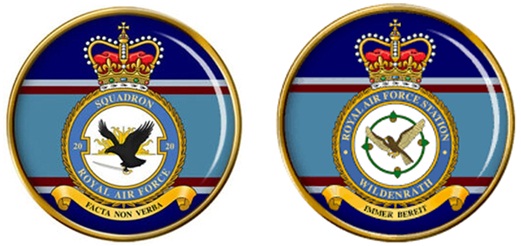
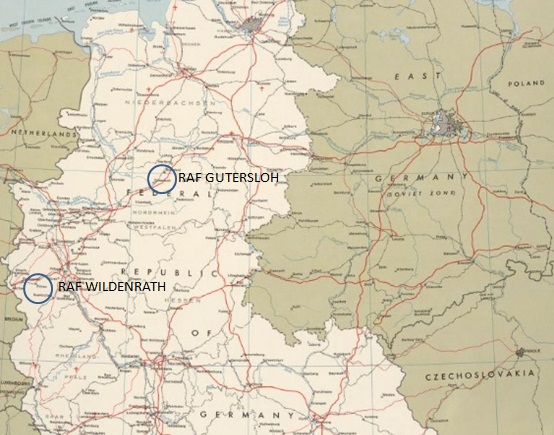
As a Flight Systems, Sergeant, I joined 20 Squadron (Sqn) Harrier part of the Harrier Force in September 1975 after a posting from RAF Wittering, servicing the INAS equipment for 1 year. This was the first RAF Squadron that I was assigned too and I had much to learn about Squadron Life, the Harrier Aircraft and the Servicing Team Operations. I therefore asked my team to allow me to do all the rectification work with them in attendance to allow me to learn as much as possible in a short space of time. This was invaluable for my future on the Harrier Force and beyond. However, my time on 20 Sqn Harrier would be short lived as it was disbanded in January 1976 due to a Strategic decision to move the Harrier Force to RAF Gutersloh North East of West Germany closer to the Iron Curtain.
4 Squadron Harrier – RAF Gutersloh
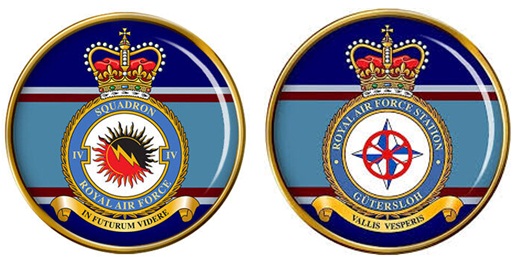
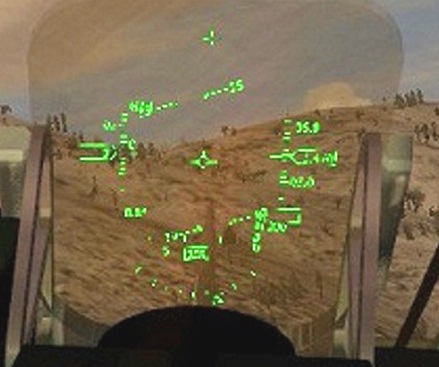
In January 1976, 3 Sqn and 4 Sqn were allocated to the Harrier Force now at RAF Gutersloh, in the North East of West Germany. My RAF Records show I was posted to 3 Sqn and 4 Sqn at the same time but actually I went to 4 Sqn. This was probably due to my promotion to Chief Technician (C/T) and Avionics Trade Manager of 4 Sqn. In addition I was tasked to Supervise and Plan the Sqn’s Vehicles, Servicing, Loading and Deployment at the appropriate time. Most of the Sqn Aircraft were modified Harrier GR3’s with a Laser Nose. I remember, I had several Harrier Aircraft in 4 Sqn and 3 Sqn that showed 500 ft per minute climb all of the time on the Head Up Display (HUD) in the Cockpit, that equated to a signal of 125 millivolts, which was not good for the Pilots. After almost pulling the Aircraft’s Avionics System apart over 18 days looking for a 125 millivolt signal, I found that an earlier modification to the HUD Power Unit, the Earth connector was connected to Virtual Earth and not True Earth. The difference was 125 millivolts which equated to a signal of 500ft per minute climb display on the HUD. After that both 4 Sqn and 3 Sqn Aircraft were rectified and the fault was cleared.
4 Sqn Deployments and Sites
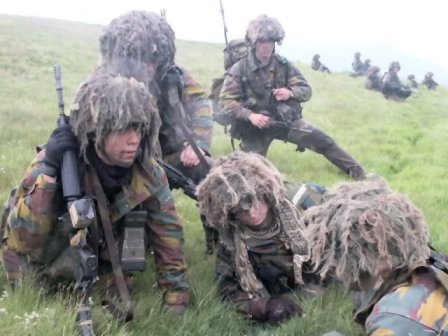
The most Demanding and Exciting part of being on the Harrier Force was the Deployments. The Deployments were a military Exercise that involved the Army Units of the Royal Engineers that prepared the Aircraft Hides and Aircraft Steel Foundations and the Signals Regiment, providing Communications on each Site. Each Sqn was allocated 3 Sites, a Prime Site, and 2 other Sites all in different but nearby locations. Each Site had 6 Harrier Aircraft and appropriate Pilots, Ground Crew, Catering and Medical Crew and Support Equipment. All personnel had personal weapons with blank ammunition when required. The Prime Site normally included the Sqn Boss, in this case, Wing Commander Tony Chaplin, Senior Management and Command and Control Responsibilities. The RAF Regiment were the front line Defenders of each Site based outside the Site, resisting any incursions by ‘Enemy Forces’ approaching the Site. If the enemy broke through to the Site then all Site RAF Personnel were called upon to defend the Site and Aircraft using their personal weapons and combat skills. This happened a few times whilst I was on 4 Sqn with injures to personnel including myself. One of our Officers had his front teeth knocked out by a Belgium Commando, so it was not all fun but plenty of Excitement.

4 Sqn Preparation and Deployments
As I said earlier, I was tasked to Supervise and Plan the Sqn’s Vehicles, Servicing, Loading and Deployment at the appropriate time. Most of the Vehicles were 4 Ton Bedford Lorries a few with 5 Ton Trailers and Landrovers some with small Trailers. There were some Specialised Vehicles with fully equipped Test facilities for Avionic Units. We had Specialised Towing Vehicles called, Mercedes Unimogs which were acquired by the 3 Sqn Boss, Group Captain Black many years earlier who borrowed one from a German Farmer to pull out a Harrier Aircraft Nose Wheel which sunk into the Mud on Take Off. The MoD bought them for the Harrier Force.

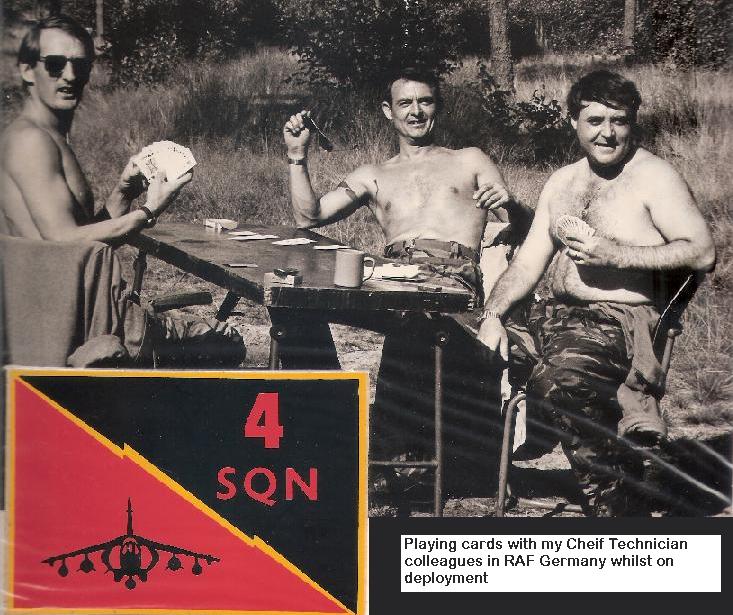
When the Exercise Alerts went off normally very early morning, the 4 Sqn Vehicles had to transport everything from Gutersloh to there specific Site. I planned all of the Vehicles Loads which included almost every equipment we had on the Sqn, Drivers and Personnel responsible for loading each item onto the Vehicles and where Personnel would sit in Vehicles. By the way this included the Beer Lorry. Although I was the Supervisor for all of this I preferred to Drive the 4 Ton Lorry with a 5 Ton Trailer with Air and Nitrogen Bottle Trolleys on Board, not a Landrover. We traveled in Convoys on per-determined routes to the Sites, however, when we reached the Sites it was a nightmare parking and camouflaging the vehicles especially if it was raining with mud all over the place. Then we had to unload a lot of equipment some of which was very heavy especially Gun Cocking Trolleys. However, that was part of the ‘Fun’ of a Deployment and morale was high. When the weather was good and we could have a break during the exercise we would get together and play cards. Like Robbie Airframe (left), Alex Electrician (right) and myself Avionics (centre).
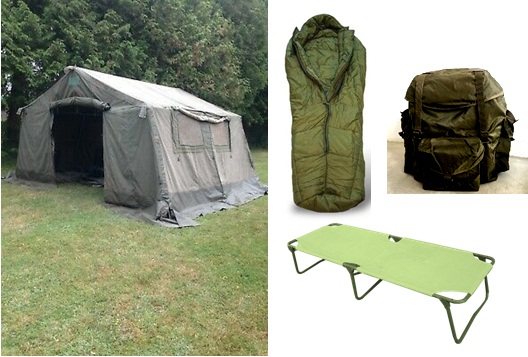
We were housed in 12 x12 Tents, with Camp Beds and Sleeping Bags. This was fine during good weather but at times especially the early Deployments there was early morning frost and the water containers were iced over, so washing and shaving was rather cold but refreshing. However every few days we would go to a local Army Regiment Barracks for a Shower and change of clothing and a beer with the Army guys who were very good hosts.
4 Sqn Operations
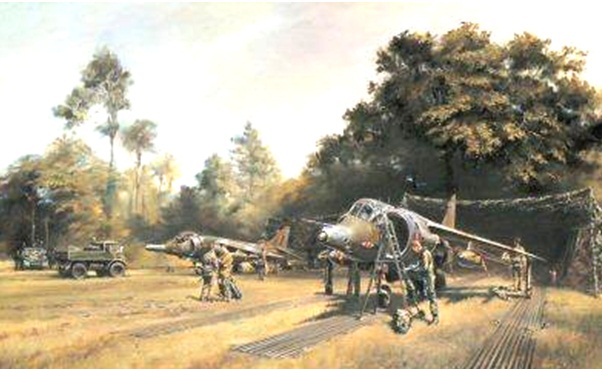
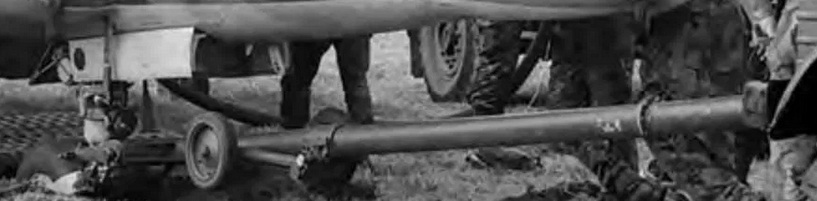
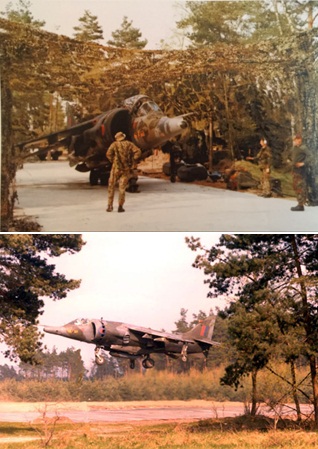
The Sites varied from runways using existing Roads, Metal Clad on Grass Fields and purely Grass Fields given that the ground was confirmed firm enough for the Harrier Aircraft to Take Off. However, using Grass and Ground only did at times cause problems with the Aircraft Nose Wheel sinking into the Ground. Very scary for the Pilots and very difficult to remove the Aircraft, hence the use of Unimog with its 24 gears.
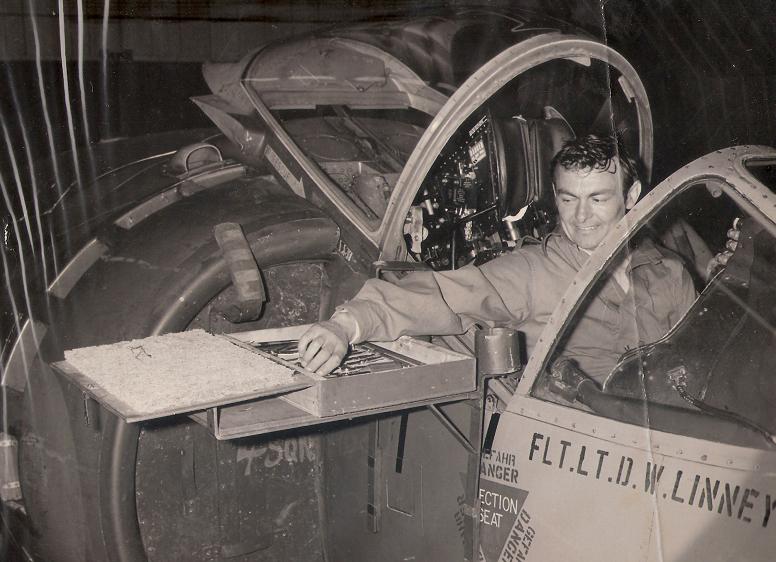
The Harrier Aircraft were parked in make shift Hides made of Poles and Camouflage Netting normally within a Tree Line which made them less visible from enemy air surveillance. Most Aircraft Servicing was done in the Hides. The Aircraft would Start and Taxi from the Hides to the area for Take Off. After the Sortie the Aircraft would land Vertically in the Hover to Touch Down and the Taxi back to the Hide location. During Servicing especially in the Cockpit it was very easy to drop a screw or bolt in the grass which was almost impossible to find. Whilst on 4 Sqn, I designed a simple attachment to enable the tool box and a container for the items. It was affectionately known as the ‘Bird Table’.
Armament Practice – Decimomannu in Sardinia
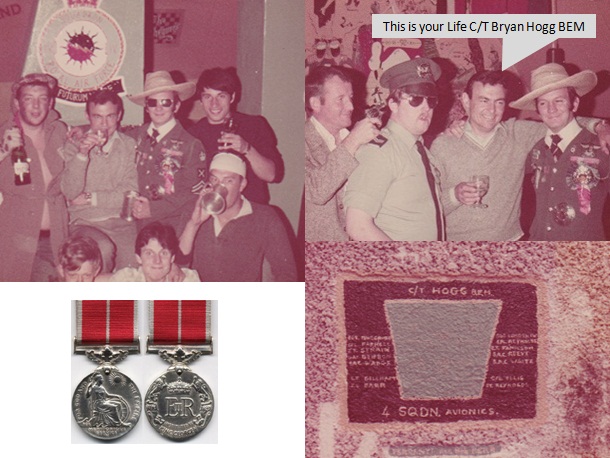
Once a year the Squadron were sent to Decimomannu in Sardinia, Italy (Deci), to allow the Pilots to experience Live Firing of Weapons from the Harrier Aircraft using the Inertial Navigation Attack System (INAS) that I and my men were responsible for. This also gave the Armourers chance to practice Loading Live Weapons on the Aircraft. We traveled from Gutersloh with our Specialised Testing Unit in a Hercules C130 Aircraft for about 4 hours which was quite noisy and uncomfortable. The Harrier Aircraft had a Moving Map Display, which I had to load a special 35mm map for navigation to Decimomannu and the pilots had to select this at 45 degrees North. However our Boss, Wing Commander Chaplin, which I had a very good working relationship with, never used the Map. We all new he was affectionately known as a ‘Pilot who flew by the seat of his pants’. At Deci Wing Commander Chaplin invited me to fly with him in the Harrier Training Aircraft (known as the ‘T Bird’) back seat, however I hated flying so I did not accept his offer. Just prior to my last visit to Deci I was awarded the British Empire Medal (BEM) which was really for the hard work that was put in by all on 4 Sqn. My great Avionics Team decided to do a ‘This is your Life skit’ and carved a wall with 4 Sqd Avionics and team names in Deci.


Finally the Squadron celebrated that the Pilots had scored the Highest number of hits on Target than any other Squadron. We also had the least number of faults recorded on the INAS. As the Ferranti Senior Management happened to be there, Wing Commander Chaplin invited me to the final Officers Mess Dinner, which was a great honour. In July 1979 my time on 4 Squadron came to an end which I enjoyed so much. I was posted to RAF Cottesmore to the Tornado Planning Team and after my Tornado Course to become SNCO IC the Tornado Aircraft Servicing Flight accepting the first Tornado Aircraft into service in June 1980. However, I would be involved with the Harrier Aircraft again in a different but important role. In April 1983 I was promoted to Flight Sergeant and was informed I would be the Officer IC of the Harrier Ground Servicing School at RAF Wittering with immediate effect.
Harrier Ground Servicing School (HGSS)
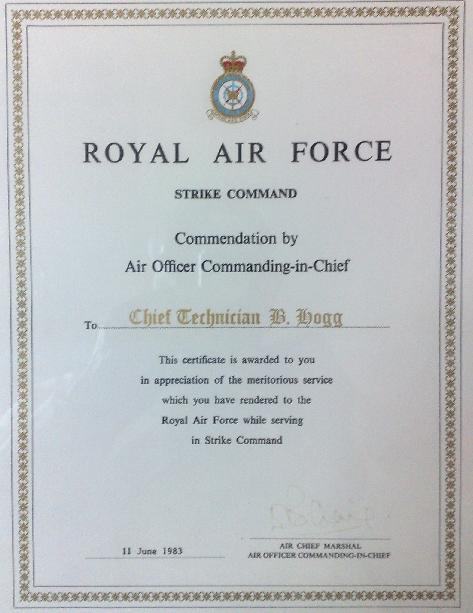
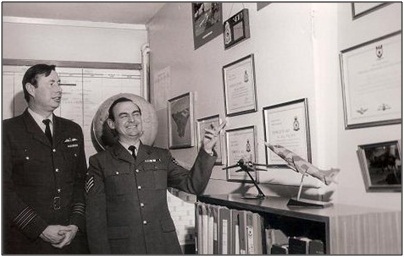
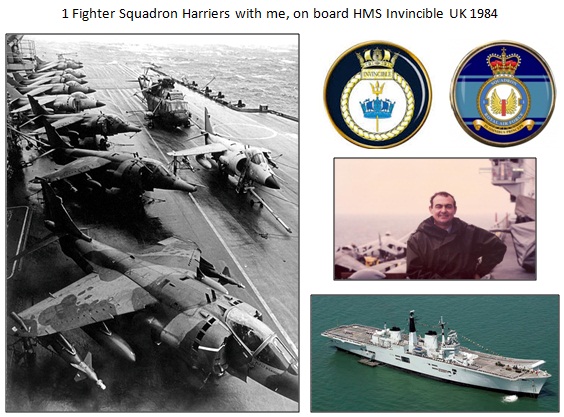
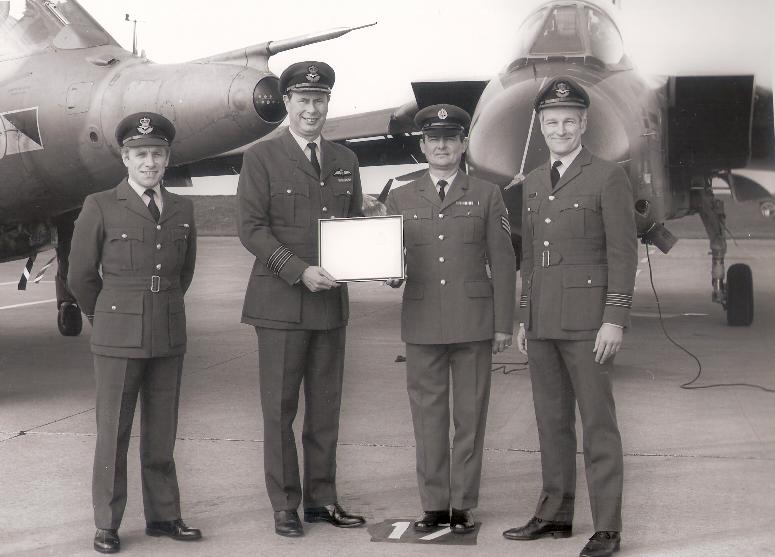
I arrived at HGSS on the 7 April 1983. The Instructional Staff include RAF and two RN personnel. They were very helpful on arrival and knew who I was and my background in the Avionics Bay in Wittering and my time on the Harrier Force with 20 Sqn and 4 Sqn. I was also welcomed by the RAF Wittering Station Commander Group Captain Dodworth as HGSS was located in the Headquarters building. Just after arriving at HGSS, I was awarded the Air Officer Commanding- In- Chief Commendation for Meritorious Service to RAF Strike Command. Only a few days later I was contacted by Support Command saying that they had been contacted by the Harrier Force in Germany to rapidly improve the quality of Harrier Avionics Personnel Technical Training. I was told that I should consider this situation and provide a plan urgently to address the situation. After consulting with the Wittering Station Commander he agreed to installing a Aircraft Power Supply Generator in HGSS to allow a disused INAS Training Rig with actual equipment to be powered just like a Harrier System. This allowed me to connect the specialised Test Equipment which my team used in Germany. I also decided to reduce the Training Time from 13 weeks to 7 Weeks for personnel working on Aircraft concentrating on Fault Finding. The responses some time later from the Harrier Force was very positive. During my time at HGSS I was selected to lead a Team from 1 Sqd and 4 GR3 Aircraft to operate from HMS Invincible to find a better way to Align the INAS which I did over 4 weeks at sea. Soon after I was awarded a Certificate of Merit for an Invention on the Tornado and the Station Commander arranged for a Tornado flown into RAF Wittering to be parked next to a Harrier GR3. On a lighter note we used to have HGSS Charity Draws with Group Captain Dodworth pulling out my ticket number. In May 1985 I was informed I would be posted to 20 Sqn operating Tornado Aircraft at RAF Laarbruch in Germany. So this would be the last time I would be involved with the Harrier Aircraft and Harrier Force in the RAF. I resigned from the RAF after 25 years service in June 1986 to Join British Aerospace and then Start my own business, Computeriesd Training Systems Ltd, which designed and developed Computer Based Training for the RAF Harrier and Tornado Aircraft.
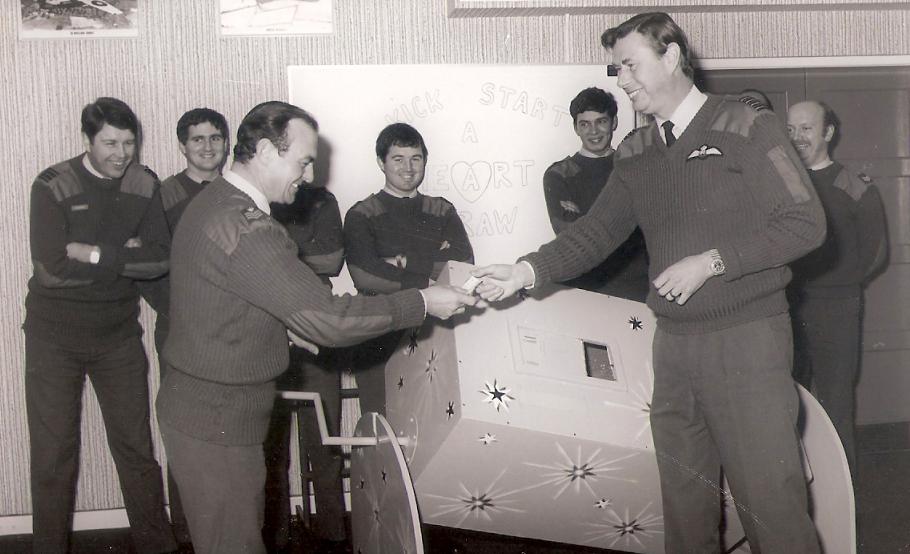
The end to an Exciting, Challenging and Enjoyable Life in the Harrier Force.
Footnote 1:
Sadly many people mentioned or seen in this article are no longer with us. Wing Commander Tony Chaplin passed away April 2018.
Group Captain Dodworth – Retired as an Air Marshall in 1996. He is 84 one year older than me.
Footnote 2:
The Harrier is no longer in RAF Service – 1969 to 2010
The Tornado is no longer in RAF Service – 1980 to 2019
 <a href="https://astra283.wordpress.com/wp-admin/site-editor.php?calypsoify=1&block-editor=1&frame-nonce=af705db4bc&origin=https%3A%2F%2Fwordpress.com&environment-id=production&support_user&_support_token&postType=wp_template&postId=pub%2Flivro%2F%2Fhome#site-title-pseudo-link">Training designer</a> - avionic & Aircraft Engineer -- BRYAN HOGGb.e.m
2 responses to “My Life in the Harrier Force”
Well written Bryan. Brings it all back!
LikeLike
Thank you very much Chris the RAF was a most enjoyable and challenging part of my life including my civilian life as founder of Computerised Training Systems Ltd (CTS) which did much of the Computer Based Training (CBT) for the RAF Harrier and Tornado, Army and RN. Once again thank you.
LikeLike