
My Aircraft Engineer’s Perspective – Introduction
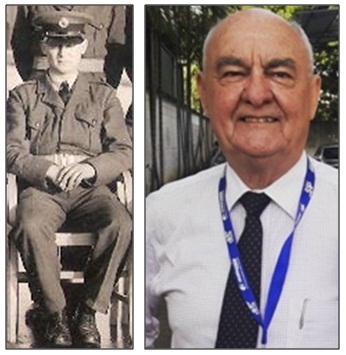
Recently I have noticed that many Airlines are under increasing pressure to keep Aircraft Serviceable to meet the increased Schedules post COVID 19. During the COVID 19 time many Experienced Aircraft Engineers were laid off or made redundant. In addition Training of new young Technicians and Engineers was stopped due to the COVID 19 classroom rules. Companies producing spare parts Mechanical and Avionic were also affected by COVID 19. Production targets for delivery of new Aircraft with improved Technology were also affected by COVID 19. Manufacturing Faults of brand new Aircraft which caused major Fatalities, delayed deliveries further. Let me be clear COVID 19 has had a significant impact on the Airlines but that cannot be blamed for all the Airlines woes especially regarding the Aircraft Serviceability problems. As a Senior Aircraft Technician and Engineer in the UK Royal Air Force for 25 years and a Designer and Developer of Aircraft and other Training Software, as Managing Director of my companies for 35 years, world wide.
I have included additional personal opinions that I believe need to be considered seriously for the future of Aircraft Servicing Training and Resulting Aircraft Technicians and Engineers.
Airline Servicing Situations to be Considered
Listed below are factors that I am expressing some opinions on:
- Aviation Authorities
- New Aircraft Technologies
- Aircraft Technician and Engineers Selection Criteria
- Training Media Content and Quality
- Quality of Trainers and Instructional Techniques
- Consolidation and Practical Training Considerations
- Examination Applicability
Aviation Authorities
There are four important world Aviation Authority Organisations which I need to identify that set the Standards for Aviation including Training from Aircraft Fundamentals; leading to a Licence to Aircraft Type; leading to Certification:
The International Civil Aviation Organization (ICAO) is a United Nations agency which helps 193 countries to cooperate together and share their skies to their mutual benefit. It was established in 1944, at the Chicago, USA Convention.
The Federal Aviation Administration (FAA) was created in 1967 which is responsible for all things Aviation including the standards for Technician and Engineering Licences in the USA and is used by other countries that adopted the FAA Standards.
Civil Aviation Authority (United Kingdom) (CAA) was established in 1972, which again is responsible for the standards for Technician and Engineering Licences in the UK. However, until the establishment of the EASA many other CAA’s in the world adopted the UK CAA standards including Singapore and Malaysia.

European Union Aviation Safety Agency (EASA) was formerly established in 2002, although the concept originated in the early to mid 1990’s, which again is responsible for the standards for Technician and Engineering Licences in the European Union (EU). Many other countries including Singapore and Malaysia have adopted the EASA standards.

However, each Country in the world has its own CAA that is Responsible in Law to its Government. In the case of Malaysia it is the Civil Aviation Authority of Malaysia (CAAM) which has adopted the EASA Training Standards.
New Aircraft Technologies

One of the latest New Aircraft is the Airbus A350 which reflects the latest Technology utilised by the Mechanical and Avionic Systems which are in most cases totally Integrated with one another. This is due to Computerisation of almost all Mechanical Systems, including Engines, Airframe, Flight Control Components and Landing Gear. The Avionics and Electrical Systems are also almost totally Integrated, including Aircraft Power Generation, Flight Management and Navigation Systems, Cockpit Display and Control Systems, Automatic Flight Systems, Communication Systems and Cabin Systems . Almost all of these Systems Mechanical and Avionic are controlled by Integrated Aircraft Software Network Systems such as the (Avionics Full DupleX switched (AFDX) network) to allow the different Systems to communicate with each other. This is known as Integrated Modular Avionics (IMA).
This means there are two elements to Servicing and Aircraft, Physically Replacing System Components which we call Line Replacement Units (LRU’s) and then undertaking the Software Integration Testing using the On-Board Maintenance System (OBMS) and Mechanical Testing when applicable to confirm Serviceability.
Over the past 30 years Aircraft and Aircraft Systems have changed dramatically, especially, the Electrical and Avionic (Aviation Electronics) Systems which now dominate Aircraft Operations. Almost every System; Power Generation, Engines, Flight Controls, Instrumentation and Displays, Communications, Cabin Systems are all Computerised and Interconnected. In the past when Aircraft Systems were not Integrated, Aircraft Engineers had specific Roles and Servicing Responsibilities such as, Airframe, Engines, Electrical, Instruments etc. Today due to Systems Integration the Aircraft Engineers have to work together as a Team when Servicing the Aircraft. As an Avionics Engineer for many years it has been essential to support all Engineers whatever their Specialisation to achieve positive results. In time to come I see that all Aircraft Specialisations will be combined to create an ‘Overall Aircraft Engineer’. This happened when the ‘Avionics Engineers’ incorporated, Electrical, Radio Communications, Instrumentation, Radar and Automatic Flight Specialisations all together. Note: In the RAF, I was an ‘Overall Aircraft Engineer’ for the Tornado and Harrier Aircraft.
Aircraft Technician and Engineers Selection Criteria
The Selection of people to fulfill the Requirements of being an Aircraft Technician or Engineer, I believe, is the most Difficult and yet the most Important aspect of Professional Aircraft Servicing especially the Airlines. However, this Selection Process is entirely up to the Countries CAA and its associated approved EASA Part 145 and Part 147 Aircraft Technician and Engineer Aircraft Licence Training Schools. This is where young people learn Basic Fundamentals in accordance with EASA Part 66 Regulations to acquire their Aircraft Technician and Engineer Aircraft Licence over a period of 3 to 5 years.
As I have highlighted, the Airline Aircraft of Today and the Future are extremely Complex and require the Highest Quality of Aircraft Engineers in particular to ensure these Integrated Aircraft Systems are Fully Operational at all times. Gone are the days when we can isolate an Aircraft Fault but still Certify the Aircraft for Flight.
If there are several approved Schools within the Country, there is going to be differences in the Selection Process not involving the Academic Selection but more importantly the ‘Aptitude and Suitability’ elements. In addition, in some Countries the preferred ‘Race, Religion or Colour’ is necessary to meet the Countries Social Objectives. However, this leads to Inferior Selection Standards, which may involve ‘Academic, Aptitude and Suitability to be a Professional Aircraft Technician or Engineer. This then affects, in a period of time, the Quality of Professional Aircraft Technician or Engineers resulting in the Airlines Serviceability Pressures and Cultural Nature of the Airline. Please note: That all different Races, Religions and Colour people can make excellent Professional Aircraft Technician or Engineers if they meet the Criteria.
Training Content and Quality
As an ex Royal Air Force (RAF) ‘A’ Class Trainer, Manager Of Training and the Officer In Charge of the RAF Harrier Ground Servicing School, in addition to being a Training Officer at British Aerospace, I am fully aware of the Importance of Training Content Design, and the Quality of the Trainers and Instructional Techniques.
In 2013, I became a Training Consultant for an Authorised Part 145 and Part 147 School in Malaysia, to Review their EASA Part 66 Training, especially for the Electrical and Avionic Modules, including Content and Quality, in an effort to produce better Technician and Engineering Student outcomes.
After an Extensive Review and Analysis of the Electrical and Avionic Training for 6 months, I produced a Report which in essence stated that the Training of the EASA Part 66 Avionic Modules shown below needed to be Upgraded to incorporate all of the New Technologies used in the Modern Integrated Mechanical and Avionic Systems and Improving the Quality of all Training Media.

One of the most important parts of Aircraft Training Media is that the Training Notes and the Presentation Slides must have the same Content (Synchronised) or the Student cannot follow the lesson. In addition, the Images and Graphics must be of High Quality and Relevant to the Subject Matter. This was not the case in all of the Modules identified.
For this reason, I Re-Designed and Produced a New Synchronised Training Environment based upon Modern Aircraft Technology which would include Training Notes, Power Point Presentations, Instructors Guides, a form of Consolidation and Updated the Question Bank for the whole of the Electrical and Avionic Modules contained in the EASA Part 66 Regulations 1149/2011 dated 21 October 2011. As part of this Major Upgrade I created hundreds of new Images and Diagrams to enhance the Training. This was a major task which took me 6 years to complete.
The Training Media in the different Aircraft Training Schools within a Country and throughout the world varies significantly which makes almost impossible to Standardise. I was invited to give a Presentation to many world Airlines at a meeting at Swiss Air headquarters in Basal Switzerland in the 1990’s to Propose that the upcoming EASA Training Syllabus should be a Computer Based Training (CBT), Standardised Training Package for EASA associated Airlines. However, this was rejected on Development Time, Different Views of Training Content and Resource, and CBT was in its infancy within my Company. The other concern is that Examination Questions should reflect what is in the Training Schools Training Media whilst complying with the EASA Requirements which was done in my Upgrade Process. If it were possible to Standardise Training Content and Examinations within the CAA of the Country this would, I believe, provide the ability to monitor performance of the Aircraft Training Schools and the Student Outcomes.
Quality of Trainers and Instructional Techniques
There is an old saying, “If you Cant Do then you Teach”. As a “Do’er and Trainer”, I find this totally ridiculous and insulting to some. “Training others is a Profession” and it takes special skills to Train others effectively. There are many Engineers that are very good at repairing Aircraft Faults but have no idea how to Train others. Like the Selection of Professional Aircraft Technician or Engineers this also applies to the Profession of Trainers. It is important that Trainers must be knowledgeable especially with the New Technology to enable them so explain clearly to the Students. It is also important that Trainers are made aware of Instructional Techniques that will help them convey the Training Content effectively.
I have seen many Trainers that do not have the Aptitude, Skills or the Subject Matter knowledge to be effective Trainers and in some cases have a very Negative impact on the Students attending their Training Lesson. The Selection of the correct type of Trainers is very important for the overall performance of the Aircraft Training Schools and Student Outcomes.
Consolidation and Practical Training Considerations
Consolidation is the Reinforcement of Theory learnt in the Classroom. This can be done through targeted Questions and Answers and by Physical Means using Equipment and Components. Another possibility is to use Simulation. I designed a portable Desk Top Simulation System that utilised commercial Simulation Software and an Interactive Real Time, Boeing B777 Simulator Software, to provide a Dynamic Consolidation for the Students to view on a Big Screen Projection. Typically it was used to show the Dynamics of the Integrated Display System (IDS) System and Flight information in the Cockpit from Start Up, Take Off, In-Flight and Landing. In the case of Part 66 there is a Formalised Practical Part of Training which includes workshop Practices and On Aircraft experiences.

Consolidation and Practical Training is vital for in depth learning especially for Fundamentals Training such as EASA Part 66. There is a general Misunderstanding of Fundamentals Training of EASA Part 66 Modules which uses Aircraft Systems to reinforce Fundamental Principles and Activities. I was asked “Why are we using Aircraft Systems? We are not doing Aircraft Type Training.” Using the Aircraft Systems, we first of all relate Theory to a Real System which also acts as Consolidation. For example when we discuss the Generation and Display of Airspeed and Altitude we can relate this to the Pilots Flight Display (PFD) and Standby Instruments on the B777 Dynamic Simulation. This is a Visual Experience which is where 80% of Learning is achieved. It also allows the Students to recognise the modern Display Systems Technology. The Aircraft systems that I used were, Boeing B747-400, Boeing B777-300, Boeing B787, Boeing B737-800, Airbus A320, Airbus A380 and Airbus A350 each of them with there own Specialised Technology, which was included in the Upgrade of the EASA Part 66 Training Media and Training.
Examination Applicability
During my Reviews I found many Inconsistencies with the Examinations that were undertaken after the individual Modules were completed and the Final Examinations. The first problem was the incorrect allocation of the number of Questions related to the Module Content Size and Training Time. The second problem was that some of the Questions were not related to the Training Media information this was before the Upgrade. During the Training Media Upgrade the Question Bank was also Upgraded as part of the Sychronisation Process. The Construction of Questions is also important to ensure that they are Fair and Reasonable and Designed to make Students think logically.
The first and most important part of Examinations is to assess what Students have learnt during a period of Training. Therefore Questions must be related to the Training Media and Training given to the students. It is also important that Questions are constructed by an Experienced and Senior Trainer or Trained Examiner to ensure accuracy and applicability of Questions and Answers.
Summary
This article is a reflection of my own thoughts and activities which may be of interest to others. EASA Part 66 Training is just the start of a young Aircraft Technicians or Engineers hopes and dreams, but is probably the Most Important to provide a Sound Basis for future Aircraft Type Training and an Aircraft Servicing Career which may last for many Years. At the age of 83, I still have Aircraft and Aircraft Servicing and Training in my blood ever since I joined the Royal Air Force (RAF) in the England on the 15th November 1961, at the age of 20.
 <a href="https://astra283.wordpress.com/wp-admin/site-editor.php?calypsoify=1&block-editor=1&frame-nonce=af705db4bc&origin=https%3A%2F%2Fwordpress.com&environment-id=production&support_user&_support_token&postType=wp_template&postId=pub%2Flivro%2F%2Fhome#site-title-pseudo-link">Training designer</a> - avionic & Aircraft Engineer -- BRYAN HOGGb.e.m