
This is the story of my Royal Air Force (RAF) experiences at RAF Seletar Singapore and RAF Butterworth also known as Royal Australian Air Force (RAAF) Butterworth in Malaysia when I was 25 to 28 years old, 54 years ago.

Malaysia/Indonesia Confrontation
Prior to 1963, the island of Borneo was divided into four separate states: Kalimantan, an Indonesian province, which was located in the south of the island and the kingdom of Brunei and two British colonies: Sarawak and British North Borneo (which was later renamed Sabah) located in the north. As part of its withdrawal from its Southeast Asian colonies, the UK moved to combine its colonies of Borneo with those on peninsular Malaya, to form Malaysia in September 16th 1963.
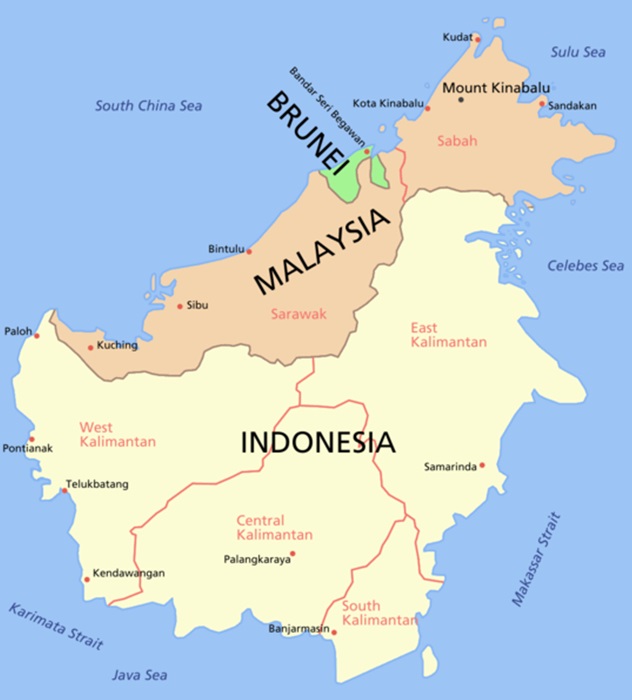
However, the Indonesians were unhappy with the intended creation of Malaysia which resulted in an undeclared war (confrontation) with the Indonesians in Borneo from January 20th 1963 which would go on until the 11th August 1966.
British Commonwealth Response
Malaysia was still a commonwealth country therefore the British, Australian and New Zealand forces who were supporting the fledgling Malaysia became involved which included the RAF in Singapore, Seletar, Tengah and Changi and RAF Butterworth and Royal Australian Air Force (RAAF) station in Malaysia.

In support of the confrontation in it was decided to trial the Jet Provost T4 as a jungle Forward Air Control aircraft. In February 1966 as an Instrument fitter, having worked on Jet Provosts, I amongst others was selected to go on a special trial mission to re-construct 4 Jet Provost aircraft which were sent to Singapore RAF Seletar together with specialised ground equipment (in boxes). This was just like putting a kit car together but more complex. My responsibility was to ensure all of the Cockpit Instrumentation and Systems were installed and fully tested correctly. I also remember a dark blue Royal Navy Buccaneer was parked outside the hangar which was quite unusual.
The aircraft were test flown from RAF Seletar after re-construction which took about 6 weeks. They then were flown to the Royal Australian Air Force (RAAF) base in RAF Butterworth in Malaysia.
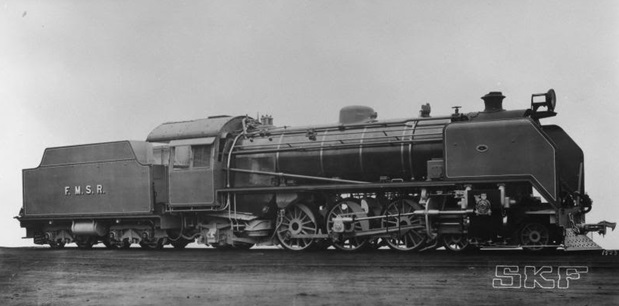
On completion of the construction I was on the last small team to leave Singapore for RAF Butterworth in northern Malaysia. We had to travel by train which was a 24 hr journey. The train had a steam engine and the carriages had no windows and wooden seats and beds. It stopped at every little village (Kampong) on the way up.
RAF Butterworth
We arrived at Butterworth railway station in the morning and we were met by one of our young RAF Flight Lieutenant Pilots who organized transport from the railway station to RAF Butterworth.
Sadly that afternoon he was flying one of the Jet Provost aircraft over the jungle and his aircraft hit a very tall dead tree and crashed, killing him. What was more distressing I and two others were told we were going into the jungle by lorry with some British Army men to get his body and some vital equipment from the crashed aircraft. This was a very dangerous and gruesome task as the including large jungle ants combined with many snakes and other animals in this dense and uninhabited part of the jungle.
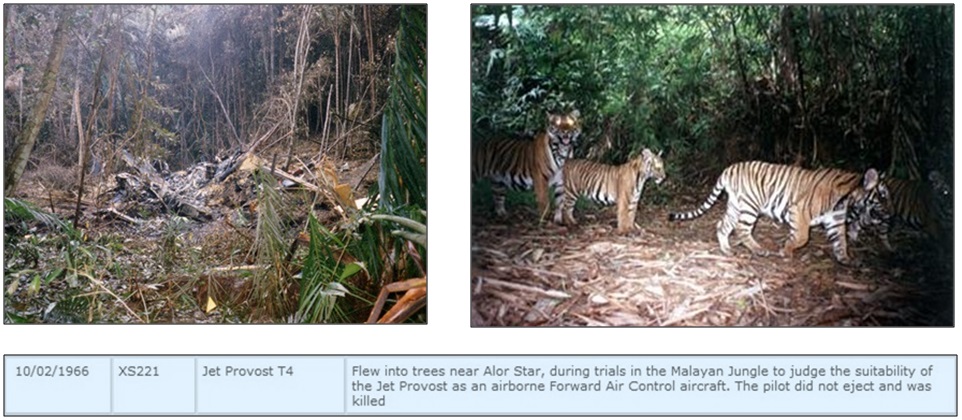
We stayed in the jungle overnight lighting fires to keep animals such as Tigers away from our lorry where we slept as it was too dangerous to sleep in tents on the jungle floor. It also rained heavy that night so it made it very difficult for the lorry to leave and return to RAF Butterworth. However, eventually we made it back but an unforgettable and harrowing experience.

On a lighter note we all enjoyed our work and play especially playing football and darts against the Royal Australian Air Force men. We had a good football team considering we only had a small number of men to pick from.
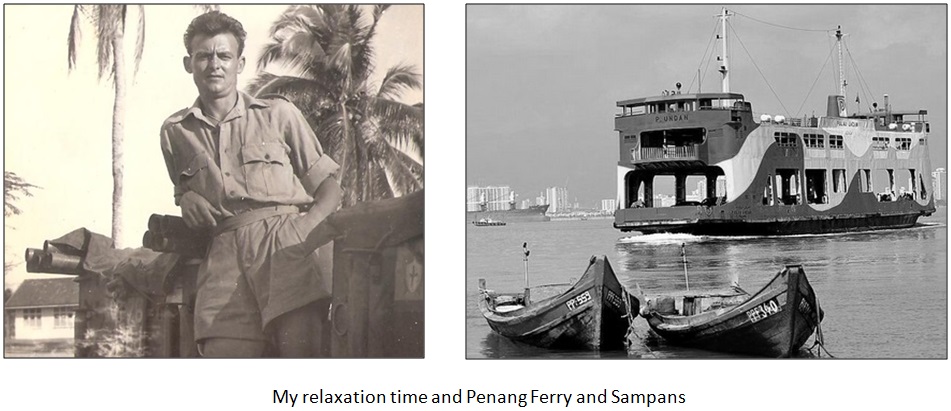
In the 3 months at RAF Butterworth we visited Penang Island many times on social visits, however there was one night I and some of my friends missed the last midnight Ferry that used to go between Penang and Butterworth. We had to go in a Sampan, a small boat all the way across the straits and we very sick on reaching Butterworth.
Mission Completed – Return to the UK
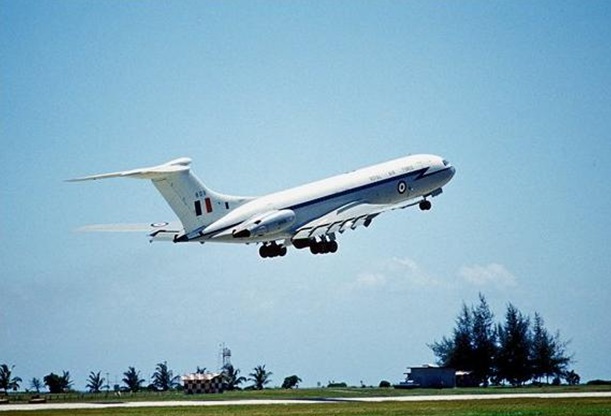
After completing the trials mission in April 1966 we were flown back to RAF Seletar by Beverley of 34 Sqd. and after a few days back to the UK and my station RAF CFS Little Rissington via Gan and Island part of the the Maldives in the Indian Ocean Maldives on a new medivac VC10 Aircraft. An epic adventure but only the start of my association with RAF Seletar.

Return to RAF Seletar
After my service at RAF Little Rissington Central Flying School as a Junior Technician (J/T), I was advise I would be going to RAF Seletar 390 Maintenance Unit (390MU) Singapore with my family, my wife and 2 year old son in December 1966 for a number of years. The Malaysian/Indonesian confrontation ended in August 1966.
Journey from RAF Brize Norton to RAF Seletar
The journey to Singapore with my family was on board an RAF passenger Airliner the Britannia but it had to stop every 6 hours to re-fuel. Our first stop was Cyprus, then Kuwait, then Columbo in Ceylon (now known as Sri Lanka). Whilst taking off from Columbo for Singapore the aircraft hit a flock of large birds and it caused one of the engines to stop and fuel was leaking from the engine. I count myself extremely lucky to be alive due to the skill of the pilot and the fact the fuel did not explode which it could have done on the hot engine.

However, after landing it was decided that the spare parts would take several days to arrive so we all sent to high quality hotels around the coast of Ceylon not far from Columbo. It was like a free holiday which was welcome after the experience we encountered.
Arrival at RAF Seletar
After landing at RAF Changi in Singapore we were bussed to RAF Seletar for processing but it was very hot and humid which I had experience before but my wife with a young child found it difficult to get used to.
Jalan Kayu Village (Kampong)
The main entrance to RAF Seletar was near the local village called Jalan Kayu, which looked very old and the shops were no more than wooden buildings that had a strange array of goods and food, some of which did not smell nice at all. However, the people were extremely friendly and especially the owners of the grocery shops who were trying to rent their houses.
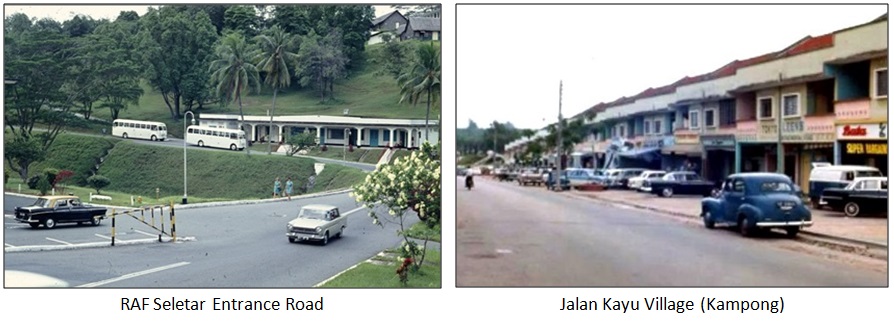
It was the custom in those days that the shop you rented the house from insisted that you do your family shopping at that shop and you had to agree to a minimum amount or they would not rent the house to you. I was very lucky to rent a house in Seletar Hills not far from RAF Seletar which meant I could use my bike to go to work.
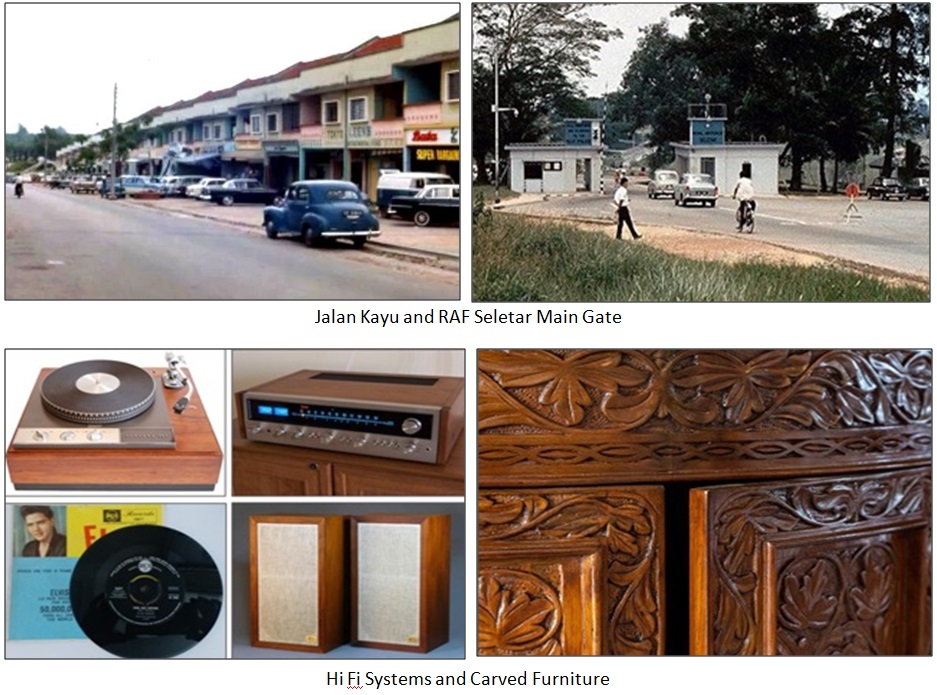
At the top of Jalan Kayu near the main gate of RAF Seletar was a High Fidelity Sound System (Hi-Fi) shop run by a Chinese, I think was called Seng. Hi-fi was really in fashion at that time and many of my friends and myself used to spend time and money at this shop as the exchange rate at that time was 8.5 Sing Dollars to one British Pound. Another fashion was buying teak carved furniture made to your own design which was also available in Jalan Kayu.
390 Maintenance Unit (390MU)
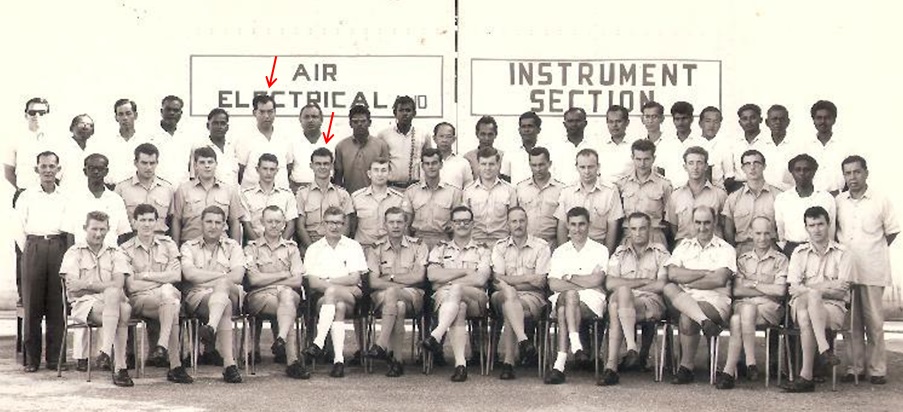
I was assigned to 390 Maintenance Unit (390 MU) which was responsible for servicing Electronic Test Equipment and Aircraft Equipment such as Autopilots and Instruments. The Electrical and Instrument Section where I worked was a mix of RAF personnel and local Singaporeans one of which was Mr Chow (arrows) who helped me build Hi-Fi amplifiers that I designed in our own time and he became a very good friend.

Electronic and Electrical Training
At that time I was promoted to Corporal and I was very interested in Electronics and undertook a correspondence course for Advanced Electronics. This enabled me to design Hi-Fi amplifiers and systems and then build them in my spare time. Another interest was doing training in basic and advanced electronics. I was asked to do training for many RAF SAC mechanics so that they could take their technicians exams in Singapore.
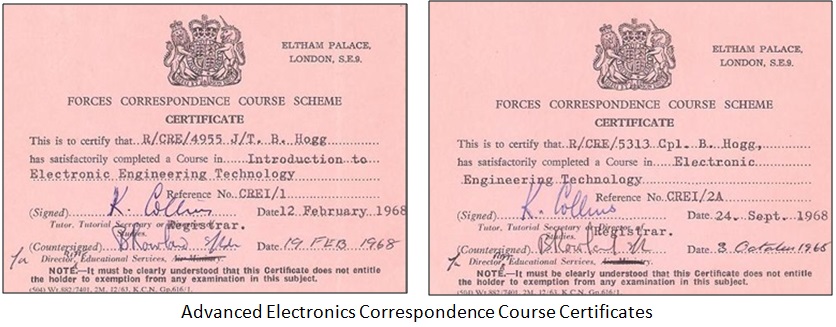
The final part of my tour at RAF Seletar in 1969 as a Corporal was taken up by training Instrument and Electrical mechanics preparing them for their fitters exams in Singapore and the local members of RAF Seletar technical sections. As RAF Seletar was going to close in late 1969 the local 20 technical personnel in the Air Electrical and Instrument section asked me to teach them electronics after work in a room at work which I agreed. However, the first class to my surprise, almost 50 locals turned up.
Special Marine Craft Task
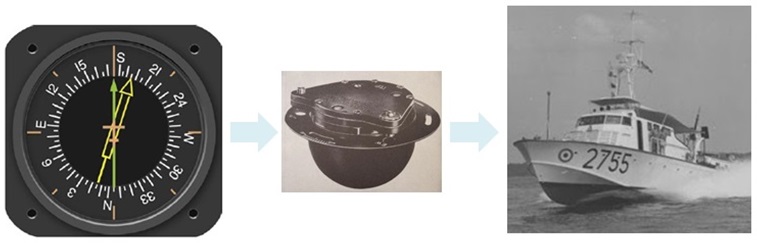
Another task of the 390 MU Electrical and Instrument Section and I, was the modification to the RAF Seletar Marine Craft by fitting a Magnetic Compass system. This involved fitting the Flux Valve (centre) inside the bow of the boat which I was tasked to do . This was like being in a Sauna as it was so hot and very cramped as it had to be fitted as near to the front of the bow as possible.
Christmas Sadden by Beverly Disaster
Christmas in Seletar Hills was very special as many of us had a ‘pied piper’ type celebration. One family would visit a home and after a couple of drinks both families would walk to the next home and so on until the last house ended up with about 30 or 40 people all very merry.
A Beverley aircraft XL 150 which had a two-tone brown camouflage scheme was issued to 34 Sqn RAF Seletar in March 1966. On the 15th December 1967 it crashed into a ridge at Bukit Hantu 144 km north of Johor Bahru, Malaysia, in bad weather during a low level cross-country flight. The crew; Squadron Leader Nigel Bacon, Flying Officers David Brodie and Brian Hudson and Sergeants John Curtis, Brian George and Ernest Trigwell were all killed.
Therefore Christmas 1967 was very depressed trying to comfort his family after the Beverly Crash. This was a very sad day for me as one the Sergeants (don’t want to name) was a family friend who had a wife and children and lived in Seletar Hills. It was even more shocking as it happened just before Christmas.
End of the RAF Seletar Tour of Duty but not Singapore.
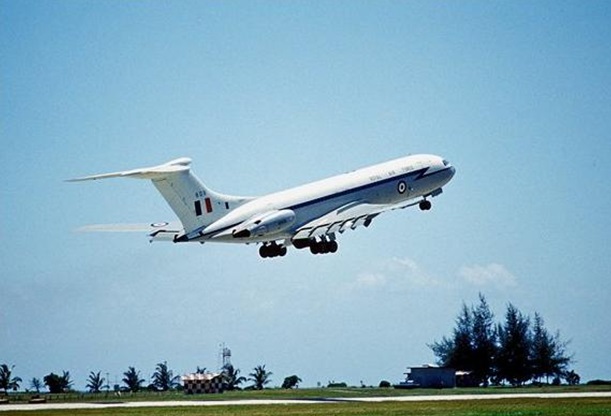
We returned to the UK on a VC 10 in late April 1969 posted to RAF Cosford as an Instructor and thought I would never see Singapore again. How wrong I was !!
In 1992 I returned to Singapore as the Managing Director of my own UK company Computerised Training Systems Ltd, as part of the ‘Orient 92’ UK government delegation. In 1993 I started my own companies in Singapore and Malaysia producing ‘e learning’ systems for the Singapore Air Force and Army, Singapore Airlines and others. I now live near Kuala Lumpur Malaysia retired after closing my company in December 2021 after 33 years since opening it in the UK on the 8.8.1988 (8th August 1988).
 <a href="https://astra283.wordpress.com/wp-admin/site-editor.php?calypsoify=1&block-editor=1&frame-nonce=af705db4bc&origin=https%3A%2F%2Fwordpress.com&environment-id=production&support_user&_support_token&postType=wp_template&postId=pub%2Flivro%2F%2Fhome#site-title-pseudo-link">Training designer</a> - avionic & Aircraft Engineer -- BRYAN HOGGb.e.m