
The Computer Situation in 1988.
When you consider the name ‘Multimedia’ is common place today and most people have an understanding what it means, combining text, graphics, animation, video and audio and virtual reality to produce a visual and audio presentation on computers, mobiles, laptops and pads.
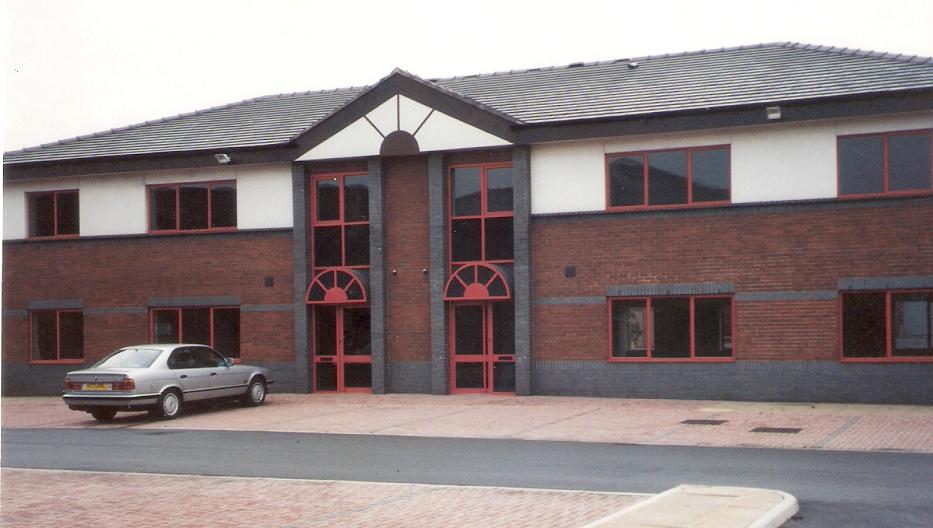
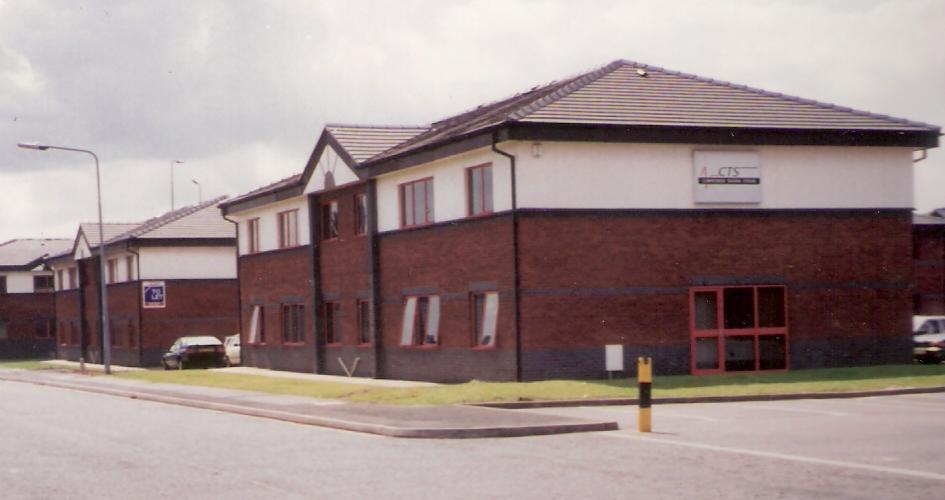
In August 1988, 35 years ago, when I started my company, as an ex Royal Air Force (RAF) aircraft and avionics engineer, called Computerised Training Systems Ltd, there was no ‘Multimedia’ and in fact I was one of the first people and my small team to create the very early forms of ‘Multimedia’ in Lincolnshire, England, United Kingdom for Technical Training which is the basis of what we have throughout the world today.


It may seem very hard for people to accept that only 35 years ago that the Computer was still in its early stages of development both in Hardware and Software terms. This included the Computer Operating Systems (OS) software and the software application tools for creating graphics and animation. Another important aspect was that there were no Computer systems that could directly show video or video combined with graphics overlays.
In 1988 there were two main Computer System types, the ‘IBM Personal Computer (PC)’ and the ‘Apple and Commodore’ Computers. These two systems were different in many ways. I chose the Commodore Computer Systems for my initial Technical Training Systems that was my vision as an experienced Technical Training Designer and Senior Instructor.

The Commodore Computers however were the more advanced Computers. Unlike the IBM these Computer Displays were full colour 16.8million colours. It had a high quality stereo audio facility. The Operating system was based upon a ‘Windows’ concept and were ‘Multi Tasking’. This was very important as there was a Central Processor Unit (CPU) Motorola 68000 32 bit, but also additional Processors dedicated to functions such as the graphics display and audio. This meant that the processors worked together on there respective tasks. The input devices included a keyboard, mouse and input/output RS 232 communication ports and other output ports. The 3,5 inch Floppy Disc was the main source of data storage but the later Amiga Computers would have a SCSI Hard Disc Drive. The application software such as ‘D Paint’ for graphics and others for animation and audio were basic but could produce some good results. The standard output display at that time was PAL 640 x 512 pixels the European video standard. The initial Commodore Amiga A 1000 and later Computer models were made in Germany. The A1000 was the first Commodore Amiga I saw which was being used to design Avionic Graphics Display systems.

However, in terms of sales and global support the IBM PC was predominant and became an industry standard as most of the Computers at this time were designed for business applications and not ‘Multimedia’ as it did not exist. The Commodore Amiga, A500 Computer was based upon ‘Graphics and Animation Applications’ with the A500 designed primarily for the ‘Games Market’. In early 1987 the Commodore Amiga A 2000 was launched which had advance facilities and expansion slots which could house a PC Compatibility Card and a 5.25” Drive for the PC discs, enabling it to display both Amiga and basic PC graphics. In 1988 the A2000 was upgraded with a SCSI 9 M/Byte Hard Disc Drive and controller. However, in comparison the prices of the Amiga A500 and A2000 package were far lower than the IBM PC’s and at the same time the capabilities of the Commodore Computers were far in advance of the IBM PC for my requirements.

The Creation of my vision of a Multimedia System – Commodore Amiga Technology
In the initial years of my company It was the Amiga A500 and A2000 that were the basis of the Multimedia Systems and Software which my team and I would design and create. The Amiga A2000 was used for the Development of the Training Software called Courseware a name I created from Training COURSE SoftWARE and is still used today. The creation of the graphics was vitally important for the Technical Training programs we would produce. In particular the Amiga allowed us to produce electrical and fluid flows that could be controlled an colours changed instantly when instructed to do so. In addition we could animate control valves, parts of mechanisms and electrical switches on control panels at the same time as the flows were activated (in real time).
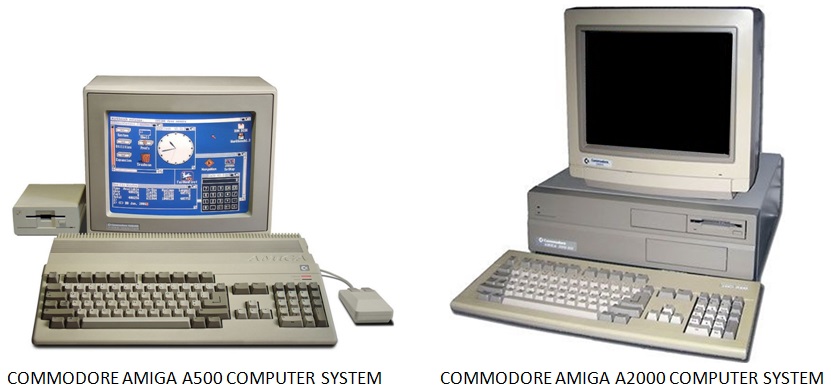
I decided that the Amiga A500 Computer Systems would be used for the individual students in the Classroom. These were loaded with each lesson on the 3.5”floppy discs. The student could then activate the Training Software themselves using the mouse.
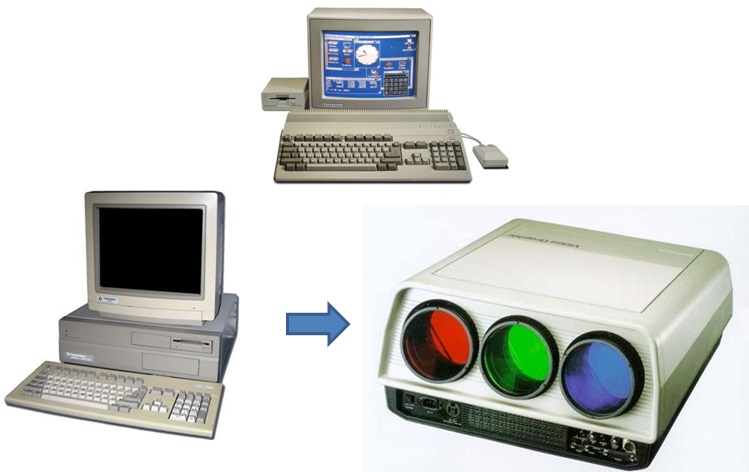
The Classroom Presentation System was also unique as I was able to design a system that connected the Amiga A 2000 to a large overhead Projector onto a Large Screen which replicated the Training Software for use by the Instructor.
Whilst the Commodore Amiga was an important platform for my vision of Multimedia Training it alone could not produce the Multimedia that I required. This included the integration of Video Tapes using a Sony U-Matic 9600 Video Recorder/Player and the ability to Overlay Text onto the Video at the same time on the display screen. The UMatic Video Recorder/Player was a high quality system using 3/4” tape but most importantly could be controlled via a RS 232C port. Therefore the Display issue and U-Matic control issue had to be solved.
At this time I was fortunate to have a contact in central England who was working with Commodore UK in developing an external ‘Genlock’ for a completely different reason. However after discussions the contact was able to produce a bespoke ‘Genlock’ for my company to enable me to physically overlay text on the video at the same time as the video from the U-Matic was being displayed.
Although this would solve the Hardware issue the Software for both the implementation of the Text Overlay and Control of the U-Matic still had to be solved.
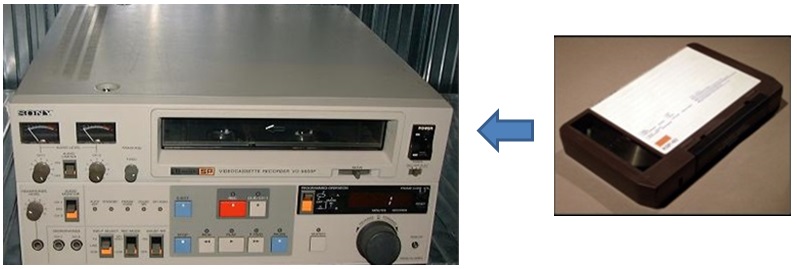
My company had its own Software known as an ‘Authoring Software’ which enabled us to program our Training Software using a set of specific commands. I called this Authoring Software ‘ASTRA’ which was developed and supported by one of my team specialist for the Commodore Amiga. After considering the requirements we included the commands for the Text Overlay and the control of the U-Matic Video Recorder/Player. The U-Matic control allowed us to search and play sequences using the ‘Frame Code Numbers’ which the UMatic system operated on using commands via the Computer RS 232C port and cable connection to the U-Matic RS232C input port.
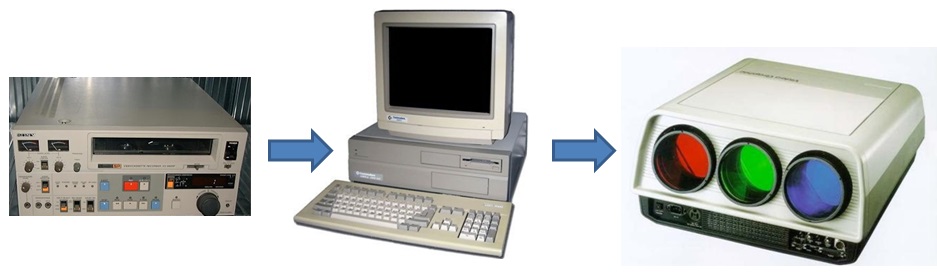
We had now developed the foundation of a Multimedia System including the ‘U-Matic 9600 Video Tape Player’ connected to the ‘bespoke Genlock’ which is connected to the ‘Commodore Amiga A2000’ which is then connected to an ‘Overhead Projector’ all controlled by our companies ‘Courseware’.
Although I had developed the major Multimedia System this had to be integrated with other existing media systems to allow the Technical Instructors full flexibility in what they could present to the students. Many of the existing lessons were presented with static Overhead Projection Slides and 35mm slides using a slide projector. In addition I also wanted to integrate a new Canon Camera RC-251 ION and the Player RV-301 technology for them to be able to show the whole class close-ups of items of equipment.
I therefore designed and built a Total Multimedia Presentation System Unit that integrated all of the sub systems outlined above. The complete Presentation System was the connected to the Overhead Projector for a big screen display.
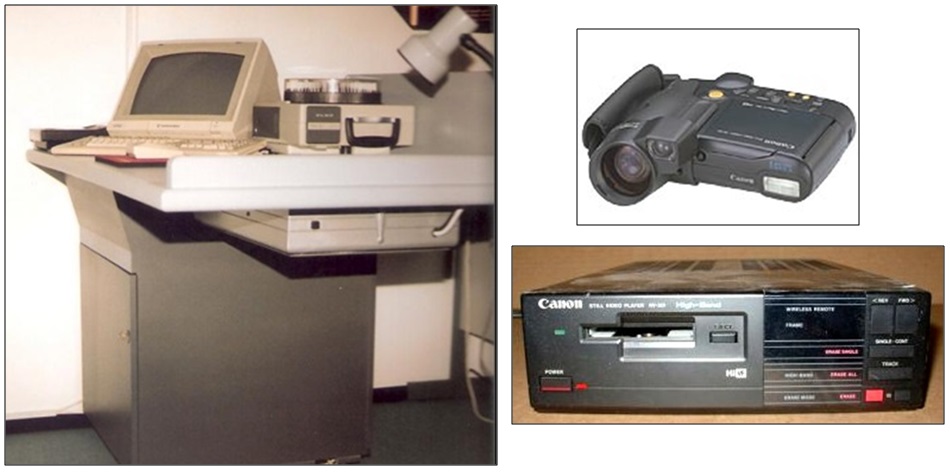
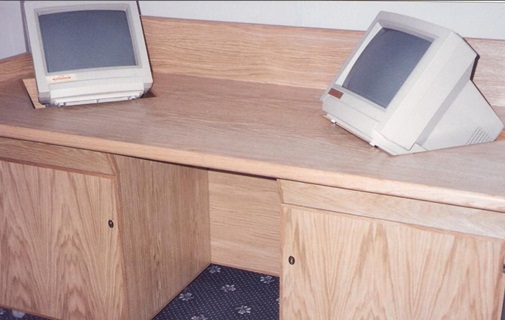
Total Multimedia Presentation System Units and the Two Screen Multimedia Presentation System Units proved to be very useful and the Instructors were very impressed being able to have Courseware having good quality graphics of systems with animated actions of components and systems with animated flows of technical systems combined with Integrated Video sequences when activated. This in addition to their existing media.

However, as an aircraft engineer I also wanted to create a Student System that reflected each part of a system when it was activated. This required a ‘Four Screen’ system each showing its part of the system being operated. This system used 4 x Amiga A500 Computers all communicating with each other using our specialised ASTRA Courseware. This was designed for two students observing the effect on a system and a component within that system at the same time.
However this was never used by a customer due to a company change in technology forced upon us due to the customers policy of wanting IBM PC technology in preference to Commodore Amiga technology not because the Amiga technology was not good.
The Creation of a new Multimedia System – IBM PC Technology

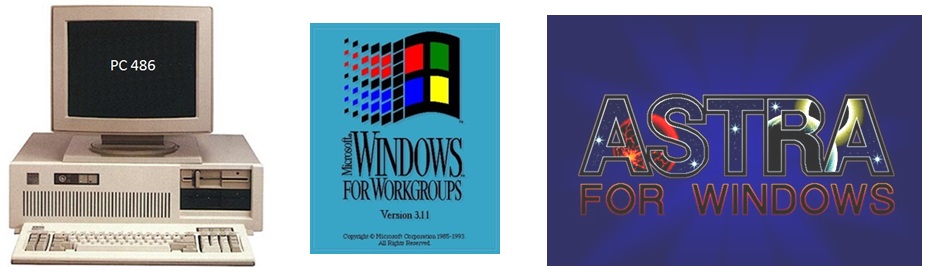
By 1991/1992 PC technology had advanced at an unprecedented rate by the introduction of the Intel i386 Processor quickly followed by the i486 Processor. This allowed processing speeds of up to a 50 million instructions per second. The PC-486GR was standard equipped with a high-resolution graphics board, and it rendered both text and graphics at high speeds thanks to the development of a high-speed video ASIC that provided a no-wait Windows environment. This was far in advance of the AT 286 that was available in 1988 and the possibility of replacing the Amiga performance for Graphics and Animation in full colour modes. In addition to the Hardware advances there were now many third party application software for graphics, animation and audio production.
The question asked by our major customer was two fold. One could we provide the new PC 486 Computer Multimedia Systems and develop new Courseware to run on them and secondly could we convert existing Commodore Amiga Courseware to run on the new PC 486 Multimedia Systems. What a Challenge !!! however the answer had to be ‘Yes’ but I had to solve these problems with my team and do it as soon as we could.
In terms of the Hardware there was very little problem, but the Operating System would be the new PC Windows. For us to be able to make any Courseware operable it would be essential to create a modified ASTRA Authoring System into a ASTRA for Windows Authoring System but this would take some time.
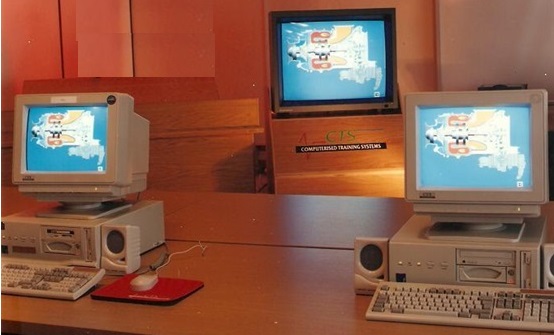

As we progressed and the market for Courseware expanded due to the success of us the forerunners. The number of competitors started to grow especially now that the PC had taken over the Multimedia market. However, our company gained major Contracts in South East Asia and from our major customer in the UK for our PC Systems and Courseware. Today like many other companies in this field I closed my final company Computerised Training Systems Sdn Bhd in Malaysia in December 2021. A new breed of companies creating new technologies are moving forward at a great rate just as we in the eighties and nineties did. I feel very proud of all my team workers over the years who helped in the advancement of our technologies and innovations which contributed in a small way to the state of technologies we have today.
It was a fantastic and technically challenging journey which I feel very fortunate to have been involved. Looking back aged 82 it was a major part of my life as you can see in the image it was so satisfying and memorable.
 <a href="https://astra283.wordpress.com/wp-admin/site-editor.php?calypsoify=1&block-editor=1&frame-nonce=af705db4bc&origin=https%3A%2F%2Fwordpress.com&environment-id=production&support_user&_support_token&postType=wp_template&postId=pub%2Flivro%2F%2Fhome#site-title-pseudo-link">Training designer</a> - avionic & Aircraft Engineer -- BRYAN HOGGb.e.m
One response to “Creating my new Multimedia company in 1988.”
Thank you Bryan for your contribution to so many lives whether they worked on your vision or were a beneficiary of your multimedia learning experience.
LikeLike