To make it clear I am not in favour of Communism in any shape or form but I have to recognise that China has achieved a great deal especially in Technical terms, Financially and Commercially over the past 10 years. As a military engineer I am am in aw of some of the achievements and futuristic advances in Technology that they are experiencing at the moment. These advances in Technical and Commercial achievements together with their rapid expansion of the military capability guided by Xi Jinping there leader, has raised China to become a Stable Superpower. However, I must stress that there are still major differences in some areas between the Western Countries and China.
Stable China v Unstable USA
In my previous article it is clear that due to the current USA President Trump the USA is extremely unstable and is declining, both internationally and internally. It’s allies Great Britain , European Union, Canada and others have been severely effected recently by the USA in terms of the military alliance, NATO and commercially especially in the case of Tariffs. The allies therefore have recognised that the USA can no longer be trusted in terms of NATO and commercially, especially regarding trade and investment.
Today the Great Britain Prime Minister is meeting with Xi Jinping in an attempt to work closer with a Stable China culturally and commercially to benefit both countries. This visit follows more recent visits by leaders of France and Canada who have also had meetings with Xi Jinping and the Germany leader meeting with Xi Jinping in the coming weeks. These meetings are in part due to the actions of an increasingly unstable USA and its President Donald Trump and his administration. Just recently the USA are proposing Tariffs of 100% on all goods coming from Canada because they have created trading condition for Electrical Vehicle from China and Canola Oil from Canada to China. In a very recent action Trump has said that the USA will de-certify all Canadian built Aircraft in the USA, which will ground the Aircraft.
China Technologies
Is China a Technology Superpower? On the face of it China is way ahead of the rest of the world in the latest Technologies, however let us consider these Technologies in more depth to establish the Technology facts.
High Speed Rail
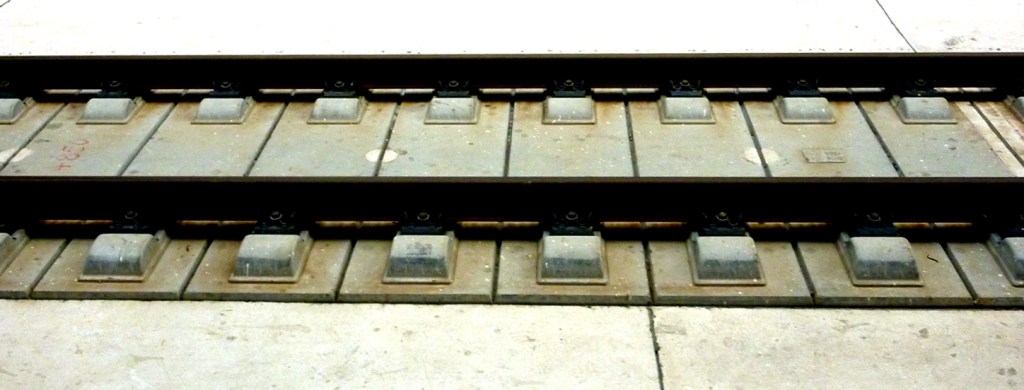
China has embraced High Speed Rail (HSR) using the Chinese Railway Hi-Speed (CRH) state company, as a main form of transport with over 50,000 km of Rail Tracks and associated signalling systems. They have also adopted in many cases to Elevate their Rail Tracks on specially constructed structures similar to bridges which are not affected by normal life below them. They have adopted a new form of Rail Track based on a Concrete Slab Sleepers rather than using Stone Ballast between the Sleepers. However, these were imported from Germany using German Technology who manufacture them. Based upon the German Technology, China is now developing and manufacturing Concrete Slab Sleepers for different Train loads. This is known as’ Technology Transfer’ which is part of the trading practices in Asia which my own company experienced in the 1990’s.
German Concrete Rail Track Sleepers Image : Gisling
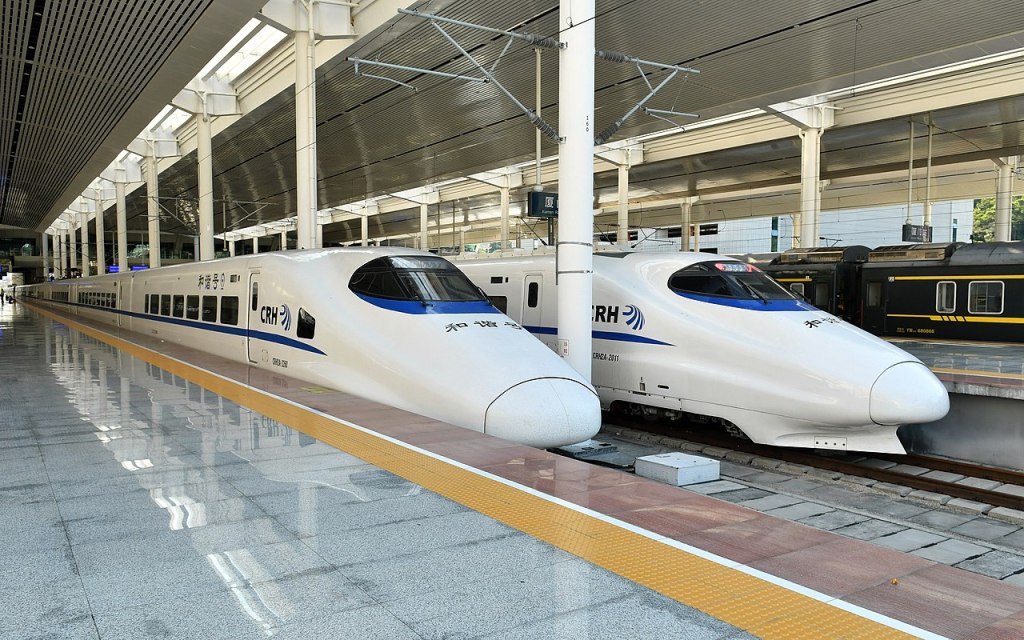
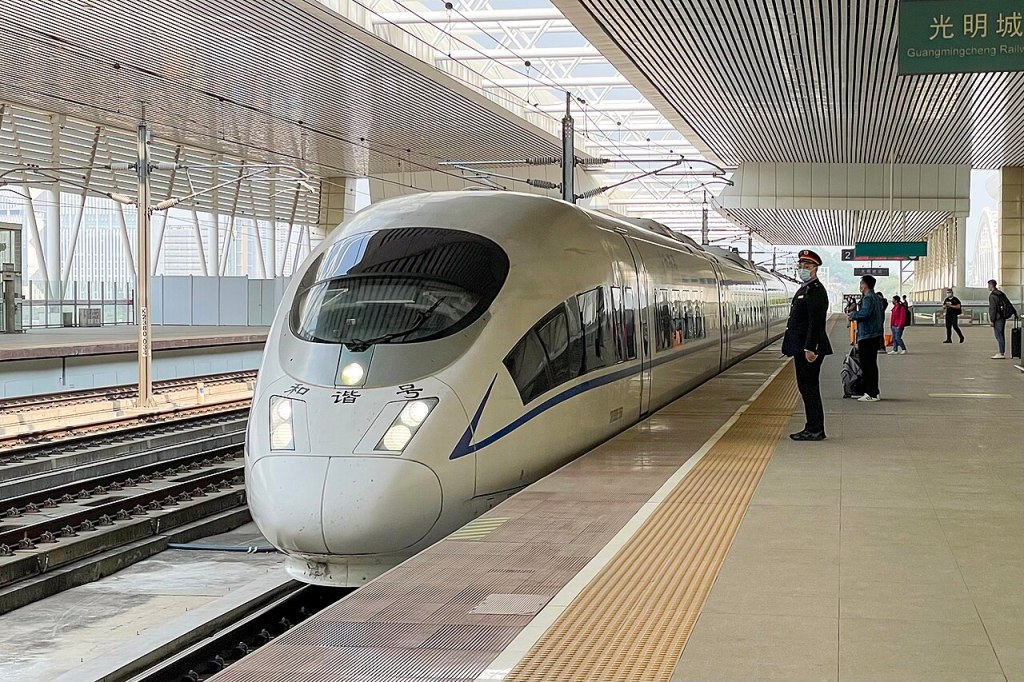
Once again using Technology Transfer from other countries such as Canada, Germany, Sweden and Japan, China is now designing and manufacturing some of its own Trains. The CRH 1 to CRH 5 series trains are mainly designed and developed from imported Train Technology. The latest CRH 380 series still uses a significant amount of imported Technology, Train and Traction Equipment. The CRH380D Train which is manufactured by the Canadian Bombardier Transportation using the Technology Transfer system. The CRH 380-B(L) reached a speed of 487.3 km/h (303.8mph) in January 2011. So it can be seen that whilst The Chinese Railway Network and Infrastructure is impressive, the HSR Train Technology still being imported from other Countries is significant.
CRH-2A (Left) and E2-1000 (right)CRH-380B(L) Train
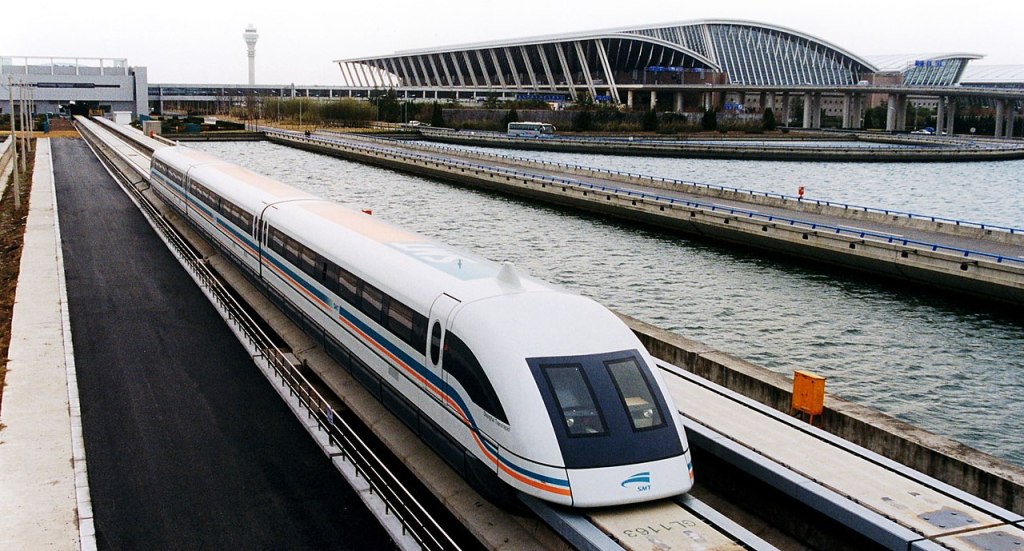
The latest Technology know as Electromagnetic Levitation (MAGLEV) was imported from Germany in 2002 for the world’s first commercial MAGLEV line, capable of speeds up to 430 km/h, linking Longyang Road station with Shanghai Pudong International Airport in Shanghai on October 19, 2010. Since then China has being developing the MAGLEV Train which has no wheels and Levitates (hovers) above a specially designed Track that allows Electromagnetic forces to drive the train forward at speeds up to 600km/h. It is expected that China will adopt this Technology for commercial rail travel within the next 5 to 10 years.
The MAGLEV train leaving Longyang Road station Shanghai China
Electric Vehicles
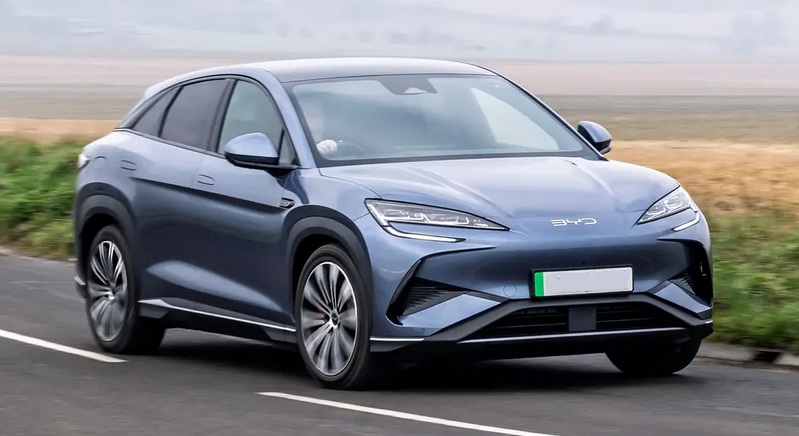
Electric Vehicles (EV’s) have been around since the 1850’s mainly Subways like the London Underground, Trams, Trolley Buses run by external electrical supplies. The EV’s of today tend to relate to Electric Cars, Buses and Lorries which use Rechargeable Lithium-Ion Batteries. The commercialised Rechargeable Lithium-Ion Battery by Sony Japan, was the catalyst for today’s modern EV Cars which have evolved very quickly since the early 2000’s, originally developed by the USA, Japan and Europe. However, it has been the rapid expansion of the Design and Development of EV’s in China that has revolutionised the Car Industry moving away from Carbon Fueled Internal Combustion Engines. The China’s BYD company is now the leading seller of EV’s of all types surpassing the USA’s Tesla and all other brands. The ‘Blade’ Battery is a revolutionary Lithium-Iron (Ferrous) Phosphate (LFP) Battery designed by BYD, that is superseding the Lithium-Ion Battery, as it has an increased capacity, is extending the Range Distance and it Charges faster. One of the latest BYD models is the Sea Lion 7 which has a range of 500 km and can fully charge in 30 mins.
Rare Earth Elements Production
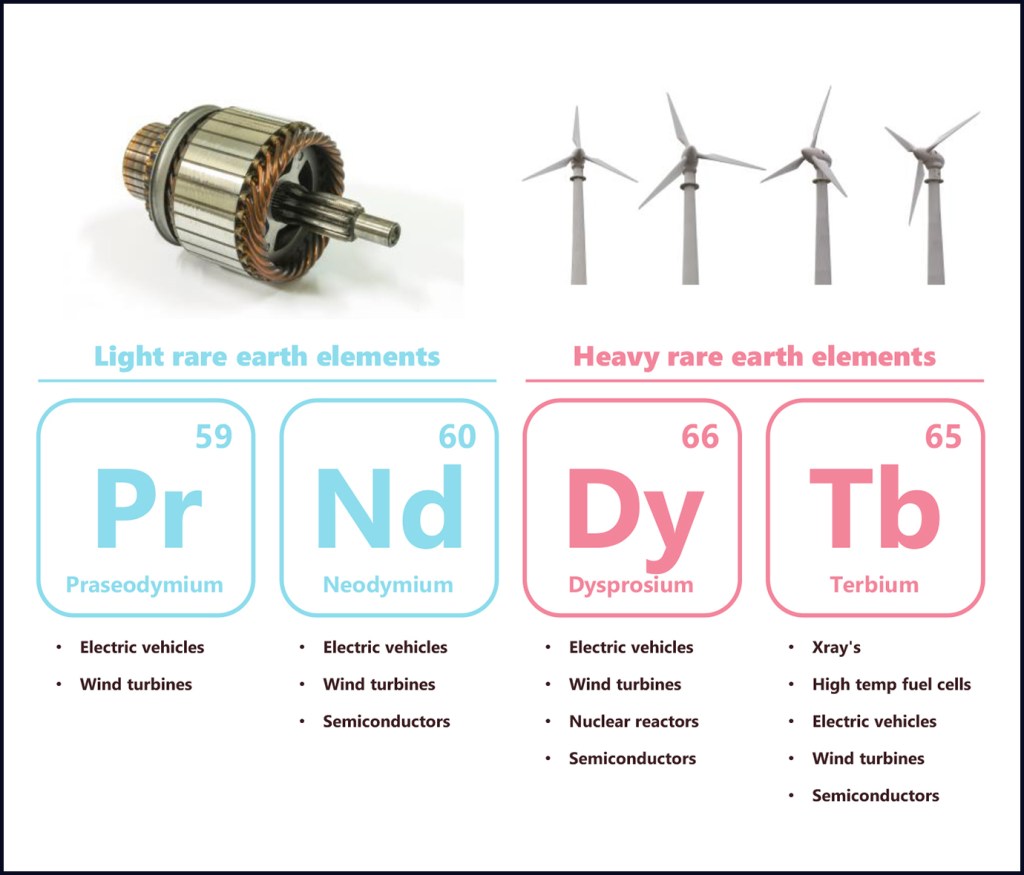
The Basic Rare Earth is not ‘Rare’ at all and is available all over the World. Almost everything thing on Earth is catergorised as an Element which are recorded in a ‘Table Of Elements’. Basic Rare Earth contains 17 Elements which are essential for today’s Electronic World. What makes them RARE is the complex and dirty process of extracting the 17 Elements from the basic Rare Earth. China produces 75% of the Extracted 17 Elements for the rest of the world to use. These 17 elements are essential for the creation of Permanent Magnets, Electronic Components, Production and Processes, Satellites and for Military Equipment and Armaments, in fact almost everything in today’s modern world. The advancement of EV’s and Wind Turbines in particular depends more and more on four major Rare Earth elements for their Motors and Generators Magnets. Therefore, China has a major advantage in the Control of the Supply of these 17 Elements to the Worlds various Technologies including to other Military Powers such as the USA. Of course the supply of the 17 Elements creates a great deal of wealth for China.
Military Technology
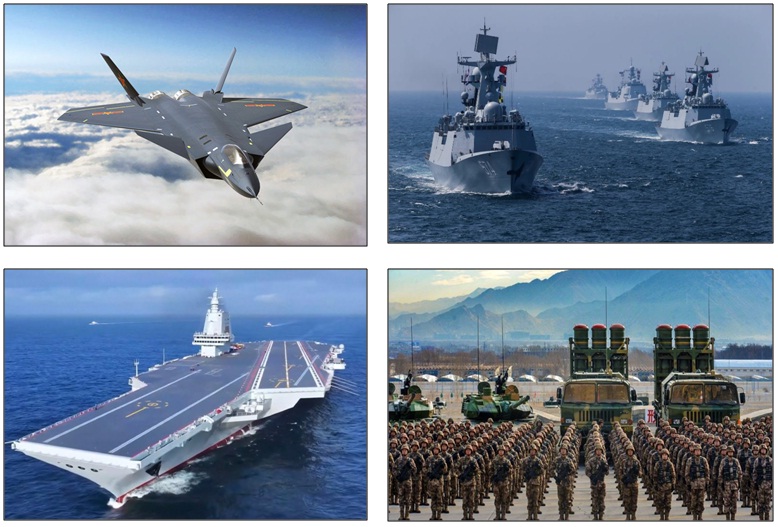
Over the last decade China has been modernising and expanding its Military using new Technologies. China’s Navy capability has now exceeded the USA’s Navy except for the number and state of the art Aircraft Carriers. The General China Fleet is more modern as China’s ship building has expanded. China’s latest Aircraft Carrier the Fuijan Type 003 shown below, uses new Technologies, Electromagnetic Catapults (EMALS), similar to the Gerald Ford USA Aircraft Carrier, for launching Aircraft. However, experts say that a major problem of the Fuijan, is that, due to its design it cannot have Aircraft Taking Off and Landing at the same time, like the USA large Aircraft Carriers. There has been a major Technology shift in China’s Air Force with the introduction of the J-20 Stealth Fighter Aircraft shown below and many other new Aircraft of all types. There has been a massive increase in High Technology Tanks, Missile Launchers and other Military Equipment, which is supported by a Manpower increase far exceeding any other Military Force in the world.
Humanoid Robots
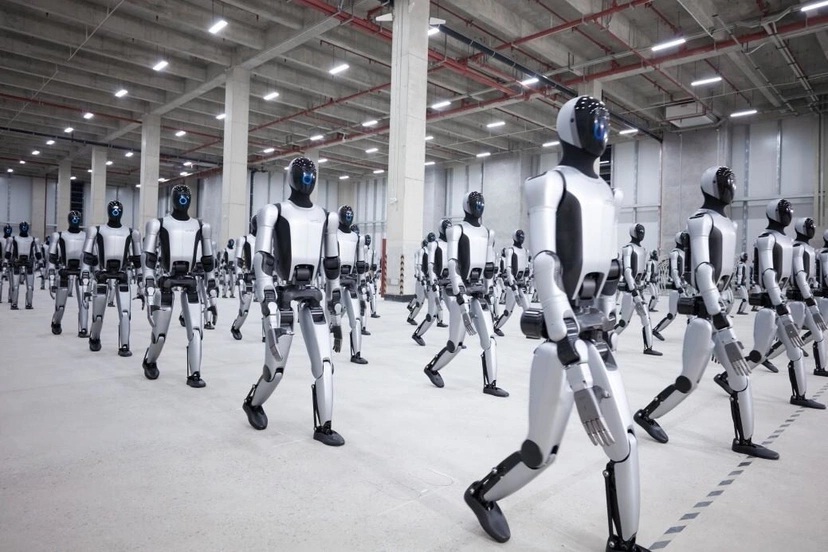
Both the USA and China are creating Humanoid Robots for Social and Manufacturing tasks. The marked difference between the USA and China is that the USA are concentrating on Bespoke Humanoid Robots with complex movements and Artificial Intelligence at a small Scale, whereas China is concentrating on Specific Task Industrial Humanoid Robots on a large Scale. An example In Shenzhen China, UBTech company created the Walker S2 Industrial Humanoid Robot and after trials has moved to mass production completing and shipping hundreds already and aiming to produce thousands in the coming two years.
Full Size Industrial Humanoid Robots (walker S2) Image: UBTech China
Another Chinese company Xpeng have created a realistic Humanoid Robot that can move similar to humans, incorporating Artificial Intelligence (AI) allowing it to interface with a human and respond accordingly. Again the company is planning to mass produce this AI Humanoid Robot for different applications in the near future. For a further insight to Humanoids you can refer to my article : Humans V Humanoids 6th January 2025 at astra283.com
Wind Turbines
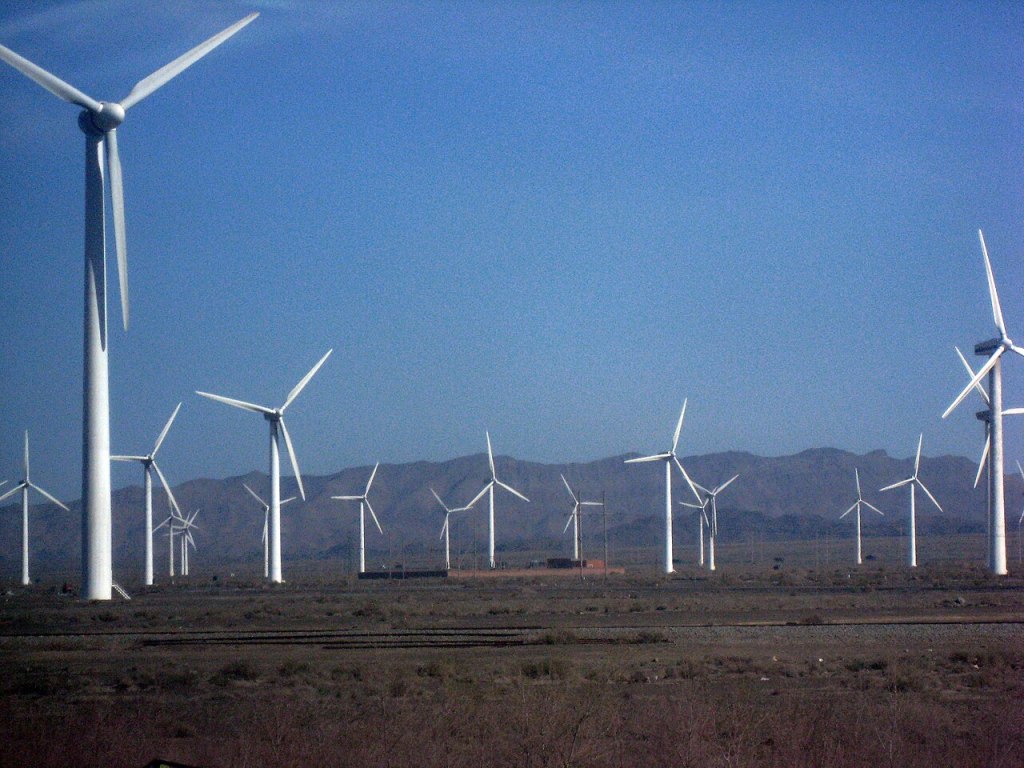
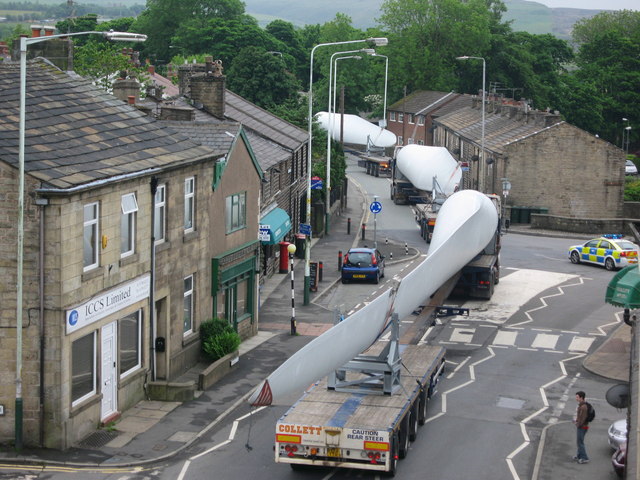
China has the largest Wind Power Generation in the world converting Kinetic Energy into Electrical Energy which in 2024 was 885 Giga Watts. On Shore Wind Farms are numerous and large in China such as the one in Xinjiang Province shown below. The major manufacturer of Wind Turbines in China, Goldwind, is also based in Xinjiang Province. The Wind Turbines of today are huge constructions. The image below of the transit of a Single Wind Turbine Blade and The Generator Housing through a UK village gives you an idea of the scale.
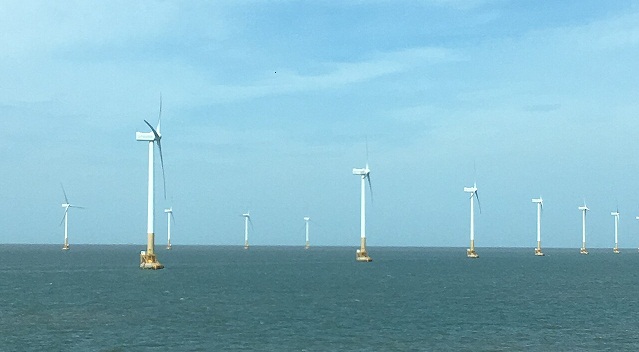
However, Chinese Off Shore Wind Farms are actually manufactured by Siemens in Germany due to their more complex design. Through the Technology Transfer route, China is now manufacturing Off Shore Turbines and Wind Farms such as the Donghai Bridge Off Shore Wind Farm shown below. A Chinese company, Power China, has designed and is developing a Floating Wind Farm near Hainan. It is worth noting that the current USA Trump Administration is withdrawing funding for Wind Farms in the USA as the USA President Trump does not like them.
Solar Panels
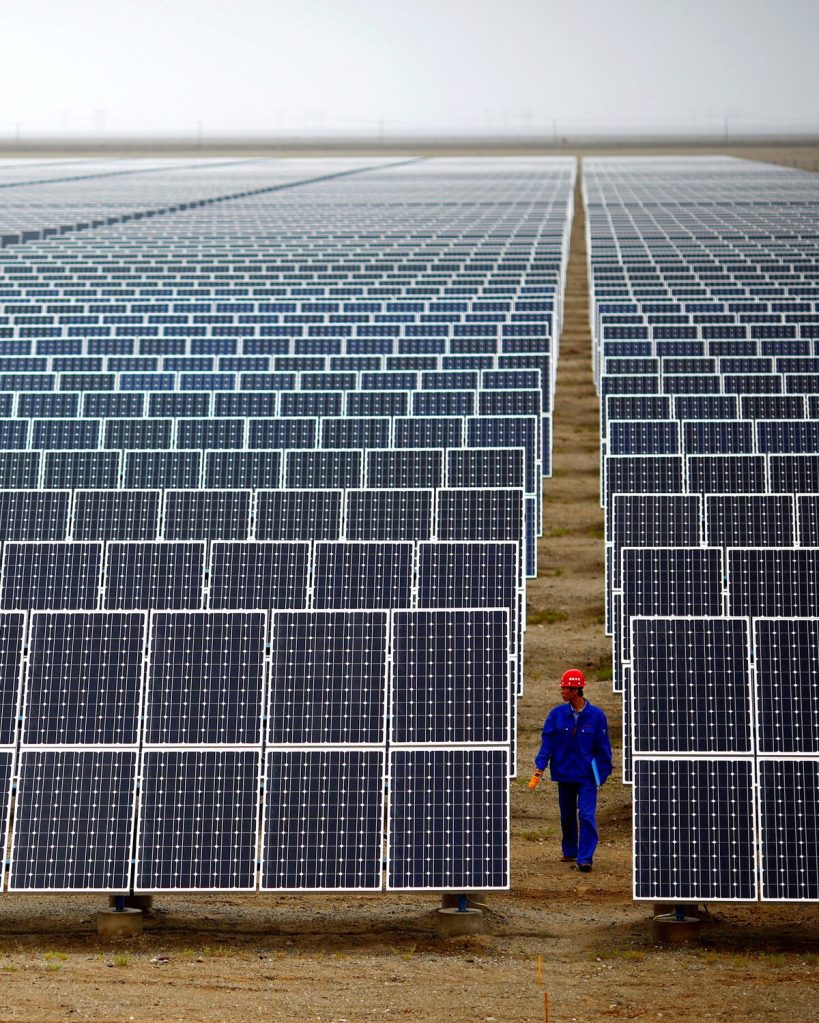
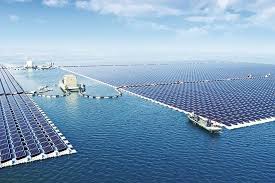
China dominates the design and development of Solar Panels which converts Sunlight into Electrical Direct Current (DC) Energy that is converted into Alternating Current (AC) Energy for use by the consumers. China manufactures almost 80% of the worlds Solar Panels and Components. It has huge Land Based Solar Farms covering many square miles the largest being 162 Square miles. China is also building Floating Solar Farms.
Conclusion
China without any doubt has embraced Technology as we have seen in many different Sectors and Applications as part of there Clean Renewable Energy and Transportation Sectors. Not only that, China, has and is, increasingly doing so at a huge Scale. The question was ‘Is China and Technology Superpower’? In 1988 my company CTS Ltd created in England the worlds first Technical Training Multimedia Systems and Software using Commodore Amiga Computers, combined with Audio/Video and Animation which was my Intellectual Property Rights (IPR). Within 1 year IBM upgraded their PC 286 Computers and Software to PC 486 allowing other Companies to learn and Emulate my Unique Multimedia Systems IPR to Compete with me. From my research and article above China has learnt through the Technology Transfer System from other Countries to Emulate others IPR on a much larger Scale especially the High Speed Train systems. The China policy of moving to a Clean Energy Environment plays an important driver for new Technologies. All Humans learn from each others Technologies, and Emulate and Improve on the original Concepts, However, China’s ability to Apply the Technology in such a Huge Scale in such a short Time, has made ‘China a Technology Superpower’.
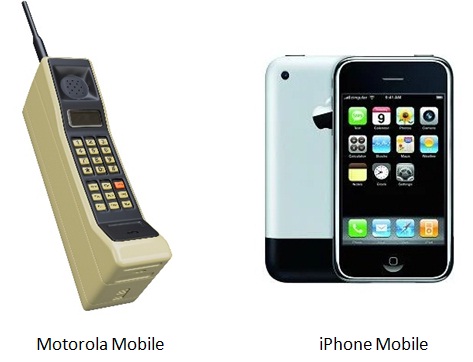
The Industrial Revolution in the 1800’s and early 1900’s was without doubt a major world changing era, with the introduction of Electricity and Steam Power, Telegraph and Telephone that transformed the way of life for many in the world. In the early 1980’s the ‘Computer/ generation of which I was part, transformed the way we communicated information between each other using the Internet in the 1990’s. The early introduction of the Mobile Telephone such as the Motorola in 1983, which we affectionately called the ‘Brick’ started era of Mobiles. However, the real World Changing Mobile was the innovative Apple ‘iPhone’ introduction on the 29th June 2007 only 18 years ago. The introduction of the Mobile can be classed as a ‘Mobile Revolution’ likened to the Industrial Revolution due to its ‘Impact’ on the world and its population.
The ‘iPhone’ Concept
We always associate the word ‘Phone’ with the Telephone that many of us had in our homes and offices, that were purely audio devices using speech and listening. However, the ‘iPhone’ was completely different in that it was in fact an integrated ‘Communication Device’ using a mini Computer system and operating software with a touch screen for user interaction. It was designed to be a lightweight mobile device powered by a rechargeable Battery. Hence the ‘Mobile Phone’ or the ‘Mobile’ as it is known world wide.
The Mobile of Today
The Mobile of today is truly a multi-function integrated device with operating software, real time application software, GPS controlled software, Internet software, still and video camera’s, recorders and scanners. The computer power and storage capacity is significant especially related to the size of the present day Mobile. There are many brands of Mobile throughout the world which number in their ‘billions’ as the Mobile is now classed as an essential item but why?
The Essential Mobile
Since the introduction of the Mobile only 18 years ago the Application Software, known as ‘Apps’ have exploded in numbers and what they are designed for. This includes so many different areas that affect our lives such as health, banking, travel, communications, games and entertainment, including films and audio, real time news and sports coverage. In addition, there are many places that a Mobile is needed to access entry or data that you may require which uses the Mobile scanners or facial recognition. Many payments are now made using the Mobile scanners which are connected to the banking systems via the Mobile networks throughout the world. There are ‘Text’ and ‘Media’ applications like ‘WhatsApp’ for intercommunication’s. These Application Software’s are so numerous and diverse it is impossible to mention them all.
The Addiction to the Mobile
I have been involved with computer, electrical and mechanical technology most of my working life and have seen many changes over the past 84 years. However, the biggest change I have seen is the effect that the Mobile Device has had on the world and its people, especially the last 5 years. Whilst I have outlined the Mobile is essential for everyday activities it is the huge change in the worlds people including myself who are the users of the Mobiles. Today most people must have their Mobile physically at hand so much so that if it is not they feel true anxiety to a point where panic sets in. This known as ‘Nomophobia’. We must understand that; Something that is ‘Addictive’ is so enjoyable that it makes you ‘Want’ to Do it’, or ‘Have it a Lot’ just like you ‘Always Want to Have your Mobile’.
The Mobile is an ‘Addiction’, a physical one, and a psychological one. Wherever, we are the Mobile must be in our possession and we are forever checking the status of our information such as messages or other applications. This is very noticeable, when people are waiting, traveling or during meals, when we can look at the Mobile as though we are in our own world. This Addiction is gradually killing the art of verbal conversation between people and at times is replacing it with real time messaging and audio conversations. It is also noticeable that if a verbal conversation is taking place and the Mobile activates for whatever reason, the Mobile always takes precedent.
Another very useful and practical application is the use of real time maps for driving such as Waze or Google Maps providing directions and road conditions. Once again the Mobile reigns supreme. However, a negative feature of people using Mobiles whilst driving, because of the Addiction, has caused a significant amount of accidents resulting in deaths and injuries.
The Infants Addiction to the Mobile
What may be more concerning is the use of the Mobile by Infants some of which are just babies affecting their development. The Mobile is increasingly used by parents to allow the infants to view children’s cartoons and other ‘Apps’ that keeps them occupied and quiet, reducing the stress on the parents. It is also noticeable that if the Mobile is taken away from the Infant, the Infant gets very upset until the Mobile is returned. This is the start of the Addiction to the Mobile at a very early age.
Mobile Anti-addictive
An Anti-Addictive is generally related to a substance to counteract a harmful substances that some people may use, which prevents or reduces them becoming addictive to. However, in the case of Mobile Addictiveness there is no such substance to counteract this condition. Considering the millions of Mobile Users it seems inconceivable that the Mobile Addictiveness can be combated like a normal Anti-Addictive as this condition is in most part physiological and behavioral. The fact is that most people in the world do not consider that having and using a Mobile is Addictive.
Conclusion
The Mobile is fast becoming an integral part of our everyday lives owing to the increased Mobile Networks that connect us to essential services we require. There is a concerted effort to lead us away from the access to services via the ‘Computer’ at home or at work, to access services via the Mobile using specific Apps, such as ‘Banking’. This means that we will not only be Addicted to the Mobile but we will need to have a Mobile to be able to live, work and access the services that we need. However, there is a looming risk in this strategy which is the sustainability and security of the operational Mobile Networks and GPS in our volatile world.
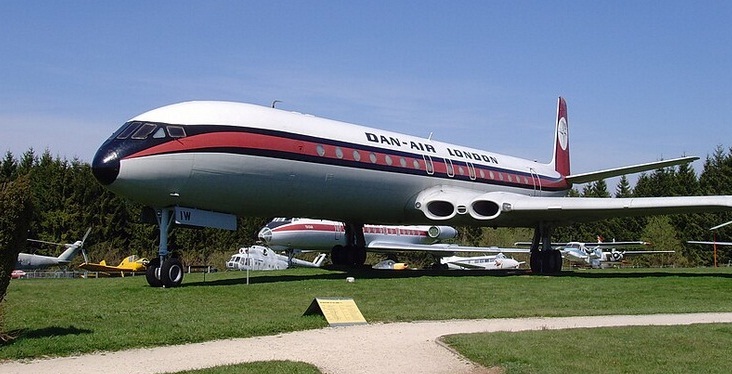
The following is the story of the Evolution of Jet Airliners from 1952 to the present day There are so many types of Aircraft so I have selected what I think are the most consequential ones to tell the story. Today we think nothing about flying on an Jet Airliner as though we are getting in a bus or train, going from one destination to another. What you may not know the first prototype Jet Airliner, the UK, de Havilland Comet Mk 1 was in 1949 (75 years ago) with its world’s first Jet Airliner Commercial Flight in 1952. The Mk1 Comet was a Narrow Body (NB) Aircraft which was Pressurised, the first time anyone had done this. It was found after an accident and fatalities that the fuselage design including the materials used were not adequate even after all of the testing. Even Boeing admitted later that they learnt from the Comet experience. Later versions were upgraded to prevent the Pressurisation and Metal Fatigue affecting the Comet.
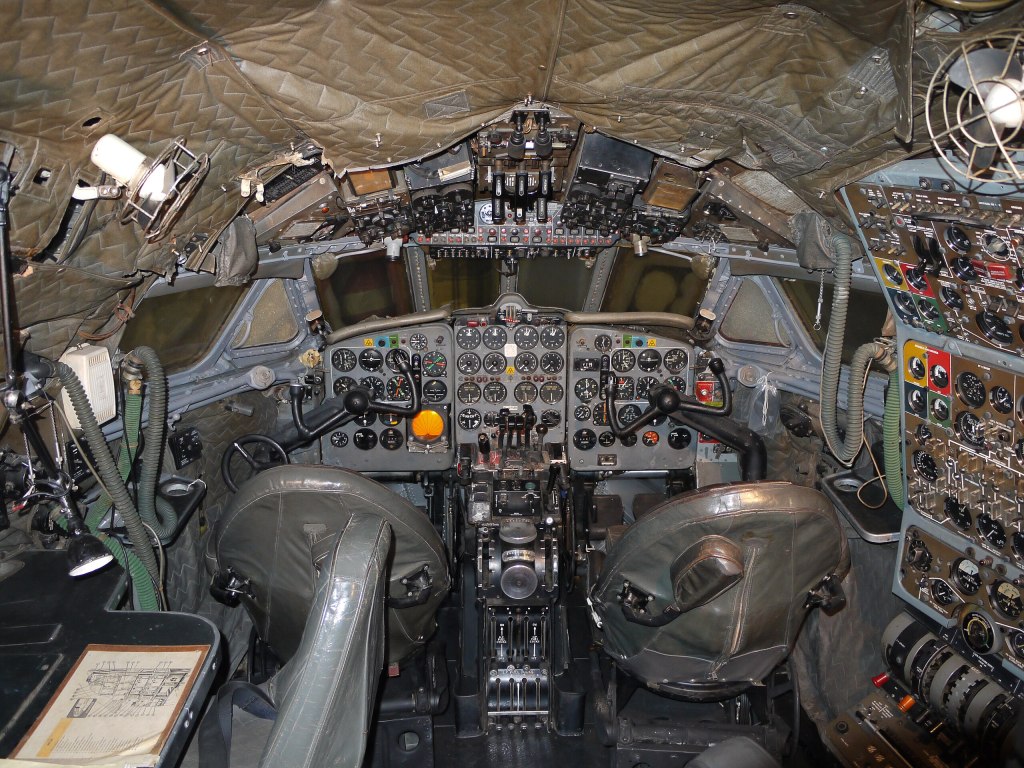
Mk 1 Comet Prototype 1949, The worlds first Commercial Jet Air LinerMk1 Comet Cockpit: left: Pilot & Navigator right: Co Pilot & Flight Engineer
de Havilland Comet Mk 4
The Comet Mk4 was introduced in 1958 and flew commercially until 1981. The de Havilland Comet Mk 4 had been redesigned with round windows, which created and industry standard. It had four Rolls Royce Avon Axial Flow Jet Engines. The Comet Mk2, entered commercial service in 1958 with British Overseas Airways Corporation (BOAC), but was continually upgraded to Mk3 and Mk4 versions until it ceased commercial operations in 1981. The latest version could seat up to 80 people. The Comet Mk4 had Mechanical linkage Power Flying Controls and a simple type of Autopilot. The Cockpit Instruments were almost all mechanical (Analogue). In the later versions it was fitted with a nose Radar and upgraded Radio systems.
Mk 4C CometRolls Royce Avon Axial Flow EngineMk4C Comet Cockpit: left: Pilot & Navigator right: Co Pilot & Flight EngineerMk 4 Comet Passenger Cabin
After the cessation of the Comets Commercial Flights ,The Royal Air Force (RAF) acquired a total of three Comet Mk 4C Aircraft and converted them into the RAF Nimrod Maritime Aircraft which operated until 2011. I went on this Aircraft and designed and produced a Simulator for this Aircraft’s Surveillance System for the RAF.
RAF Nimrod Maritime Aircraft
Boeing B707
The USA Boeing Company produced the Boeing B707 was a narrow body four engine Aircraft which was slightly bigger that the Comet Mk4 and could carry more than 100 people. This was the second Jet Airliner which commenced Commercial Flights in 1958 with PAN AM. The B707 had Navigator position in the Cockpit for long haul flights but due to the introduction of the new technology in the 1960’s, such as the Inertial Navigation System (INS) and other Radio Navigation Aids, the Cockpit only had Pilot, Co-Pilot and Flight Engineer Stations. The Cockpit Instruments were almost all mechanical (Analogue). However, the B707 had a more complex PB-20 Autopilot operating the Power Flying Controls and maintaining the Aircraft’s Heading and Stabilising the Pitch, Roll and Yaw of the Aircraft.
Boeing B707 Boeing B707 Cockpit: left: Pilot right: Co-pilot and Flight Engineer
The Boeing B707 versions had four Engines, the Pratt & Whitney JT3D or the Rolls Royce Conway Turbofan Jet Engines. These were the forerunner to the modern day Turbofan Engines as they use a Large Fan at the front of the Jet Engine. This was different to the Axial Jet Engine that does not have a large Front Fan which generates even more Thrust (Jet Engine Output). The cabin was fairly basic like the Comet Mk4C but had 3 abreast seats either side of the Aisle. Note no Electronic Entertainment Systems, Magazines only!!!
B707 Cabin Seating up to 130 Passengers
The Boeing B707 was adopted for the USAF E3 Sentry Aircraft (AWACS) which has a very large Radar Dome fitted above the Fuselage. Inside there are very sophisticated Electronics. The RAF also had some Upgraded versions of the E3 Sentry (AWACS) which I went on many times to help me design and produced the Electronic Systems, Simulator for the RAF.
USAF E3 Sentry Aircraft
Vickers VC10
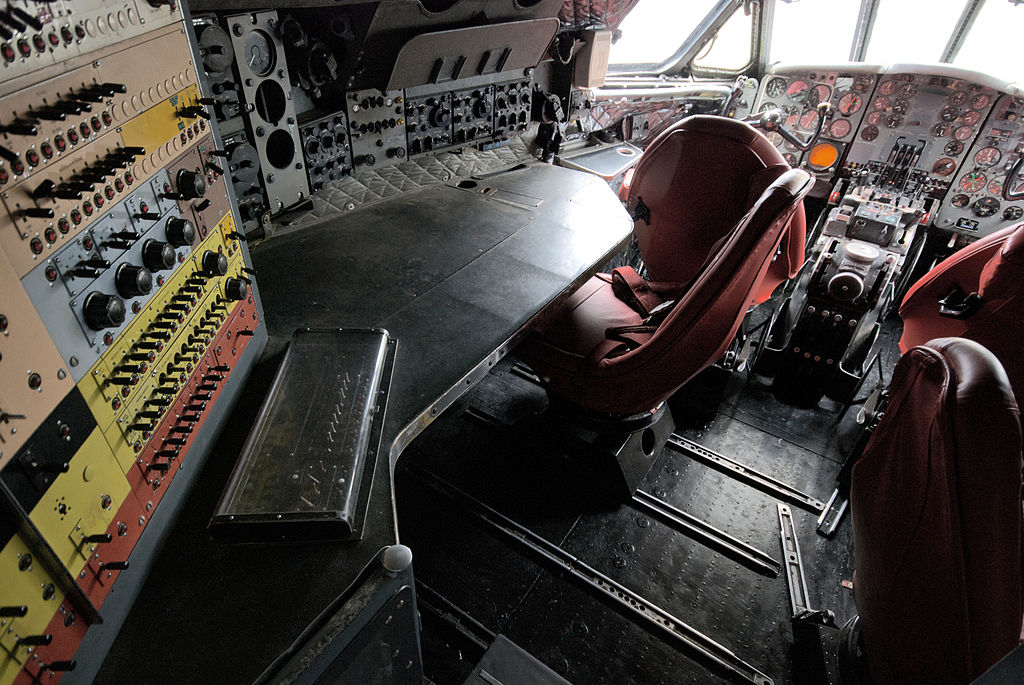
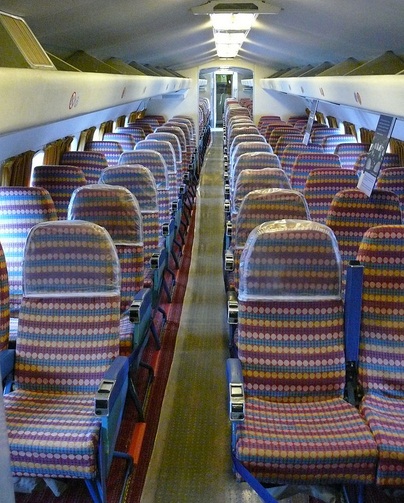
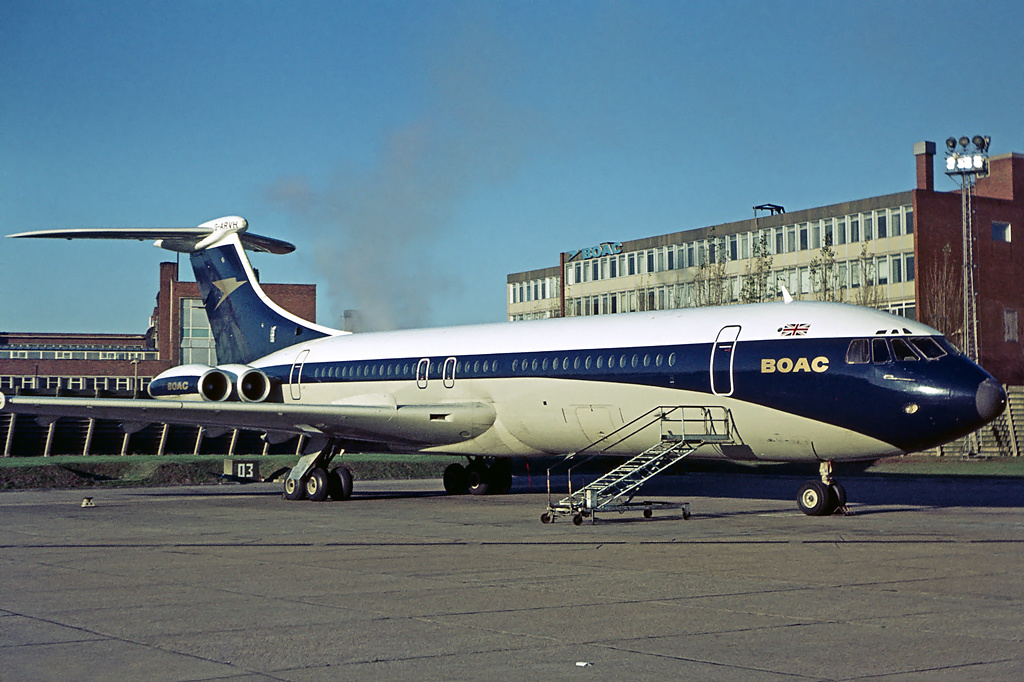
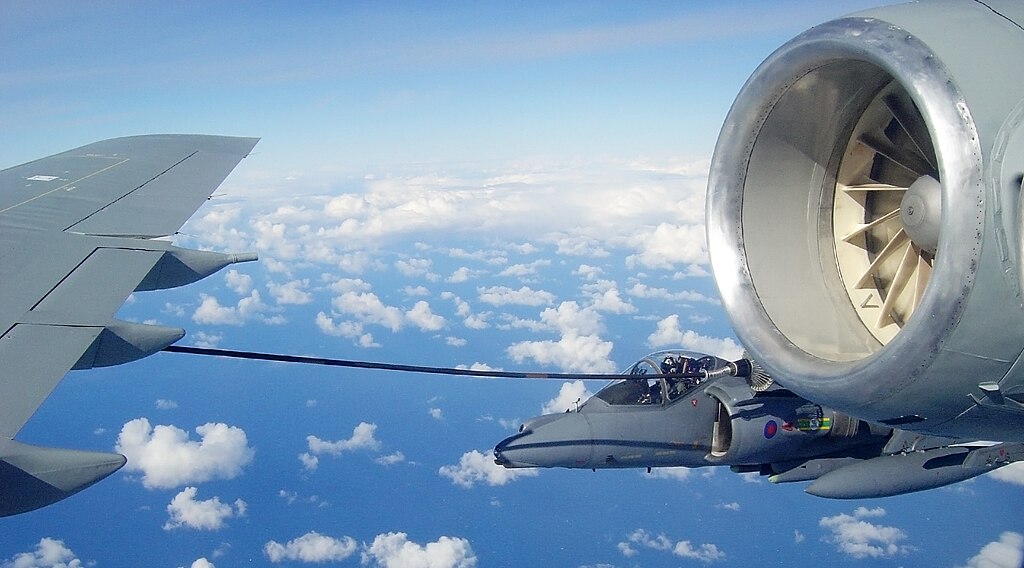
The Vickers VC10 was a combined UK Civil and Military Aircraft designed and Manufactured by Vickers-Armstrongs (Aircraft) Ltd, to be able to take-off and land on short runways or non concrete runways. It also was designed for High Altitude, High Speed and Long Range, International Travel. It held the Atlantic Crossing Speed for 41 years until 2020. It really was the link between the start of Jet Airliners to the start of the New Technology of the modern day Jet Airline Aircraft. The VC 10 operated Commercially from 1962 to 1985 and the RAF 1962 to 2013 as Passenger Aircraft and Fuel Tankers for Air to Air Refueling.
BOAC VC10
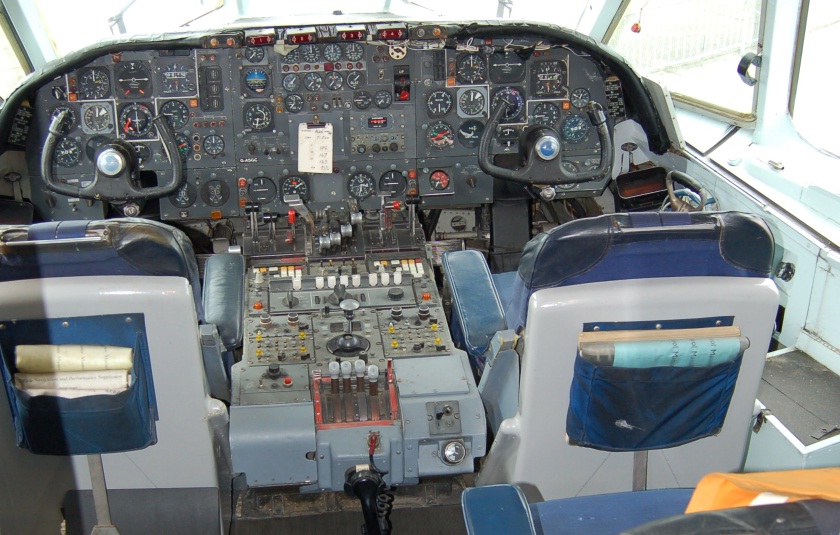
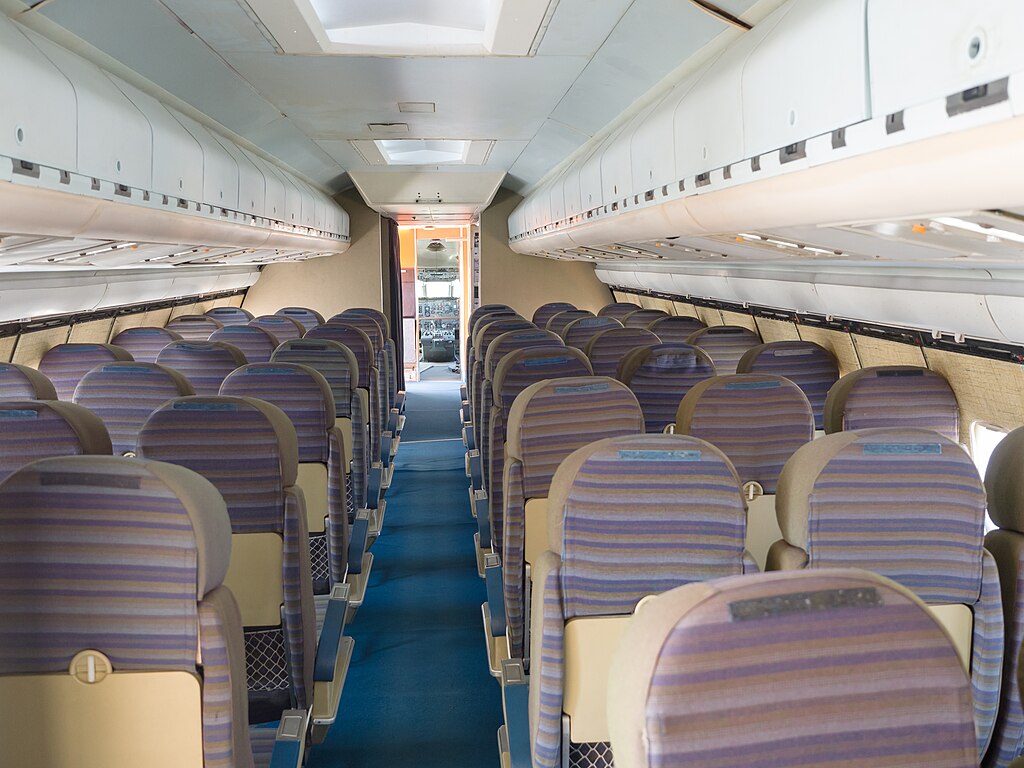
The VC10 was unique in that it had four Tail Mounted, Rolls Royce Conway Turbofan Engines including Reverse Thrust, with the Aircraft’s Pitch Flying Controls on the Top of the Tail. The onboard Avionics (Aviation Electronics) were extremely advanced at that time. It had a Elliot Quadruplicated Automatic Flight Control System (Twin Autopilot) with Auto-Throttle, which was designed to enable Fully Automatic Zero-Visibility Landings using the Airports Instrument Landing System (ILS) Localiser and Glideslope Radio Beams. The Flight Instruments were mainly Analogue. On the later versions of the VC10 up to 200 Passengers could be accommodated in the well lit Cabin.
VC10 Cockpit: left: Pilot right: Co-Pilot & Flight EngineerVC10 Cabin with Overhead Hand Luggage Lockers
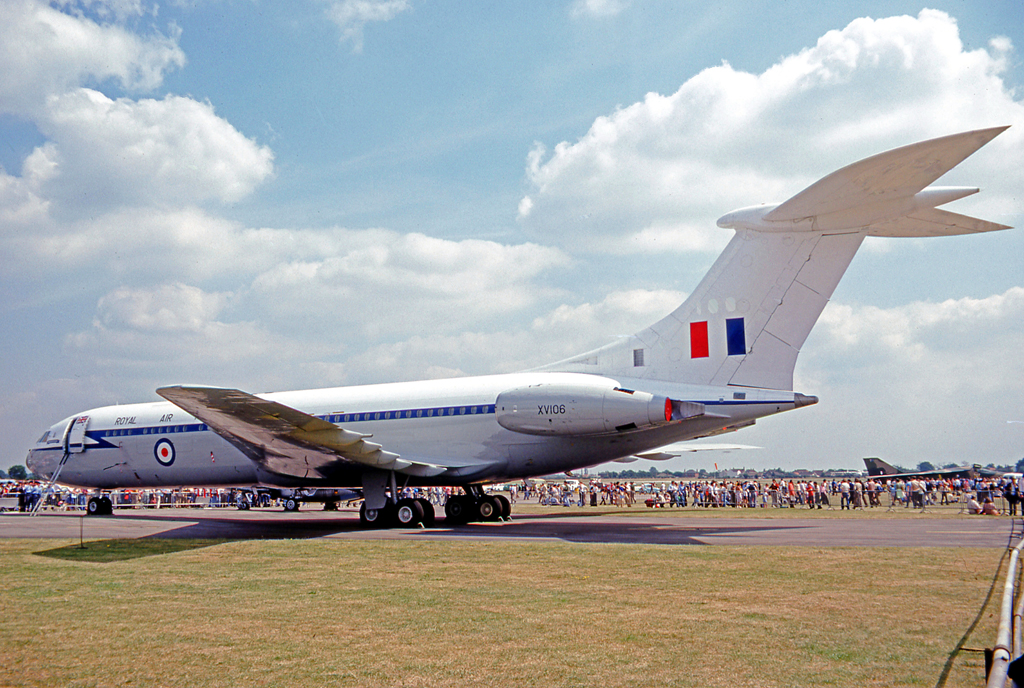
The RAF version of the VC10 had increased Engine Thrust and Passenger Seats facing Rearward for Safety Reasons especially when Braking on Short Runways. The Passenger versions operated from 1966 to 1970 and then they were converted into Air Refueling Aircraft. I have flown on the RAF VC10 shown in the image 5 times in the 1960’s, Singapore to UK, UK to USA Las Vegas, Nellis USAF base via Goose Bay Canada, and return USA to UK, UK to Singapore and Singapore to UK. It was a Superb Aircraft.
RAF VC10 Passenger VersionRAF VC10 Refueling a Harrier Aircraft
Boeing B737 Series
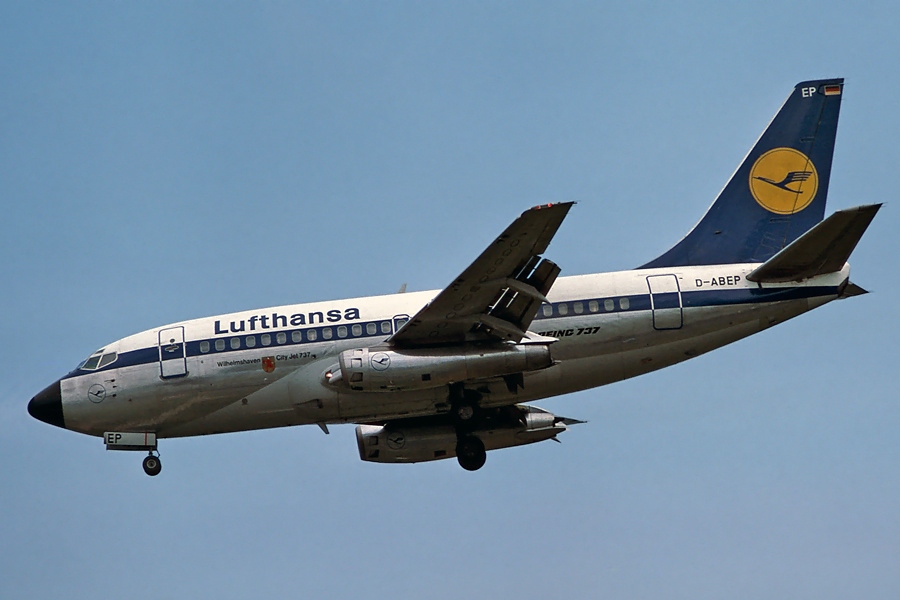
The first Boeing 737-100 was delivered to Lufthansa in 1968 it was the follow on from the Boeing B707 Narrow Body (NB) Aircraft. However, it has had many upgrades over the years and has and still is the workhorse for Airlines throughout the world. At present 12,000 are in service and 16,000 on order. The B737-100, 200 was the First Generation (1968). The second Generation was the B737-300, 400 and 500 (1979) the third (Next Generation) B737-600, 700, 800, 900 (1993) and the Forth Generation and latest is the B737 Max Series 7,8,9 and 10 (2011).
Boeing B737-100 First GenerationBoeing B737-200 Cockpit First Generation
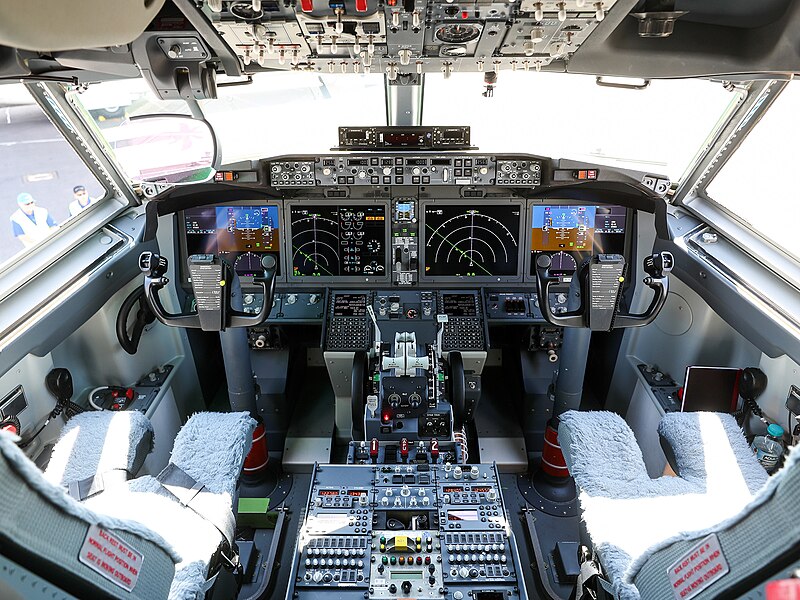
The older Generation had many older design Flight Instruments but had an Autopilot, Autothrottle and ILS Landing facilities. The Flight Controls on all Generations are Power Assisted Mechanical Linkage. The Later third and fourth Generations have most of the Flight Instrumentation and Engine Information and Navigation Information displayed on Glass faced Monitors generated by the Aircraft Electronic Systems which is know as the ‘Glass Cockpit’. The latest Cabin designs vary between Airlines but all of them employ new LED for lighting and in some cases back seat screens for In Flight Entertainment. I have flown on the B737-800 several times for holidays and work.
Boeing B737 Max 7 (Fourth Generation)Lufthansa B737 Forth Generation Cabin
Boeing B747 Series
The Boeing B747 affectionately known as the ‘Jumbo Jet’ changed the world International Travel more than any other Aircraft to date. Almost 1600, B747 have been delivered up to the last production in 2019. However some Airlines are still flying Passenger Services and Modified Freight Aircraft. The Series started in 1969 with the B747-100 and progressed to B747-200 (1971), 300 (1983) and the most important of all the B747-400 (1984). A B747-800 is likely to come into service soon. The B747 was the first Wide Bodied (WB), Two Deck Jet Airliner which can seat over 400 Passengers. In October 1958 PAN AM Airlines wanted an Aircraft 2.5 times bigger that the B707.
Boeing B707 left and B747 right (2.5 Bigger than the B707)
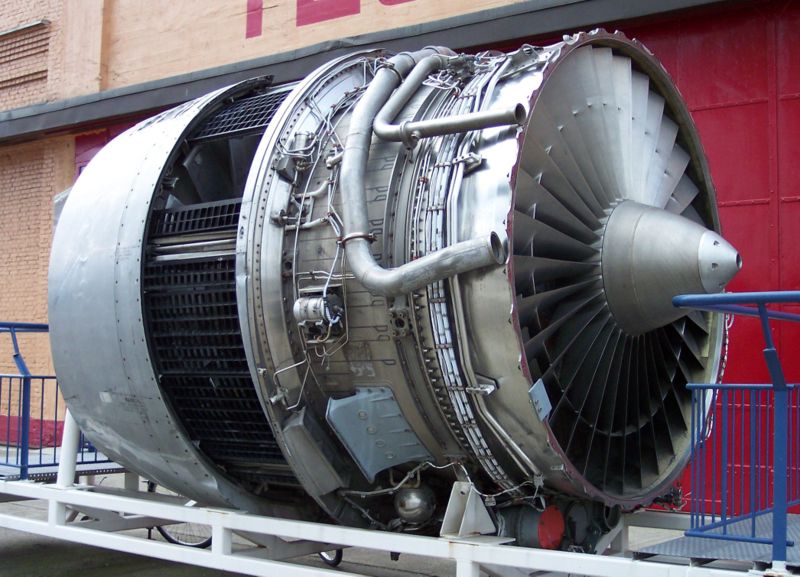
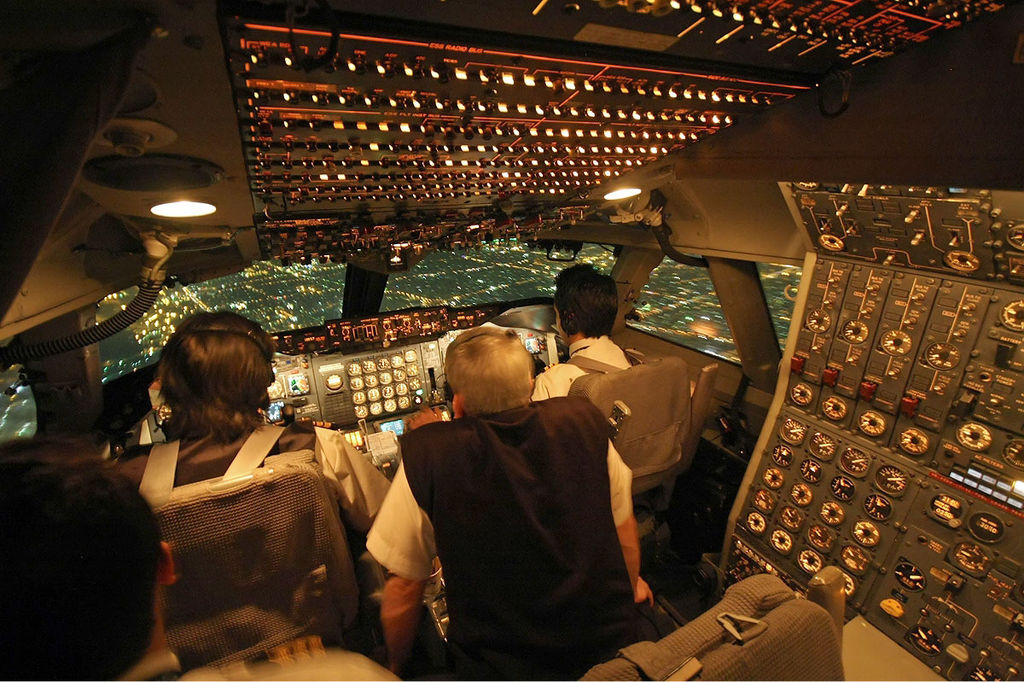
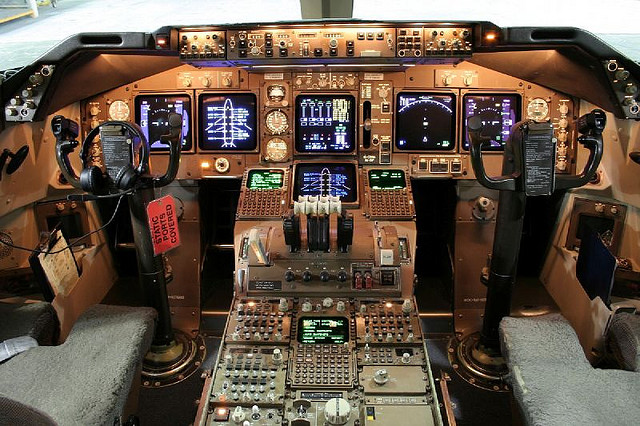
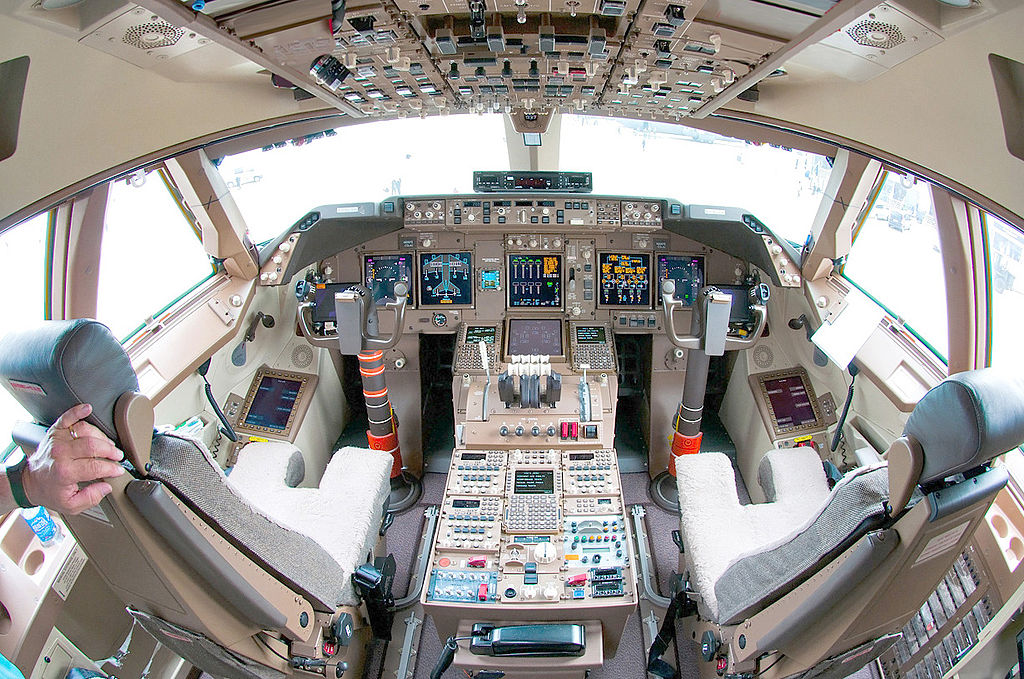
It has four Engines provided by different Manufactures such as the Rolls Royce RB211 Turbofan each producing 41,000 lbf to 60,000 lbf of Thrust. A foot-pound (lbf) is a unit of Energy that measures the amount of Energy required to push one pound with one pound-force for a distance of one foot. The higher the lbf the more Thrust Power from the Engine. The B747-400 had a full Glass Cockpit with Advanced individual Flight and Autopilot Computers, Inertial Navigation Computers, Radio Navigation and Flight Management System. The Flight Controls were Mechanical Power Assisted. The Lower Cabin had First Class, Business Class and Economy Passenger Seating. the Upper Cabin was for Business Class and Flight and Cabin Crew Areas.
Rolls Royce RB 211 Turbofan EngineB747-200 Cockpit with Pilot, Co-Pilot and Flight EngineerB747-400 Glass Cockpit – Pilot and Co-Pilot No Flight EngineerBoeing B747-400 An Economy Part of the Cabin
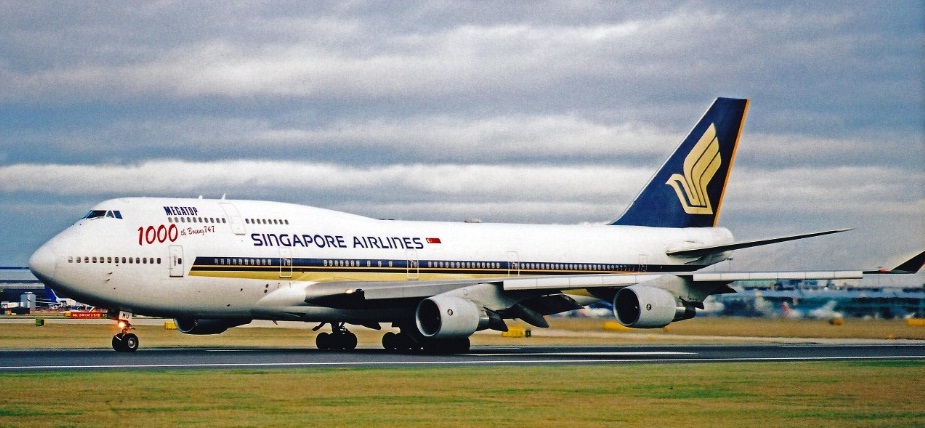
I have flown in the Singapore Airlines (SIA) B747-400 flights almost 70 times between the UK and Singapore and return during my business dealings in Singapore and Malaysia, in Economy and Business Class. This included the the Contract for Training Software with Singapore Airlines Engineering and B747-400 Cockpit Simulator for the Civil Aviation Authority of Singapore (CAAS). I have also been fortunate during the early days to have flown in the B747-400 Cockpit for a while with my friend and Captain Pilot (Rudi) who was flying it from the UK to Singapore.
B747-400, 1000th Aircraft which I flew First Class, Seat 01, from Malaysia to Singapore Courtesy of SIA
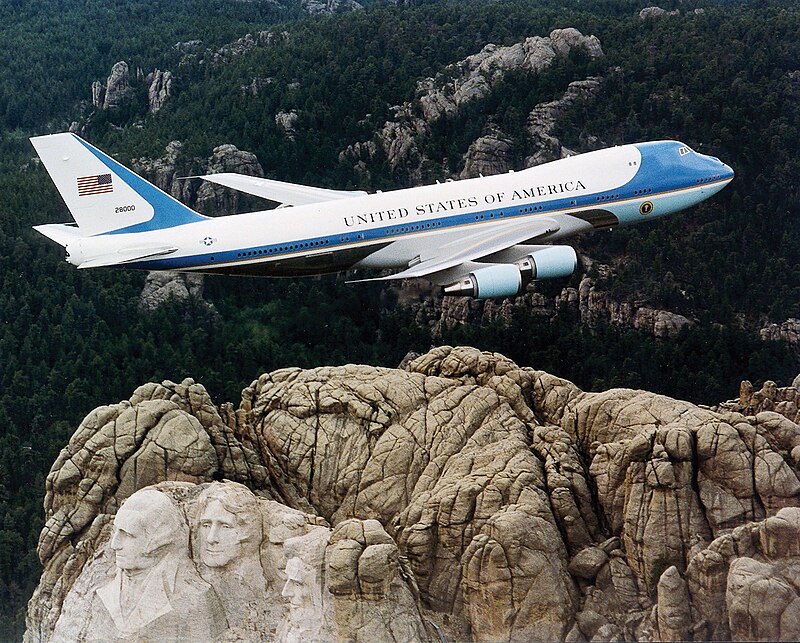
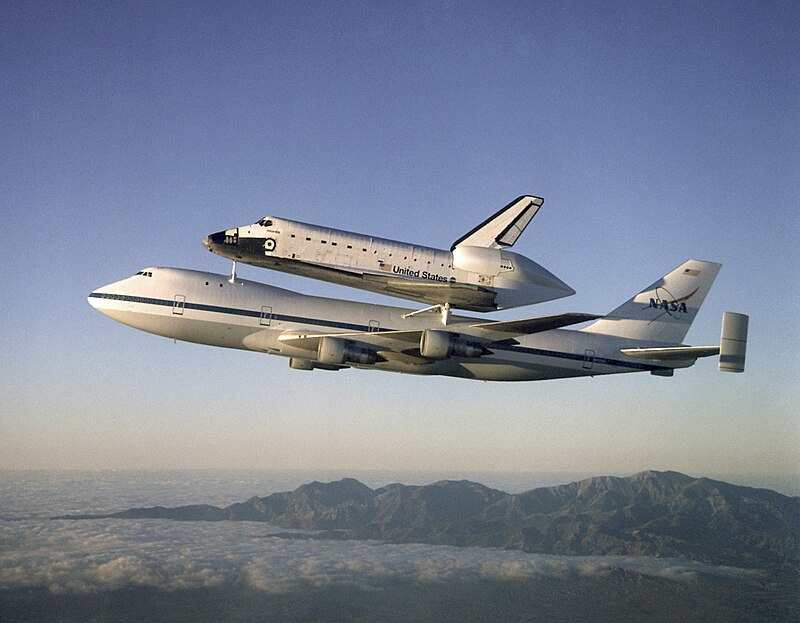
The other two 747-200B (VC-25A) upgraded customised Aircraft are the USA Presidents Aircraft ‘Air Force One’, which have been in service since 1990. Two new B747-800 Aircraft are on order to replace the existing ones. NASA also used a specially modified B747 for transporting the Shuttle Space Craft.
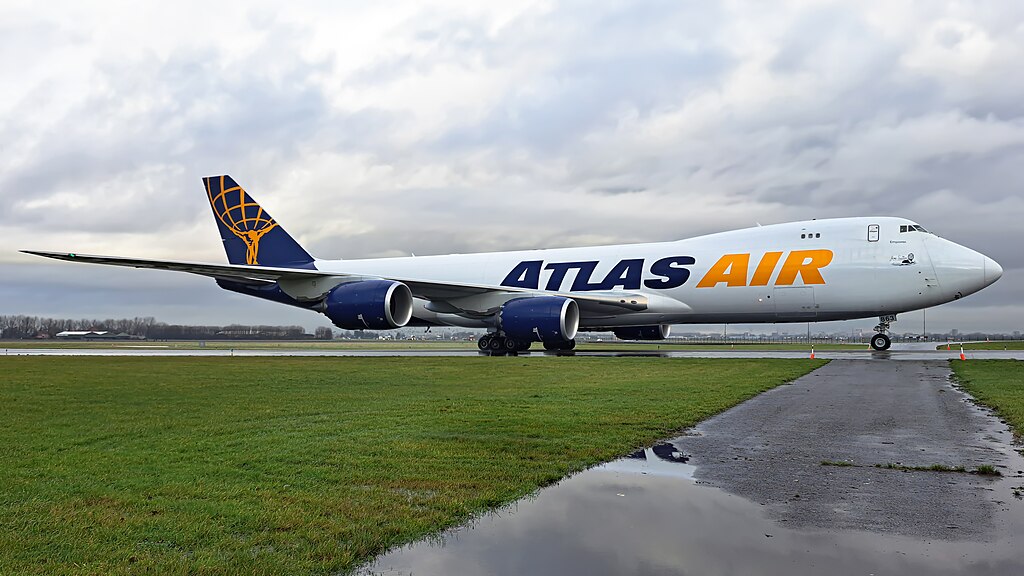
The B747-8 project has been very limited due to the requirements of Airlines for more advanced Aircraft which we will discuss later. Most of the Aircraft were for the Cargo Sector B747-800F (Freighter) but some for the International Passenger Aircraft B747-800i. The Final B747 Delivery was a B747-800F. The Boeing B747 was truly Change Maker and Favourite for International Passengers over Years.
B747-800 CockpitThe Last B747 to be Built by Boeing Delivered in 2022 (B747-800F)
Fly-By-Wire (FBW), Integrated Modular Avionics (IMA) and the Side Stick-v-the Yoke Era.
At this stage it is important to know that there was a major shift in Technology from those Jet Airliners we have discussed to that of the following Commercial Jet Airliners we are going to discuss which is still being upgraded as new Commercial Jet Airliners are being Designed and Manufactured. This involved Fly-By-Wire (FBW), Integrated Modular Avionics (IMA) and the Side Stick / Yoke Flight Controls.
Fly-By-Wire (FBW) System
As a simple to understand description of FBW is that the Mechanical Linkages between the Pilots Flight Controls and the Flight Control Surfaces are removed and replaced with Electrical Sensors on the Pilots Controls which send Signals via Electrical Cables and Computer System which then processes them and then sends Signals to the Flight Control Surfaces which move the to the appropriate positions. Note these Systems are very complex. FBW systems have been experimented with prior to 1969 which was the first time FBW was used in a Commercial Jet Airliner.
Integrated Modular Avionics (IMA)
Once again a simple to understand description of IMA is that the Avionics are controlled via the Flight Management System (FMS) Controllers in the Cockpit and associated Computers which are connected via a Wire or Fibre Network System to all the other Aircraft Systems Computers. These are able to communicate with each other to Control Systems ; for example FBW and Automatic Pilot System to the Air Data System, Fuel System, Engine Control System, Navigation Systems and Communications Systems etc etc automatically. There two types of IMA System, the Common Core System used on Boeing Aircraft and the Open IMA used on Airbus Aircraft both of which are fully Integrated Systems using a version of the Avionics Full Duplex (AFDX) Switched Ethernet.
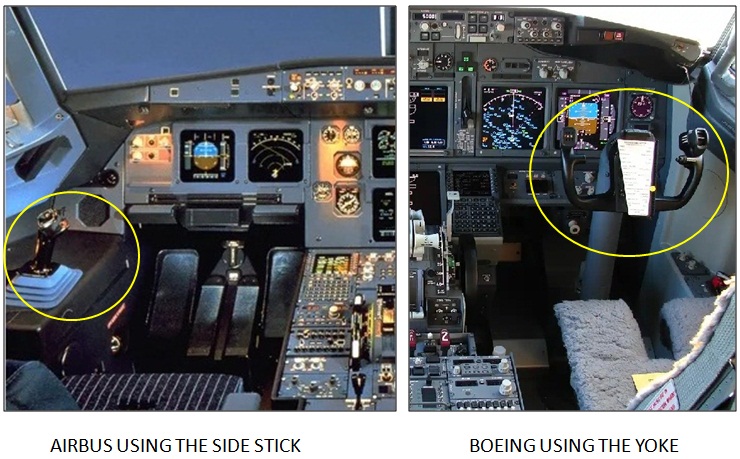
Side Stick and Yoke for Controlling the Flight Controls
Another major change in Technology was the adoption by Airbus Aircraft to use the Side Stick for controlling the Pitch and Roll Flight Controls (FBW). However the Boeing Aircraft still used the Yoke (FBW) for controlling the Pitch and Roll Flight Controls. Both Airbus and Boeing Systems use the Rudder Pedals for the Yaw Flight Control.
Concorde
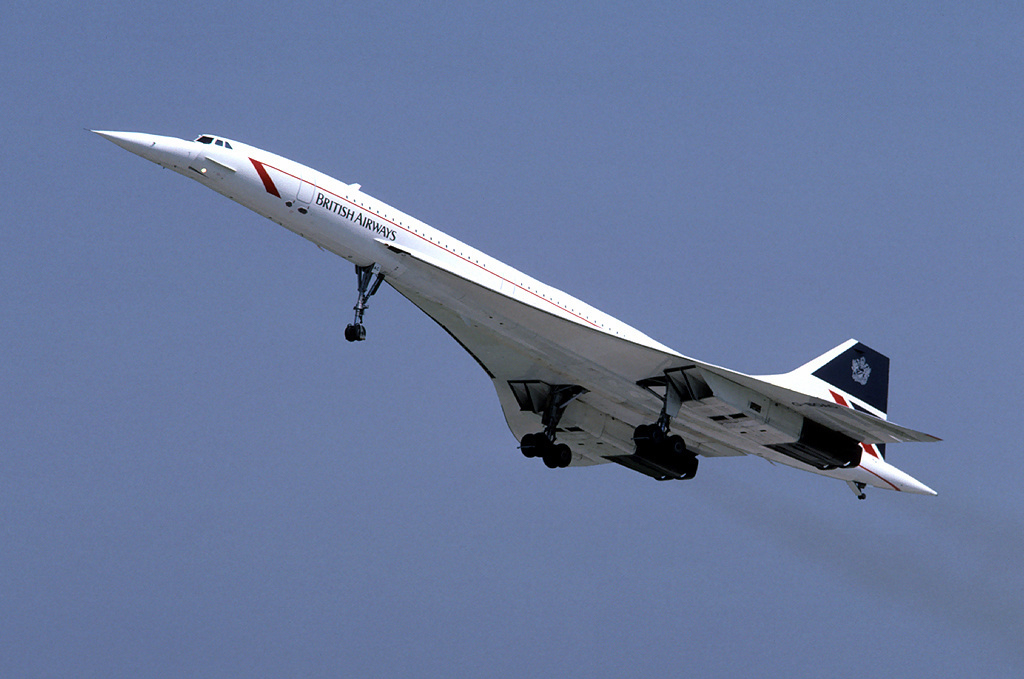
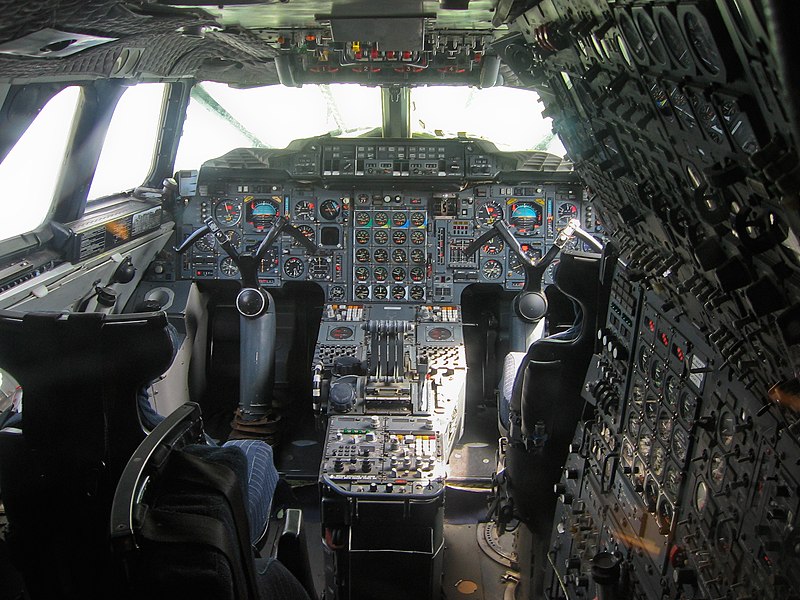
Concorde the only Supersonic Aircraft first flew in 1973 from the UK to the USA with the first Commercial Jet Airliner Flights. It was Designed and Manufactured by the British Aircraft Corporation (BAC) and the French company, Aerospatiale. The first Commercial Flights were on January 21st 1976 by British Airways (BA) from the UK to Bahrain and Air France (AF) from Paris, France to Rio de Janeiro, Brazil. The Concorde was the first Commercial Jet airliner to have a FBW System. It also had a very futuristic Avionics System for its time but not an IMA. Only British Airways and Air France operated the Concorde from 1976 to 2003, 27 years due to the only Concorde crashed after Take-Off due to punctured Wing Fuel Tank and resulting Fire, caused by Metal Part from previous Aircraft Take-Off. Only 14 Commercial Concorde Jet Airliners were built 7 for BA and 7 for AF.
British Airways Concorde after Take OffConcorde Cockpit; left; Pilot, right; Co-Pilot and Flight Engineer
Airbus A320 Family
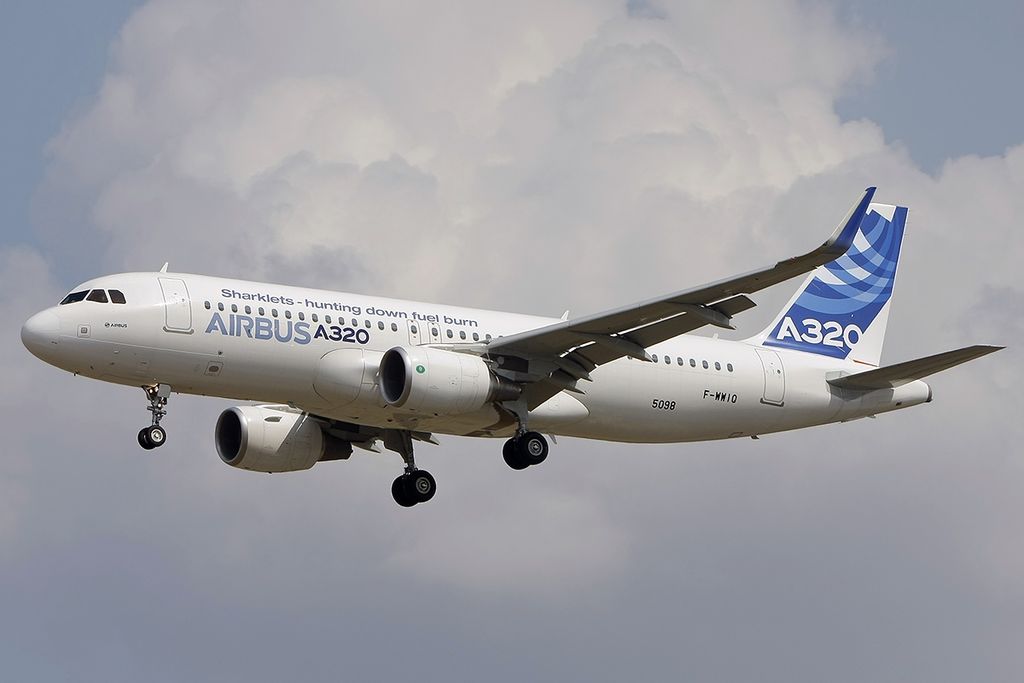
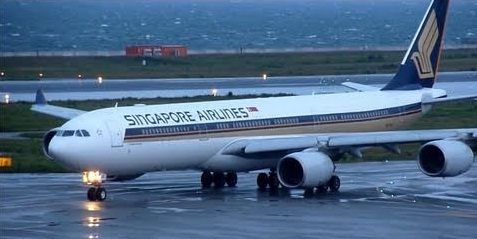
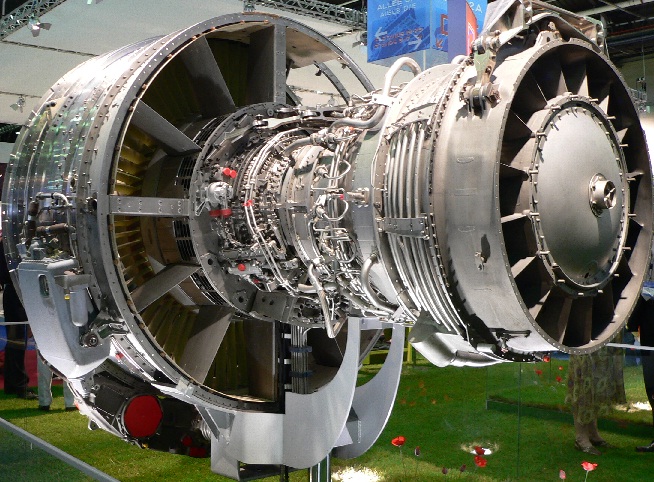
Airbus is a consortium of European Airline Manufactures including France and UK in 1970. It is in competition with Boeing in the USA and is now in 2024 almost equal. The Airbus family started with the Wide Body (WB) A300 in 1972 and the WB A310 in 1981. From there the A320 family Narrow Body (NB) Aircraft with Twin Engines, mainly the CFM56 Engine producing around 23,000 lbf of Thrust each, emerged all using the same Cockpit Layouts. It started with the largest and then decreased in length, A320 (1987), A321 (1993), A319 (1995) and A318 (2002). Other WB Aircraft A340 (4 Engines) (1991), A330 (1992), A330neo (2018), A380 (4 Engines) (2005) and the latest A350 (2013). We will discuss the A380 and A350 later. It should be noted that the A340 flew from Singapore to New York (SQ 21) over the North Pole non-stop for 18 hours Piloted by my Singapore Airlines Captain friend (Rudi) .
Airbus A320 Airbus A340-500 Singapore to New YorkRear View of the A 320 Family CFM56-5 Turbofan Engine
The Airbus A320 was the first Commercial Jet Airliner to use full FBW with Cockpit Side-Stick Flight Controllers for the Pilot and Co-Pilot which Airbus adopted for all of the Aircraft that followed the A320. The Side Stick Produced Position Electrical Signals to the FBW System for Pitch (Elevators) and Roll (Ailerons) Flight Surfaces. The Rudder Pedals also had Position Electrical Transmitters for Azimuth (Rudder) Flight Surface. The Airbus Family (A320 to A318) had the Electronic Flight Instrument System (EFIS) and Electronic Centralised Aircraft Monitor (ECAM) Systems. These were a major improvement using the Glass Cockpit.
Airbus A320 Glass Cockpit and Side-Stick Flight Controllers
Boeing B777
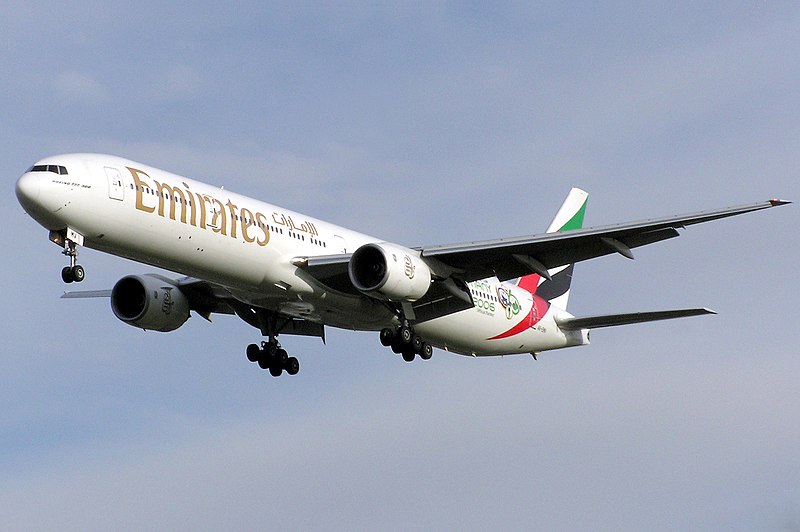
The Boeing B777 Jet Airliner played a big part in the Evolution of new Technology, especially related to the Airframe, Engines, FBW and IMA. The B777-200 was introduced in 1995 commonly known as the ‘Triple Seven’ and is the most built Wide Body, Twin Engine Aircraft in the world. It was also the first aircraft to be Designed using Computer Aided Designed (CAD) using 3D Graphics. The B777-300ER (Extended Range) is used extensively by many Airlines but Emirates Airlines have a fleet of 160 Aircraft. The B777-300 was introduced in 1997 and can accommodate 350 plus Passengers. I have flown on the B777-300ER many times and it is a superb Aircraft. I also used the B777-300ER to Design and Produce the Avionics Training Media for Malaysia Airlines (EASA Part 66) by my Company in Malaysia.
Emirates Airlines Boeing B777-300ER
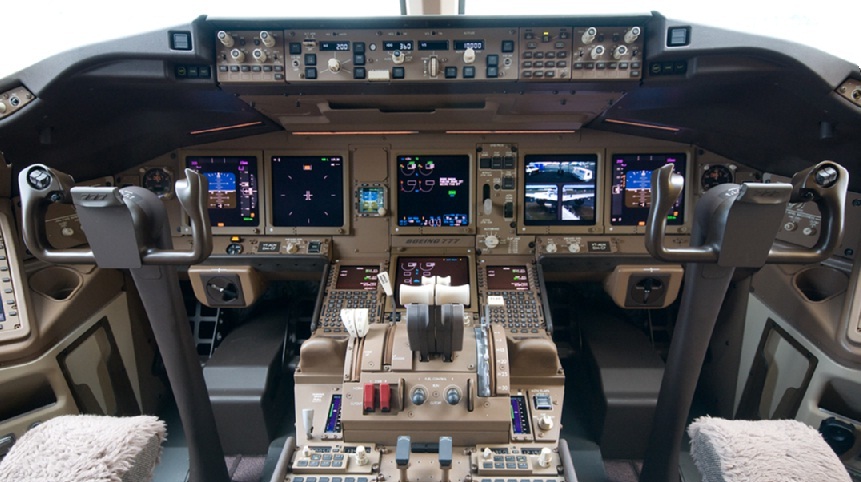
The B777 was the first Boeing Aircraft to have full FBW using the standard Cockpit Yoke and Rudder Flight Controls which was part of the first Integrated Modular Avionics (IMA) System to be used on a Commercial Jet Airliner in the world. It used the Common Core System and the forerunner of the AFDX Network System and IMA Computers for Processing all of the Flight Management System (FMS) functions. An additional function of the IMA was to allow the Avionics Engineers to do On – Board IMA Testing using a dedicated Computer Station in the Cockpit.
Boeing B777 Cockpit
The Boeing early B777’s were fitted with the Rolls Royce Trent 800, a large but the lightest Turbofan Engine fitted to the B777. However the B777-300 aircraft introduced in 2003, were fitted with a new GE90 Engine using the technology of curved Fan Blades producing over 100,000 lbf of Thrust, almost twice as much as each Boeing B747-400 Engine.
Boeing B777-300ER GE90 Turbofan Engine with curved Fan Blades
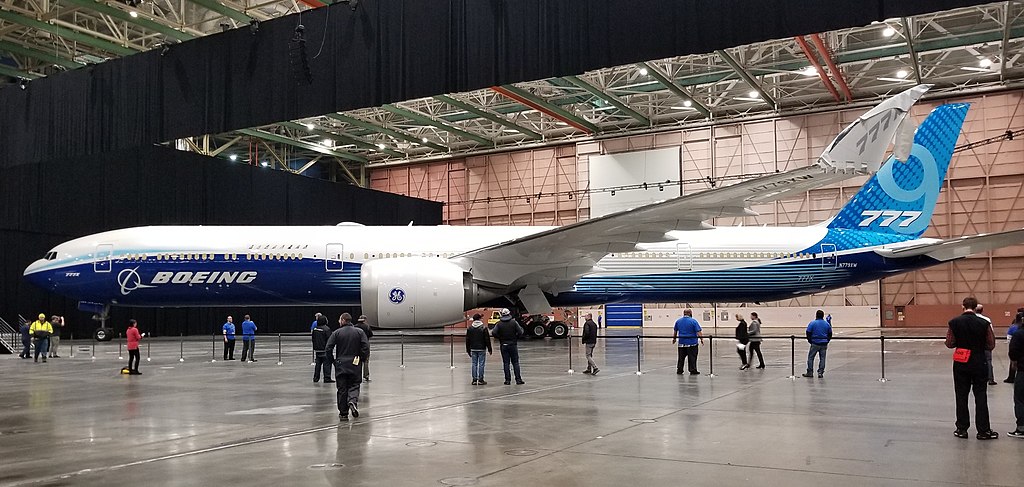
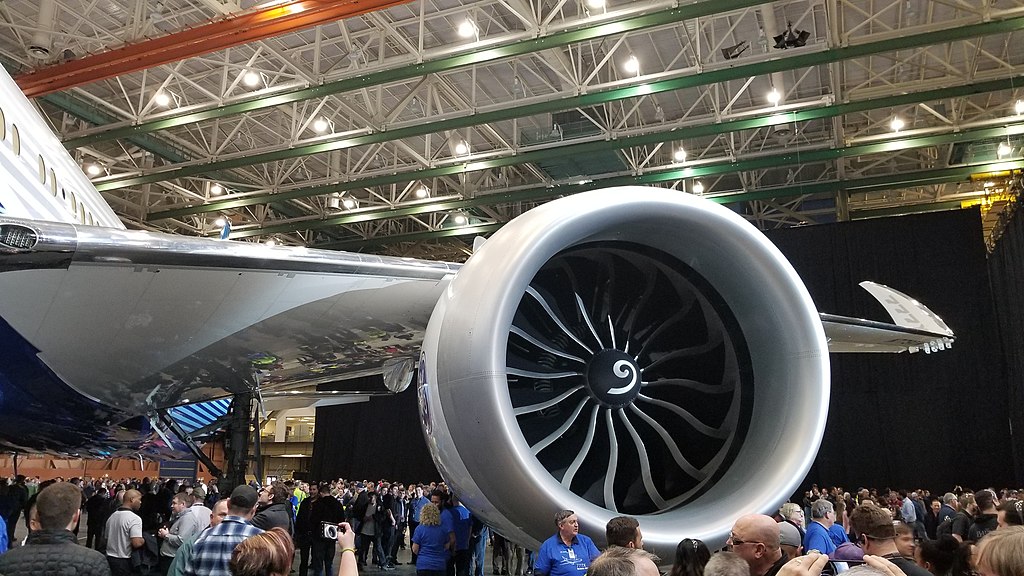
The B777x Series is the latest which is much larger than the B777-300ER and again advanced Technology. The Wings are made of Composite Material and are so long the Wing Tips fold upward until ready for flight. The Engines are the GE9X the largest Jet Engine in the world surpassing the B777- 300 GE90 Engines. The Glass Cockpit has been upgraded including Head Up Display (HUD) Systems, inline withe the advanced IMA. The B777-8 Passenger Capacity is 395 with the B777-9 having 426 Passengers. However, due to Technical and Production the major introduction of the B777-8 and 9 are being delayed until 2025.
Boeing B777x Aircraft with Folding Wing Tips.The Boeing B777x Aircraft with the GE9x Engines, the largest in the world.Boeing B777x Advanced Glass Cockpit with HUD.
Airbus A380
The Airbus A380 is the largest Wide Body (WB) four Engine Jet Airliner in the world. It has a full length, Double Deck Passenger Cabins, that can seat over 500 Passengers but each Airline have their own Cabin Configurations. The first delivery of the Airbus A380 was to Singapore Airlines (SIA) in 2007, followed closely by Emirates Airlines both of which are the major Operators of the majestic Jet Airliner.
Airbus A380 Singapore Airlines first delivery in 2007Airbus A380 Emirates Airlines second delivery in 2008
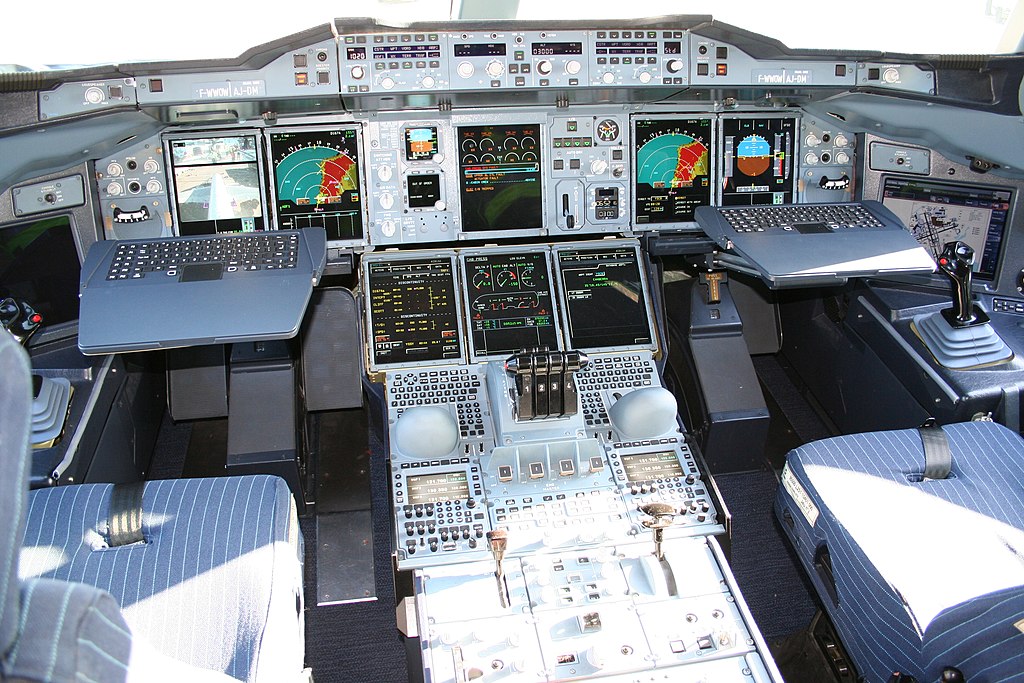
The Airbus A380 is powered by the Rolls Royce Trent 900 Turbofan Jet Engine, which SIA selected, and the GP 7200. Each of the four Trent 900 Engines produces 84,000 lbf of Thrust. The A380 is Designed and Manufactured by companies from France, Germany, Spain and the UK each having their own specialty. For example the Wings are made in the UK. Then all of the parts are transported to Toulouse in France for final assembly. The transportation of the Wings is by Land and Sea from Wales in the UK on huge barges to France. Therefore transportation from all donor countries is a huge undertaking. Except for the Wings most of the A380 Fuselage is constructed of Aluminum Alloys.
Airbus A380 Cockpit with Side Stick Controllers
A major Technology change was from the use of Copper Electrical Wiring to Aluminum Electrical Wiring which also required new techniques. This was to reduce the weight of the A380. The A380 uses the Open IMA using AFDX combined with the Glass Cockpit. Due to the huge size of the A380 the AFDX Ethernet Data Cables are extensive. The Flight Controls which are full FBW Side-Stick are also more complex especially the secondary Control Surfaces such as the Flaps and Spoilers etc. It is hard to imagine controlling such a Huge A380 Aircraft with Side-Sticks similar to that that we play Computers games with. The Cabin Configuration depends upon the Airline Operators however the A380 is designed to be able to accommodate up to 800 people. For example Malaysian Airlines only operates the A380 for religious Pilgrimages that seat 700 people for each flight.
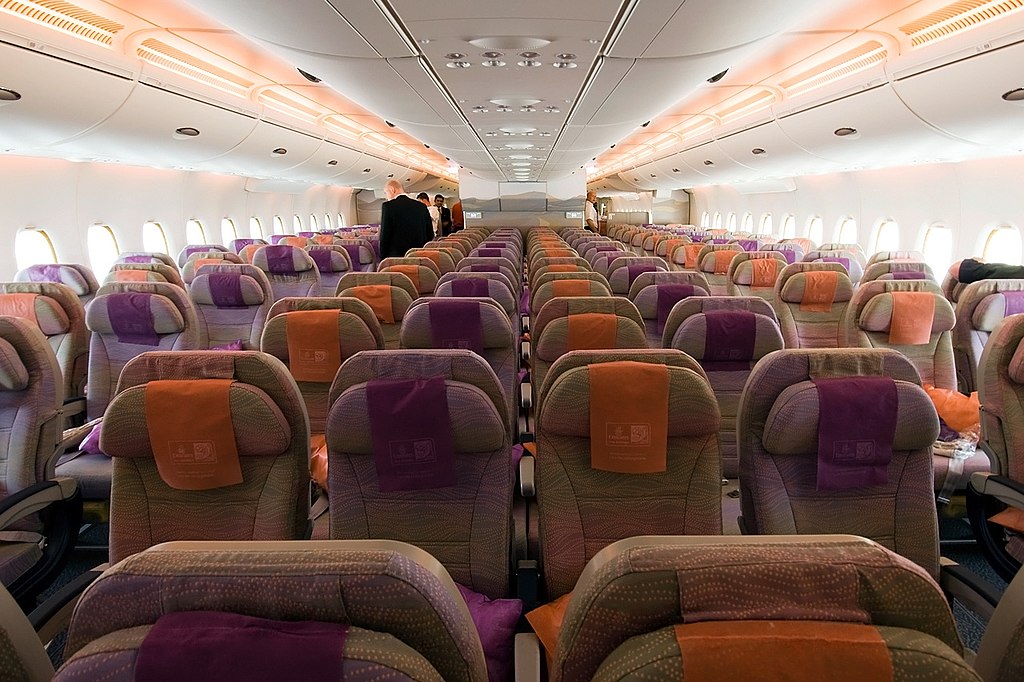
Only a small part of the Airbus A380 Lower Deck Cabin Economy Seating
Boeing B787
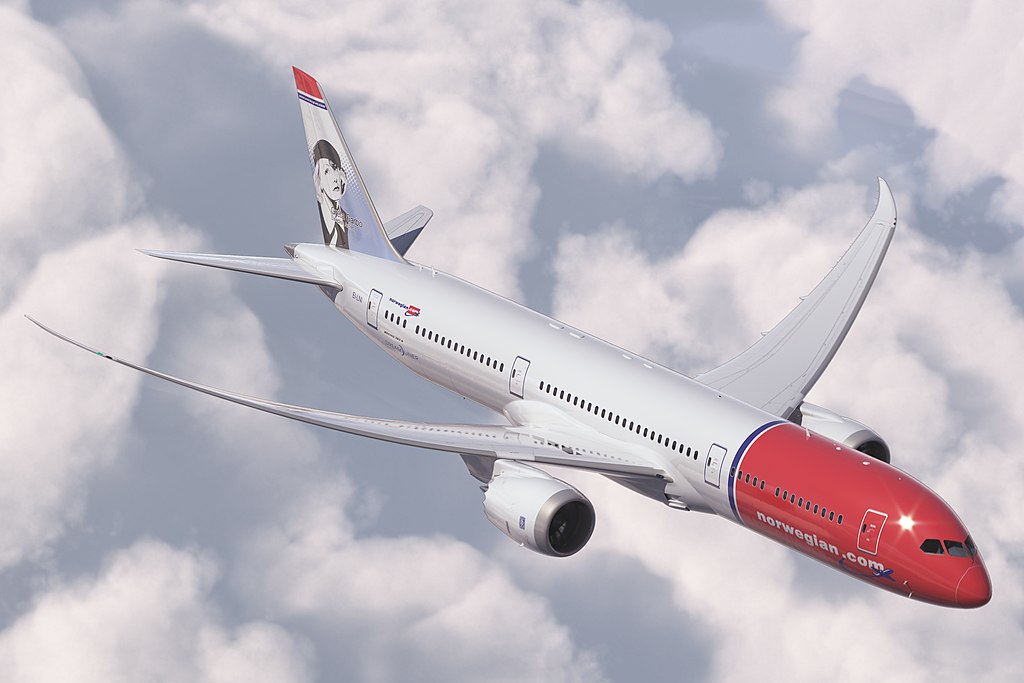
The Boeing B787 known as the ‘Dreamliner’ is a ‘Technology Explosion’ in the Commercial Jet Airliner Evolution. It first came into service with Japan’s All Nippon Airways (ANA) in 2011. It is a large Wide Body (WB) Aircraft seating up to 425 Passengers. The Boeing B787 has many versions but the latest is the B787-10 which is the largest B787, that Singapore Airlines (SIA) took the first delivery in 2018.
Boeing B787 Delivered to ANA in 2011Boeing B787-10 Delivered to SIA in 2018
The modern Boeing B787 Commercial Jet Airliner was the first to be constructed using Carbon Fibre Reinforced Polymer (CFRP) not Aluminum Alloys like other Aircraft we have discussed. The majority, (80%) of the Aircraft’s Fuselage (Body) and Wings, Tail and most of the Flight Control Surfaces are made of CFRP. This has allowed the Cabin Windows to be larger and fitted with ‘Smart Glass’ which can Change from ‘Dark to See Through’ using Electronics. There are no Window Shades. The Aircraft Wings are flexible as normal but actually Curve Upward when Flying.
Part of theB787 Fuselage made from CFRPB787 showing the Wings Curved Upward when Flying
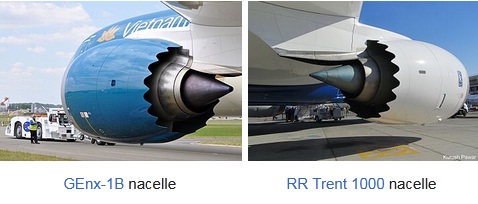
The Boeing B787 uses the GEnx, Rolls Royce Trent 1000 and the latest Rolls Royce Trent XWB Turbofan Engines. Each Trent XWB Engine produces 70,000 lbf of Thrust. The Engine Nacelle’s are also unusual as the are Serrated at the rear to reduce Noise. The Cabin Air Conditioning does not use Engine Bleed Air like other Aircraft but uses Electrical Air Conditioning Compressor’s just like a house Air Conditioner System.
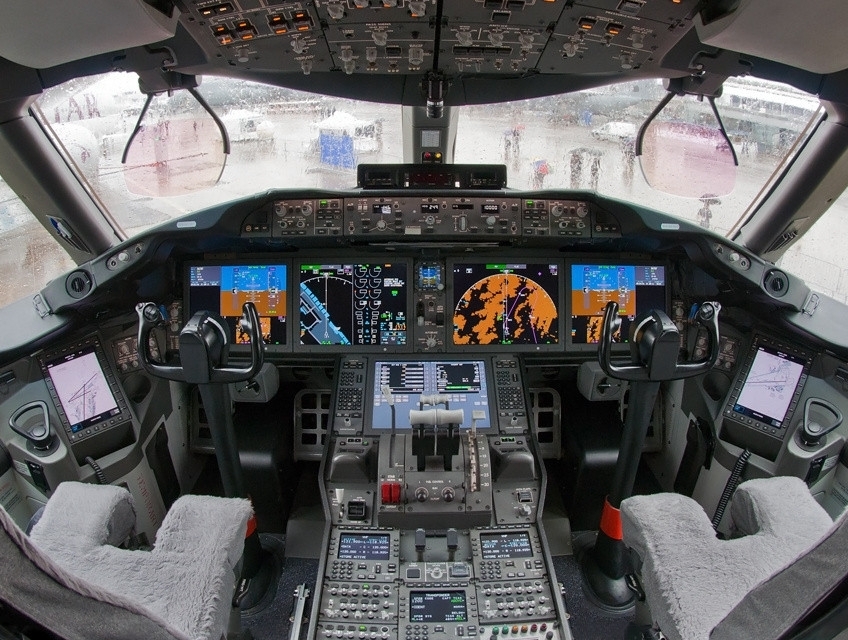
The Boeing B787 uses the latest Common Core IMA system with upgraded Cockpit Display Systems that have Dual Information Screens on a single Display Unit. Additionally, Head-Up Display (HUD) Systems are fitted for both Pilots. It has full FBW system including Autopilot and Autoland System using the Boeing standard Yoke and Rudder Pedals. All of the Cabin Lighting is LED allowing several Colour’s and Brightness to be selected by the Cabin Crew.
Boeing B787 Cockpit Dual Screen Displays and Head Up Displays (Top)Boeing B787-10 Cabin, Smart Windows and LED Lighting
Airbus A350
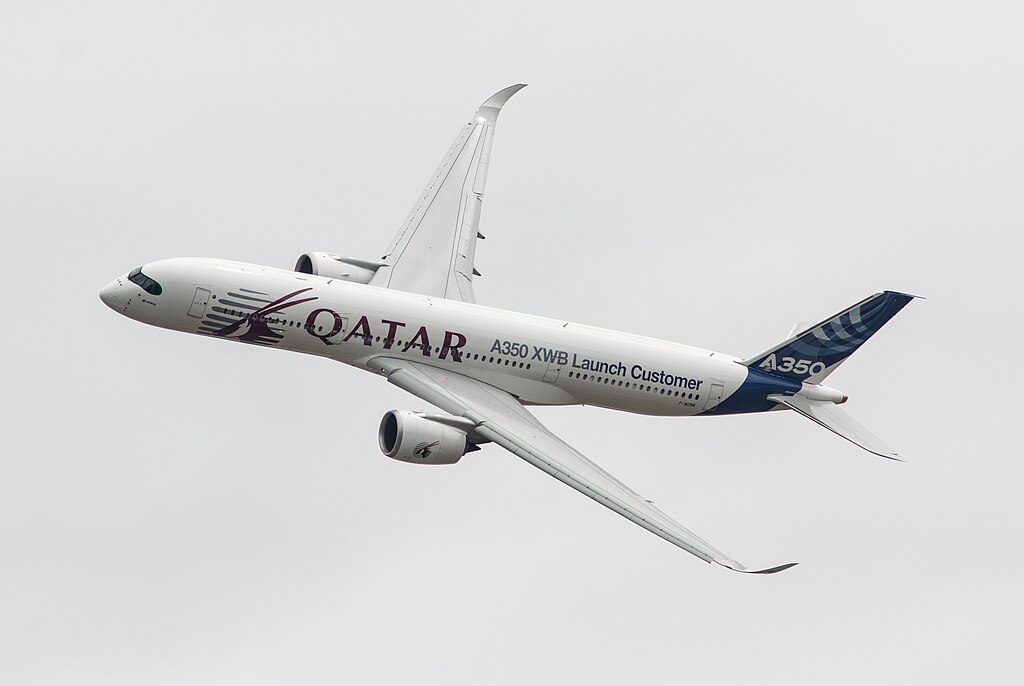
The Airbus A350 is and Extra Wide Body (XWB) Aircraft which was designed to compete against the Boeing B787 Dreamliner. The first Commercial Flight of Airbus A350-900 was in 2015 by Qatar Airways. the main variants of the the A350 is the A350-900, A350-1000 and the latest A350neo.
Qatar Airways Airbus A350-900 First Commercial Flight 2015
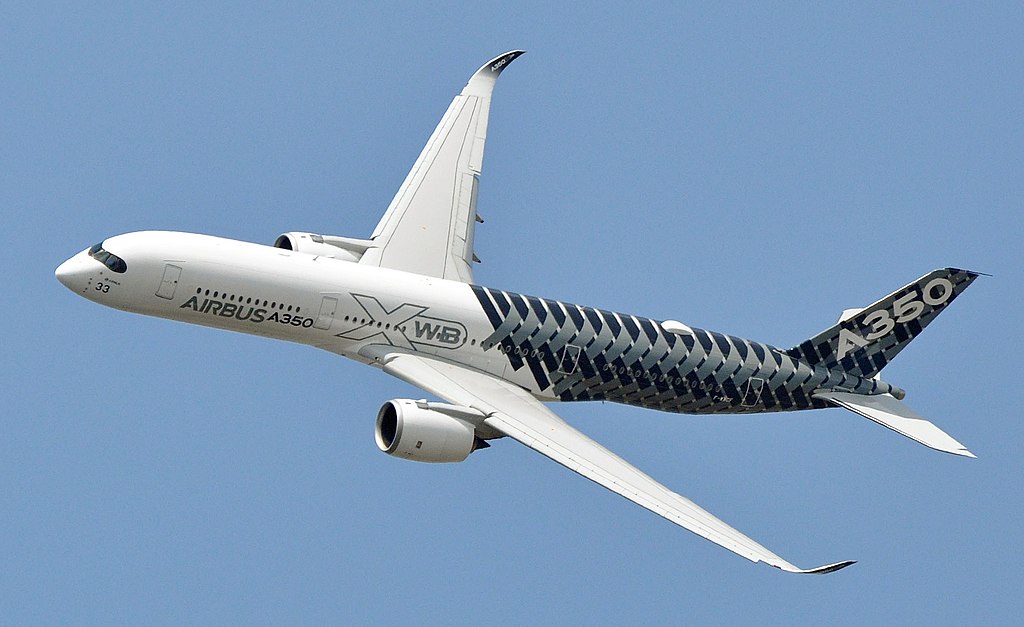
The Airbus A350 Fuselage and Wings are constructed using Carbon Fibre Reinforced Polymer (CFRP) following the Boeing B787 construction. However, Airbus construction was based upon Panels fitted to a Rib Construction made of Aluminum-Lithium Alloy, which was completely different to the Boeing B787. The Airbus A350 Ribs gives the Fuselage more Strength and Conductibility against Lightning Strikes. The Wings are also unique in that the Wing Outer portion is Curved Upward to enhance the Aerodynamics. The Engines in the main are Rolls Royce XWB Engines with Curved Fan Blades, specially designed for the Airbus A350, each with up to 97,000 lbf Thrust. The Air Cabin Air Conditioning is from the standard Engine Air Bleed System.
Airbus A350 with Curved Outer WingsRolls-Royce Trent XWB on the Airbus A350-941
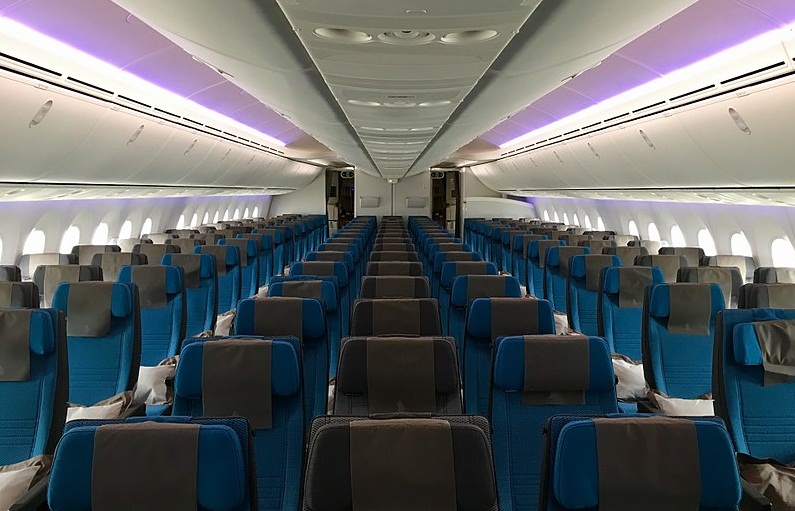
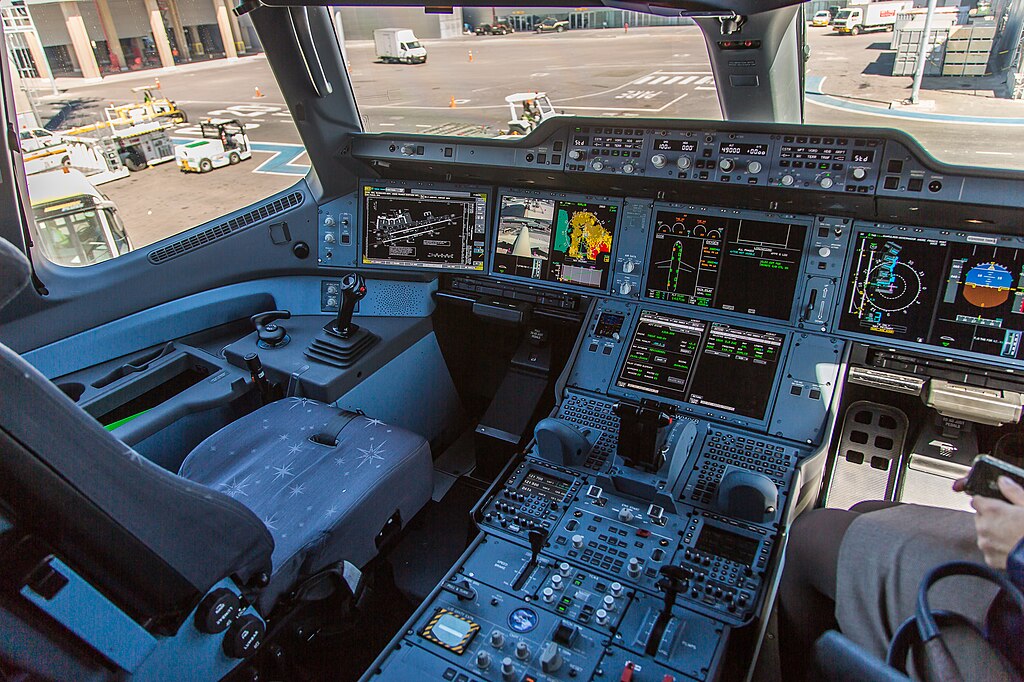
The Airbus A350 variants have the Open IMA system based upon that used in the Airbus A380 including the enhance Cockpit layout and Dual Information Liquid Crystal Displays (LCD’s). It has Full FBW and Autopilot and Autoland using the Airbus Side-Stick Configuration. The Cabin can accommodate 400 Passengers in the latest A350-1000 and A350neo owing to the Extra Wide Cabin Design and 3×3, 9 abreast Seating.
Airbus A350 Cockpit with Dual Information LCD DisplaysAirbus A350 with 3×3, 9 Abreast Seating
Future Commercial Jet Airliners
Throughout my 60 years being an Aircraft Engineer in the Royal Air Force and associated with the Commercial Jet Airliners what have been discussed has basically followed the same Design Format, Fuselage, Wings, Tail and Engines. However there are new Designs ongoing known as Blended Wing Aircraft. This stems from the Military Flying Wing Bombers Designed and Flown by the USAF. These will not be introduced in my lifetime but these are serious Design Considerations for the future. The move by the Commercial Aircraft Industry is the Electrification of Aircraft moving away from Fossil Fuels and Oil known as More Electrical Aircraft (MEA) Project. However, the Technology there will be an increasing demand for Air Travel especially as the Population Expands over the coming decades.
A Blended Wing Design Concept
Thank you for your time viewing this quite large Article, I hope you found it interesting and not too technical for you to understand.




























 <a href="https://astra283.wordpress.com/wp-admin/site-editor.php?calypsoify=1&block-editor=1&frame-nonce=af705db4bc&origin=https%3A%2F%2Fwordpress.com&environment-id=production&support_user&_support_token&postType=wp_template&postId=pub%2Flivro%2F%2Fhome#site-title-pseudo-link">Training designer</a> - avionic & Aircraft Engineer -- BRYAN HOGGb.e.m